
- August 5, 2025
- Posted by: feinuojixie
- Category: Chain Guides News
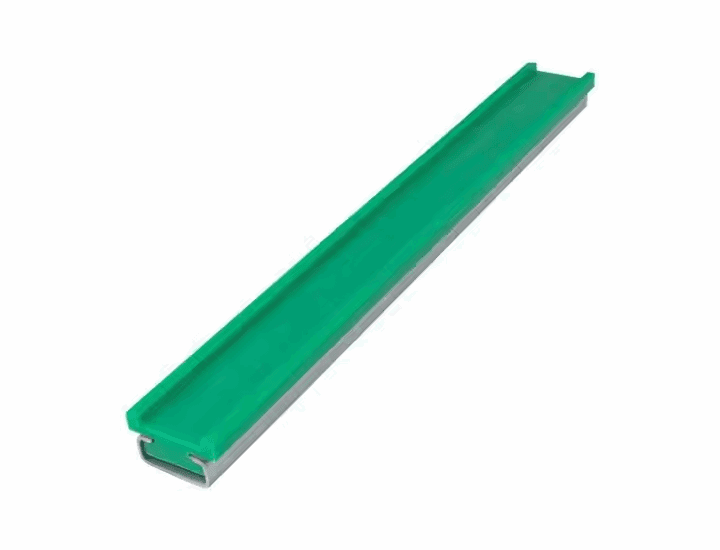
In the intricate world of modern machinery, roller guide rails serve as the unsung heroes, facilitating smooth and precise linear motion across a wide array of applications. From the high-speed operations of CNC machines in manufacturing plants to the delicate movements of robotic arms in surgical theaters, the performance and reliability of these components are paramount. However, traditional roller guide rails have long been plagued by limitations that hinder their optimal functionality. Enter the revolutionary self-lubricating roller guide rails—a game-changing innovation that is set to redefine the standards of precision and efficiency.
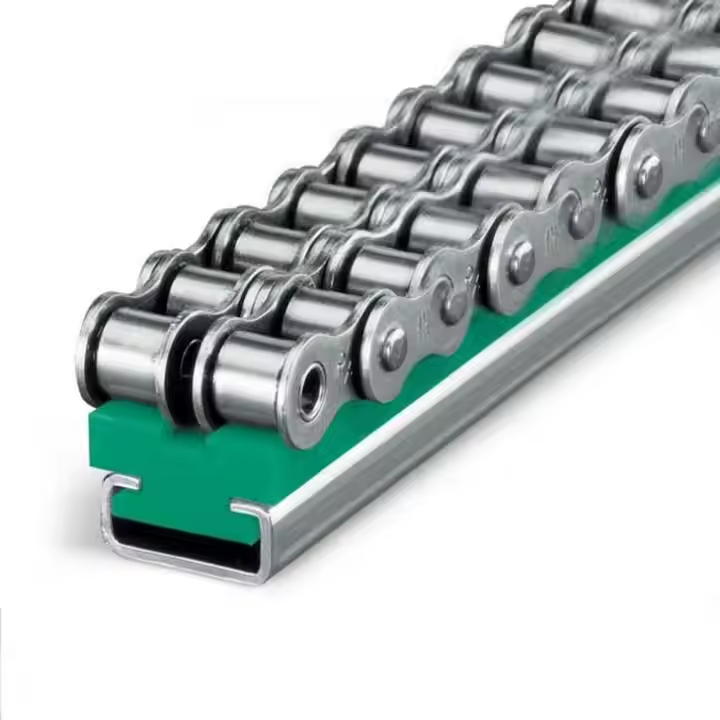
At the heart of any mechanical system, roller guide rails play a crucial role in guiding and supporting moving parts, ensuring accurate positioning and minimizing friction. These components consist of a rail and a carriage with rollers that roll along the rail, enabling smooth and efficient motion. Depending on the application, different types of roller guide rails are employed, such as recirculating ball guide rails, linear roller bearings, and crossed roller guide rails. Each type offers unique advantages in terms of load capacity, stiffness, and precision, making them suitable for various industries and applications.
Despite their importance, traditional roller guide rails come with several drawbacks that can significantly impact the performance and longevity of machinery. One of the primary challenges is the need for frequent lubrication. Without proper lubrication, the rollers and rails experience increased friction, leading to wear and tear, reduced efficiency, and potential failure. Regular lubrication not only requires time and resources but also poses environmental concerns due to the use of lubricants. Additionally, traditional roller guide rails are susceptible to contamination, which can further degrade their performance and increase maintenance requirements.
Self-lubricating roller guide rails address these limitations by incorporating innovative materials and design features that eliminate the need for external lubrication. These rails are typically made from advanced polymers or composites that have inherent self-lubricating properties. The materials are engineered to reduce friction and wear, ensuring smooth and reliable operation over extended periods. Some self-lubricating roller guide rails also feature integrated lubrication channels or reservoirs that store lubricant and release it gradually as needed, providing continuous lubrication without the need for manual intervention.
The benefits of self-lubricating roller guide rails are numerous and far-reaching. One of the most significant advantages is the substantial reduction in maintenance requirements and costs. With no need for frequent lubrication or lubricant replacement, companies can save valuable time and resources, allowing them to focus on core operations and productivity. Self-lubricating rails also offer extended lifespan and enhanced durability, reducing the frequency of component replacement and minimizing downtime. This not only improves overall equipment reliability but also contributes to cost savings in the long run.
In addition to maintenance savings, self-lubricating roller guide rails deliver superior precision and repeatability in motion control. The reduced friction and wear result in smoother and more consistent movement, enabling higher accuracy and better surface finish in machining operations. This is particularly crucial in industries such as aerospace, semiconductor, and medical, where precision is of utmost importance. Self-lubricating rails also offer improved dynamic performance, allowing for higher speeds and acceleration without sacrificing accuracy or stability.
Another key advantage of self-lubricating roller guide rails is their positive impact on environmental sustainability. By eliminating the need for external lubrication, these rails reduce the consumption of lubricants, minimizing the potential for spills, leaks, and contamination. This not only helps to protect the environment but also simplifies waste management and compliance with environmental regulations. Self-lubricating rails are also more energy-efficient, as the reduced friction results in lower power consumption, contributing to cost savings and a smaller carbon footprint.
The applications of self-lubricating roller guide rails are vast and diverse, spanning across multiple industries. In the manufacturing sector, these rails are used in CNC machines, robotic arms, and automated production lines to improve precision, speed, and productivity. In the medical field, self-lubricating rails are essential components in surgical robots, diagnostic machines, and patient handling systems, ensuring smooth and accurate movements for enhanced patient care. The aerospace and defense industries also benefit from the use of self-lubricating rails in aircraft components, satellite systems, and military machinery, where reliability and performance are critical.

To illustrate the real-world impact of self-lubricating roller guide rails, let’s take a look at a few case studies. A leading automotive manufacturer implemented self-lubricating rails in their robotic assembly lines, resulting in a significant reduction in maintenance costs and downtime. The improved precision and repeatability of the rails also led to higher quality products and increased production efficiency. In the semiconductor industry, a chip manufacturer replaced traditional roller guide rails with self-lubricating ones in their precision manufacturing equipment, achieving better process control and yield improvement. These case studies highlight the tangible benefits that self-lubricating roller guide rails can bring to businesses across various sectors.
Looking ahead, the future of self-lubricating roller guide rails is promising, with ongoing research and development efforts focused on further enhancing their performance and capabilities. Scientists and engineers are exploring new materials, coatings, and design concepts to improve lubrication efficiency, increase load capacity, and extend the lifespan of these components. Additionally, advancements in sensor technology and condition monitoring systems are enabling real-time monitoring of rail performance, allowing for predictive maintenance and proactive troubleshooting.
In conclusion, self-lubricating roller guide rails represent a revolutionary advancement in linear motion technology, offering numerous benefits over traditional counterparts. From reduced maintenance and improved precision to enhanced durability and environmental sustainability, these rails are transforming the way machinery operates across various industries. As the demand for higher performance, reliability, and efficiency continues to grow, self-lubricating roller guide rails are poised to play an increasingly important role in shaping the future of manufacturing, healthcare, aerospace, and beyond. If you’re looking to optimize the performance of your machinery and stay ahead of the competition, it’s time to explore the potential of self-lubricating roller guide rails.