
- September 2, 2025
- Posted by: feinuojixie
- Category: Chain Guides News
No Comments
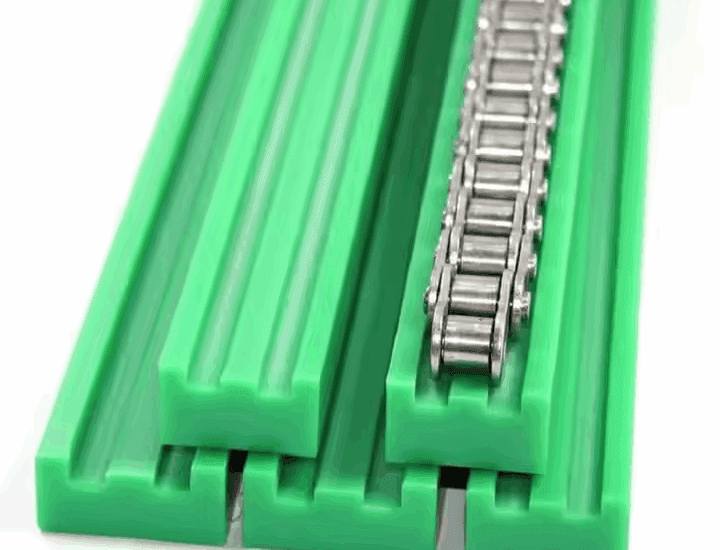
This section introduces the basic definition of guide rail for conveyor, explaining that it is a component installed alongside conveyor systems to direct, align, and stabilize products as they move. It highlights the core role of guide rail for conveyor in preventing product jams, reducing damage, and ensuring a consistent flow—key factors in maintaining efficient production. A brief overview mentions how even small misalignments can disrupt operations, making guide rail for conveyor an essential, though often overlooked, part of the system.
How Guide Rail for Conveyor Works: The Science of Smooth Product Movement
Here, we delve into the functionality of guide rail for conveyor. It explains how the rail’s design—including its height, angle, and distance from the conveyor belt or chain—guides products along a precise path. We touch on how guide rail for conveyor interacts with different product shapes and sizes, from small parts to large packages, ensuring each item stays on track without friction or resistance that could slow down the line. Examples might include how curved guide rail for conveyor handles turns or how adjustable rails adapt to varying product dimensions.
Types of Guide Rail for Conveyor: Choosing the Right Fit for Your Needs
This section explores the various materials and designs of guide rail for conveyor. It covers common materials like stainless steel (for durability and hygiene in food or pharmaceutical industries), plastic (for lightweight, low-friction applications), and aluminum (for versatility and corrosion resistance). We also discuss specialized designs, such as flexible guide rail for conveyor for irregularly shaped products or telescoping rails for adjustable setups. Each type is briefly explained with its ideal use cases.
Installing Guide Rail for Conveyor: Best Practices for Optimal Performance
Here, we outline key steps and considerations for installing guide rail for conveyor. This includes measuring the conveyor path accurately, ensuring proper alignment with the belt or chain, and securing the rail firmly to prevent movement during operation. We also mention the importance of accounting for product speed and weight, as these factors influence how tightly the rail should be positioned. Common mistakes to avoid, such as uneven mounting or incorrect spacing, are highlighted to help readers achieve a reliable installation.
Maintaining Guide Rail for Conveyor: Extending Lifespan and Sustaining Efficiency
This section focuses on routine maintenance tasks for guide rail for conveyor. It explains how regular cleaning—removing debris, dust, or product residue—prevents buildup that could cause jams or scratches on products. We also discuss inspecting for wear and tear, such as bent sections or loose fasteners, and replacing damaged parts promptly. Lubrication (for metal rails in certain applications) and adjusting alignment over time are additional tips to keep the guide rail functioning smoothly.
Troubleshooting Common Issues with Guide Rail for Conveyor
Here, we address typical problems that arise with guide rail for conveyor and how to resolve them. This includes product jams caused by misaligned rails, uneven wear due to improper spacing, or scratches on products from rough rail surfaces. We provide step-by-step solutions, such as realigning the rail, replacing worn sections, or adding protective coatings, to help readers quickly diagnose and fix issues, minimizing downtime in their production line.
Upgrading Guide Rail for Conveyor: When to Invest in a Better System
This section helps readers determine when it’s time to upgrade their guide rail for conveyor. It discusses signs that the current rail is no longer sufficient, such as frequent jams, increased product damage, or difficulty adapting to new product lines. We explore advanced options, like modular guide rail for conveyor that can be easily reconfigured, or high-performance materials designed for extreme temperatures or heavy loads. Upgrading is framed as an investment in long-term efficiency and cost savings.
Real-World Success Stories: How Guide Rail for Conveyor Transformed Production Lines
Here, we share case studies or examples of businesses that improved their operations by optimizing their guide rail for conveyor. This might include a food processing plant that reduced product waste by switching to hygienic stainless steel rails, or a manufacturing facility that increased throughput by installing adjustable rails to handle multiple product sizes. These stories illustrate the tangible benefits of proper guide rail selection, installation, and maintenance.
Conclusion: Elevate Your Production Line with the Right Guide Rail for Conveyor
The final section summarizes the critical role of guide rail for conveyor in maintaining a smooth, efficient production line. It reinforces that investing in the right type, installing it correctly, and maintaining it regularly can lead to fewer disruptions, lower costs, and higher product quality. Readers are encouraged to assess their current guide rail setup and take action to optimize it, ensuring their production line continues to flow smoothly for years to come.
What Are Guide Rails for Conveyors, and Why Does Your Production Line Need Them?
Guide rail for conveyor is a fundamental yet often underappreciated component in material handling systems, serving as the steady hand that directs products along their journey through a production line. At its core, this rail is a structured barrier or guide installed parallel to conveyor belts, chains, or rollers, designed to keep items aligned, centered, and on course as they move from one stage to the next. Whether handling small electronic components, bulky packages, or delicate food items, guide rail for conveyor prevents products from veering off track, colliding with adjacent equipment, or toppling over—all of which can cause costly jams, damage, or delays.
The need for guide rail for conveyor becomes evident when considering the chaos that even minor misalignment can introduce. Without a reliable guide, products might bunch up, creating bottlenecks that slow or halt the entire line. Fragile items could scrape against conveyor frames, leading to defects and waste, while irregularly shaped goods might tip, risking damage to both the product and the machinery. In high-speed production environments, where precision and consistency are paramount, guide rail for conveyor acts as a silent enforcer of order, ensuring that every item moves exactly where it needs to be, exactly when it needs to be there.
Beyond preventing disruptions, guide rail for conveyor also plays a key role in optimizing efficiency. By maintaining a steady flow, it allows conveyor systems to operate at their full capacity, reducing idle time and maximizing throughput. It adapts to diverse product types, from flat boxes to cylindrical containers, by offering customizable designs that cater to specific shapes and sizes. In short, guide rail for conveyor is not just an accessory—it’s a critical investment in the reliability and productivity of your entire production line.