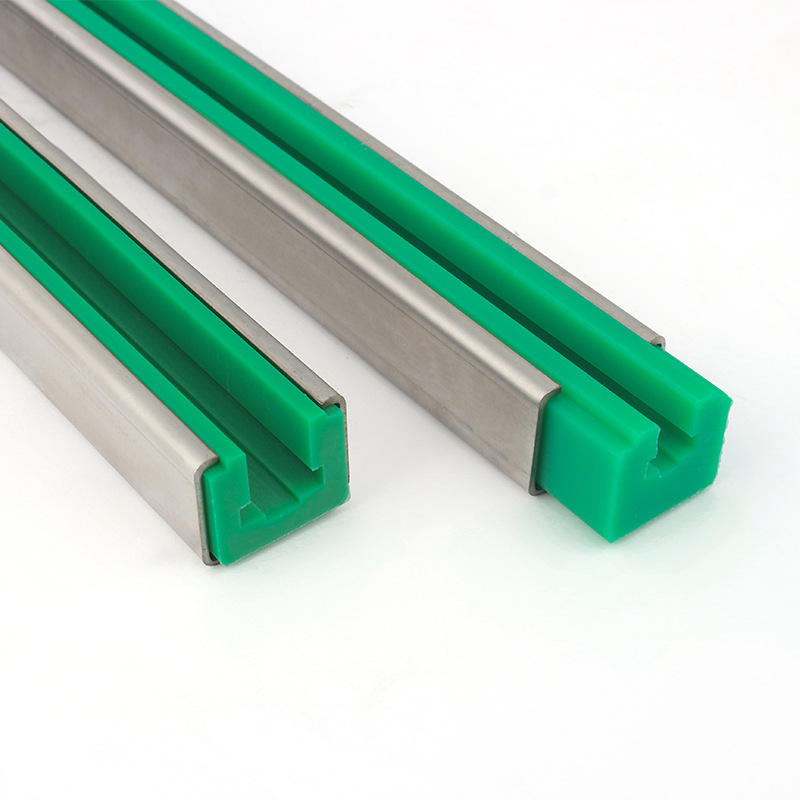
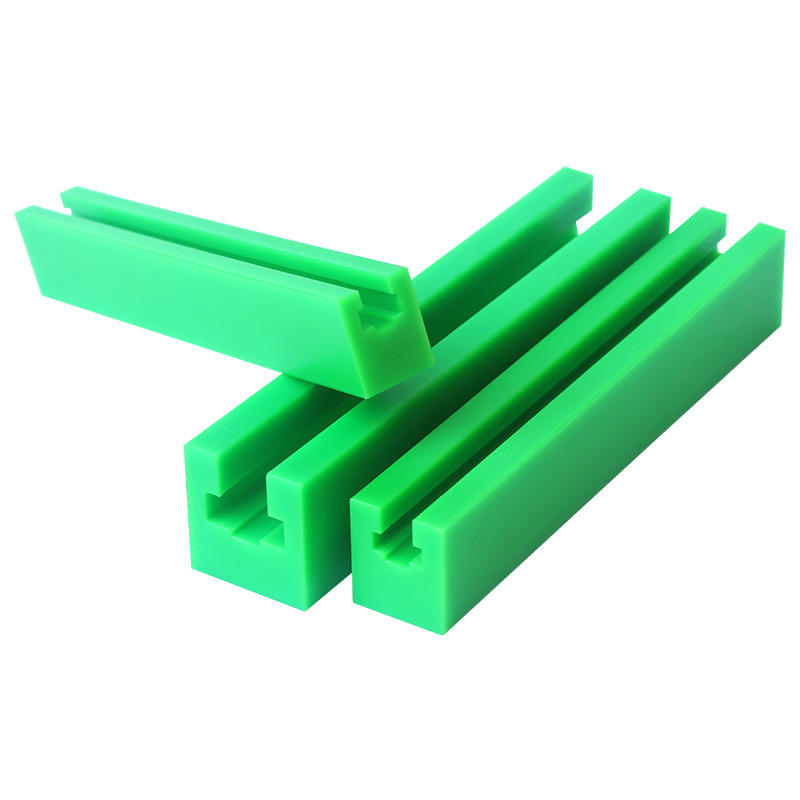
In the fast-paced world of modern industry—where manufacturing lines hum 24/7, logistics hubs move millions of packages yearly, and e-commerce fulfillment centers race to meet next-day delivery demands—conveyor systems stand as the backbone of efficient operations. These systems streamline the movement of products, raw materials, and components, eliminating manual labor bottlenecks and ensuring consistent workflow. Yet, within every conveyor system, there is an often-overlooked component that plays a make-or-break role in its success: the guide rail for conveyor. While conveyors themselves get much of the attention, the guide rail for conveyor is the quiet workhorse that keeps everything on track—literally. It prevents products from slipping off the conveyor belt, maintains precise alignment during transport, and shields both the product and the conveyor itself from unnecessary wear and damage. Without a reliable guide rail for conveyor, even the most advanced conveyor system can falter, leading to costly product loss, unplanned downtime, and frustrated teams.
In recent years, however, the guide rail for conveyor has undergone a remarkable transformation. No longer just a simple metal bar, innovations in material, design, and smart technology have elevated the guide rail for conveyor from a basic accessory to a strategic tool for operational excellence. These innovations address longstanding industry challenges—like rigid rails that can’t adapt to changing product sizes, metal rails that corrode in harsh environments, or manual monitoring that misses early signs of failure. By reimagining what a guide rail for conveyor can do, manufacturers and facility managers are now unlocking new levels of efficiency, cost savings, and reliability. In this blog, we’ll dive deep into these innovations, explore how they solve real-world problems, and show exactly how upgrading your guide rail for conveyor can boost every aspect of your operations—from throughput to bottom-line profits. Whether you’re running a small manufacturing shop or a large-scale distribution center, understanding these advancements will help you make smarter decisions about your conveyor system and stay ahead in a competitive market.
Understanding the Core Function of Guide Rail for Conveyor: Beyond Basic Alignment
To fully appreciate the impact of innovations in guide rail for conveyor, it’s first essential to unpack its core functions—functions that extend far beyond simply keeping products “in line.” At its most fundamental level, a guide rail for conveyor acts as a stabilizing force: it holds products in a consistent path as they move along the conveyor, preventing shifts that could lead to jams or spills. For example, in a beverage bottling plant, a well-designed guide rail for conveyor ensures glass bottles stay upright and spaced evenly, avoiding collisions that would crack or break the containers. But the role of guide rail for conveyor goes deeper: it also reduces friction between the product and the conveyor’s edges. Without this buffer, products (especially those with irregular shapes or soft surfaces) can scrape against the conveyor frame, causing damage to both the product and the equipment over time. A guide rail for conveyor creates a smooth, low-resistance barrier that protects both, extending the lifespan of the conveyor and reducing the need for costly repairs.
Equally critical is the guide rail for conveyor’s role in protecting conveyor components themselves. Conveyor belts, rollers, and motors are expensive to replace, and misaligned products can put extra strain on these parts—for instance, a box pushed to one side by uneven transport might rub against a roller, wearing down its surface and forcing the motor to work harder. Over time, this leads to more frequent maintenance, longer downtime, and higher operational costs. The consequences of using an outdated or low-quality guide rail for conveyor are stark, as seen in the experience of a mid-sized logistics facility in the Midwest. For years, the facility relied on a decades-old metal guide rail for conveyor that had become bent and worn. As a result, packages often shifted off course, getting stuck between the rail and the conveyor belt. These jams required workers to stop the line, manually clear the blockage, and realign the packages—leading to an average of 15% more order delays each month. The facility also saw a 10% increase in damaged packages, as items were crushed or torn during these incidents. This example highlights a key truth: a subpar guide rail for conveyor isn’t just a minor inconvenience—it’s a bottleneck that undermines the entire conveyor system’s performance.
Material Innovations in Guide Rail for Conveyor: Durability Meets Versatility
One of the most impactful areas of innovation in guide rail for conveyor lies in the materials used to manufacture it. For decades, the industry relied primarily on metal—such as steel or aluminum—for guide rail for conveyor. While metal offers strength, it comes with significant drawbacks: it’s heavy, prone to corrosion (especially in wet or chemical-rich environments), and requires regular lubrication to reduce friction. These limitations often led to higher maintenance costs and shorter lifespans for the guide rail for conveyor. Today, however, high-performance polymers—such as ultra-high-molecular-weight polyethylene (UHMWPE), nylon, and acetal—have emerged as game-changers for guide rail for conveyor. These materials address nearly all the pain points of traditional metal rails while adding new benefits that enhance operational efficiency.
Polymer guide rail for conveyor, for instance, is inherently corrosion-resistant. Unlike metal, it won’t rust when exposed to moisture, cleaning chemicals, or harsh industrial fluids—making it ideal for industries like food processing, pharmaceuticals, and automotive manufacturing, where hygiene or chemical exposure is common. It’s also significantly lighter than metal: a polymer guide rail for conveyor can weigh up to 70% less than a steel rail of the same size. This light weight simplifies installation and adjustment, reducing the labor required to set up or modify the conveyor system. Another key advantage is quieter operation: metal guide rail for conveyor often produces loud scraping or clanging sounds as products move along it, contributing to noisy work environments. Polymer rails, by contrast, absorb vibration and create minimal friction, cutting down on operational noise—a benefit that improves worker comfort and compliance with occupational safety standards. Additionally, most polymer guide rail for conveyor has self-lubricating properties, eliminating the need for regular oiling or greasing. This not only saves time on maintenance but also reduces the risk of product contamination (a critical concern in food and pharmaceutical settings).
A compelling case study comes from a large food processing plant in the Southeast that specializes in frozen vegetables. The plant previously used steel guide rail for conveyor, which required weekly cleaning to remove food particles and prevent bacterial growth— a time-consuming process that often forced the line to slow down. Worse, the steel rails would corrode over time due to the constant exposure to water and cleaning solutions, leading to frequent replacements. When the plant switched to a food-grade UHMWPE guide rail for conveyor, the results were transformative. The polymer rail’s smooth surface prevented food from sticking, cutting cleaning time by 30% and allowing the line to run at full speed for longer. The corrosion-resistant material also eliminated the need for frequent rail replacements, reducing maintenance costs by 22% in the first year. Most importantly, the food-grade certification of the polymer guide rail for conveyor ensured the plant met strict FDA hygiene standards, reducing the risk of costly recalls or regulatory fines. This example demonstrates how material innovation in guide rail for conveyor isn’t just about improving durability—it’s about solving industry-specific challenges that directly impact productivity and compliance.
Design Innovations in Guide Rail for Conveyor: Adaptability for Diverse Needs
While material innovations have enhanced the performance of guide rail for conveyor, design innovations have focused on making it more adaptable to the diverse and ever-changing needs of modern facilities. Today’s operations handle a wide range of product types—from small electronics components to large, heavy automotive parts—and a one-size-fits-all guide rail for conveyor is no longer sufficient. Innovations in design have addressed this by creating guide rail for conveyor that is modular, flexible, and tailored to specific use cases, allowing facilities to customize their conveyor systems without costly overhauls.
Modular guide rail for conveyor stands out as one of the most practical design advancements. Unlike traditional guide rail for conveyor, which is often a single, fixed length, modular rails are made up of interlocking sections that can be easily connected or disconnected. This allows facility managers to adjust the length, height, or width of the guide rail for conveyor in minutes—no welding or specialized tools required. For example, if a facility adds a new product line with larger boxes, it can simply add extra sections to the modular guide rail for conveyor to accommodate the bigger size. Similarly, if a product is phased out, the sections can be removed or repurposed for other parts of the conveyor system. This flexibility not only saves time but also reduces waste, as old rail sections don’t need to be discarded when needs change. Modular guide rail for conveyor also simplifies installation: instead of waiting for custom-cut metal rails to be delivered, facilities can keep a stock of standard modular sections and assemble them on-site as needed.
Another key design innovation is curved and flexible guide rail for conveyor. Conveyor systems rarely run in straight lines—they often need to navigate around corners, pillars, or other equipment in a facility. Traditional straight guide rail for conveyor struggles with these bends, as products can get caught on the sharp edges, leading to jams or damage. Curved guide rail for conveyor is engineered with smooth, gradual bends that match the conveyor’s path, allowing products to glide around corners without interruption. Flexible guide rail for conveyor takes this a step further: made from bendable polymers, it can be shaped to fit almost any curve or angle, making it ideal for tight spaces or custom conveyor layouts. For example, a furniture manufacturing plant using flexible guide rail for conveyor was able to route its conveyor around large machinery, reducing the need for additional floor space and eliminating product jams that had previously slowed down production.
Low-profile guide rail for conveyor is another design innovation tailored to specific needs—namely, small or lightweight products like cosmetics, electronics components, or medical devices. Traditional guide rail for conveyor is often too tall or bulky for these items, creating unnecessary friction or even blocking sensors that track product movement. Low-profile guide rail for conveyor sits close to the conveyor belt, providing just enough stability to keep small products aligned without interfering with other components. This design is particularly valuable in e-commerce fulfillment centers, where conveyors handle thousands of small, varied items daily. One such center in the Northeast implemented low-profile modular guide rail for conveyor and saw immediate results: it was able to handle over 50 different product types (from small jewelry boxes to thin paperback books) on the same conveyor line, increasing throughput by 20% and reducing product misplacement by 17%. These design innovations prove that a well-engineered guide rail for conveyor isn’t just a support component—it’s a tool that enables facilities to adapt to changing demands and maximize the value of their conveyor systems.
Smart Innovations in Guide Rail for Conveyor: Data-Driven Operational Excellence
In an era of Industry 4.0, where data and connectivity drive efficiency, guide rail for conveyor has joined the ranks of “smart” industrial components. Smart innovations in guide rail for conveyor integrate sensors, IoT (Internet of Things) technology, and data analytics to transform a passive component into an active, data-generating tool. These advancements allow facilities to move beyond reactive maintenance and manual monitoring, instead leveraging real-time insights to optimize workflow, prevent downtime, and make more informed operational decisions. For modern facilities, a smart guide rail for conveyor isn’t just a luxury—it’s a necessity for staying competitive in a data-driven world.
At the heart of smart guide rail for conveyor is the integration of small, durable sensors. These sensors are embedded directly into the guide rail for conveyor and can track a range of critical metrics: product flow rate, the position of items on the conveyor, friction levels between the product and the rail, and even signs of wear on the rail itself. For example, a sensor in the guide rail for conveyor can detect if a product is starting to shift off course—sending an alert to a control system before the product jams or falls off the line. This real-time monitoring eliminates the need for workers to constantly patrol the conveyor, freeing them up for more valuable tasks. Sensors can also detect blockages: if a product gets stuck between the guide rail for conveyor and the belt, the sensor will pick up the sudden increase in pressure or lack of movement and trigger an immediate alert, allowing maintenance teams to resolve the issue quickly. Perhaps most valuable is the sensor’s ability to monitor the guide rail for conveyor’s own condition: it can track wear patterns, detect cracks or warping, and send predictive maintenance alerts when the rail is approaching the end of its lifespan. This prevents unexpected failures, as teams can replace the guide rail for conveyor during scheduled downtime instead of dealing with a costly emergency shutdown.
Taking this a step further is IoT-connected guide rail for conveyor. These systems sync the data collected by sensors with a central warehouse management system (WMS), enterprise resource planning (ERP) software, or even cloud-based analytics platforms. This connectivity allows for end-to-end visibility of the conveyor system and the entire supply chain. For example, if the sensor in the guide rail for conveyor detects a slowdown in product flow, the WMS can automatically adjust the speed of upstream or downstream conveyors to prevent bottlenecks. Or, if the guide rail for conveyor’s sensors show that a particular section is experiencing higher-than-normal wear, the system can flag this to the maintenance team and even generate a work order for replacement. IoT-connected guide rail for conveyor also improves inventory accuracy: by tracking the movement of products as they pass along the rail, the system can update inventory records in real time, reducing the risk of stockouts or overstocking.
The benefits of smart guide rail for conveyor are quantified in the experience of a large automotive parts manufacturer in the Midwest. The manufacturer had struggled with unplanned downtime due to guide rail for conveyor failures—on average, the line would shut down 3-4 times per month, each time costing the company thousands of dollars in lost production. After upgrading to a smart guide rail for conveyor with embedded sensors and IoT connectivity, the manufacturer saw a dramatic improvement: unplanned downtime decreased by 25%, as predictive alerts allowed teams to replace worn rails before they failed. Maintenance costs also dropped by 18%, as the system eliminated the need for unnecessary inspections and repairs. Additionally, the real-time product flow data from the guide rail for conveyor helped the manufacturer optimize its production schedule, increasing overall throughput by 12%. This case study illustrates how smart innovations in guide rail for conveyor turn data into action—driving operational excellence that directly impacts the bottom line.
How Innovations in Guide Rail for Conveyor Directly Boost Your Operations
The innovations in material, design, and smart technology for guide rail for conveyor aren’t just technical advancements—they translate to tangible, measurable improvements in your day-to-day operations. Every upgrade to your guide rail for conveyor is an investment that pays off in efficiency, cost savings, reliability, scalability, and competitive advantage. Understanding exactly how these innovations boost your operations can help you justify the investment and prioritize upgrades that align with your specific goals.
First and foremost, innovative guide rail for conveyor drives increased efficiency. By reducing friction (via polymer materials), eliminating jams (via curved or flexible designs), and preventing misalignments (via smart sensors), the guide rail for conveyor ensures products move smoothly and quickly along the conveyor line. This reduces bottlenecks—one of the biggest enemies of efficiency in any facility. For example, a modular guide rail for conveyor that adapts to different product sizes eliminates the need to stop the line to adjust or replace rails, keeping the workflow continuous. Similarly, a smart guide rail for conveyor that alerts teams to potential blockages allows for quick intervention, preventing long delays. The result is faster product transport and higher throughput: facilities using innovative guide rail for conveyor often report throughput increases of 15-20%, meaning they can process more orders, manufacture more goods, or ship more packages in the same amount of time.
Cost savings are another direct benefit of innovative guide rail for conveyor. Let’s break this down: maintenance costs drop because polymer guide rail for conveyor requires less lubrication and resists corrosion, and smart guide rail for conveyor enables predictive maintenance (so you only replace parts when needed, not on a fixed schedule). Product damage costs decrease because better-aligned, gentler transport (from curved or low-profile rails) reduces the number of broken or crushed items. Labor costs are also lower: modular rails are easier to install and adjust, so workers spend less time on setup or repairs, and smart rails eliminate the need for constant manual monitoring. A study of facilities that upgraded their guide rail for conveyor found an average of 18-25% in total cost savings related to maintenance, product loss, and labor—savings that directly improve profit margins.
Reliability is another key advantage of innovative guide rail for conveyor. Traditional guide rail for conveyor is prone to failure in harsh conditions: metal rails rust, rigid rails crack, and unmonitored rails break unexpectedly. Innovative rails, by contrast, are designed to withstand the demands of modern operations. Polymer rails hold up in wet or chemical-rich environments, modular rails resist damage from adjustments, and smart rails alert you to issues before they cause failure. This consistency means your conveyor system runs more reliably, even when handling varying product loads or operating in challenging conditions (like cold storage or high-temperature manufacturing). For example, a pharmaceutical facility using corrosion-resistant polymer guide rail for conveyor in its cold storage area reported zero rail failures in two years—compared to quarterly replacements of metal rails before the upgrade. This reliability ensures you meet production deadlines and avoid the frustration of unplanned shutdowns.
Scalability is critical for growing businesses, and innovative guide rail for conveyor makes scaling your operations easier. Modular rails allow you to add or remove sections as your product line expands or your order volume increases—no need to replace the entire conveyor system. For example, if you add a new product that’s larger than your current items, you can simply extend the modular guide rail for conveyor instead of investing in a new conveyor line. Smart rails also scale with your operations: as you add more conveyors, the IoT-connected system integrates seamlessly, providing end-to-end visibility across your entire facility. This flexibility means your guide rail for conveyor grows with your business, avoiding costly overhauls down the line.
Finally, innovative guide rail for conveyor gives you a competitive advantage. In today’s market, customers expect faster delivery times, higher quality products, and consistent service. An optimized conveyor system—powered by innovative guide rail for conveyor—helps you meet these expectations: faster throughput means quicker order fulfillment, reduced product damage means higher quality, and reliable operations mean you can keep promises to customers. For example, an e-commerce business using modular and smart guide rail for conveyor can offer next-day delivery on a wider range of products, setting it apart from competitors still struggling with slow, unreliable conveyor systems. In a crowded industry, these small advantages add up to a significant edge in winning and retaining customers.
Choosing the Right Innovative Guide Rail for Conveyor: Key Considerations
With so many innovative options for guide rail for conveyor available, choosing the right one for your facility can feel overwhelming. The best guide rail for conveyor isn’t the most expensive or the most technologically advanced—it’s the one that aligns with your specific product characteristics, operational environment, future growth plans, and existing equipment. Taking the time to evaluate these factors will ensure you invest in a guide rail for conveyor that delivers long-term value and solves your unique pain points.
First, start by assessing your product characteristics. The size, weight, shape, and fragility of the items you transport will heavily influence the type of guide rail for conveyor you need. For example, if you handle fragile products like glassware or electronics, a low-profile polymer guide rail for conveyor is ideal—it provides gentle stability without putting pressure on delicate surfaces. If you transport heavy items like automotive parts or large boxes, a sturdy modular guide rail for conveyor (either polymer or reinforced metal) will offer the strength needed to keep products aligned. Irregularly shaped products, such as oddly sized packages or bulk materials, may benefit from flexible guide rail for conveyor that can adapt to their unique contours. It’s also important to consider the speed at which your conveyor runs: faster-moving conveyors require guide rail for conveyor with lower friction (like UHMWPE) to prevent products from shifting due to momentum. Taking a detailed inventory of your products will help you narrow down your options and avoid investing in a guide rail for conveyor that’s ill-suited to your needs.
Next, evaluate your operational environment. The conditions in which your conveyor system operates—temperature, humidity, presence of chemicals, and hygiene requirements—will impact the material and design of your guide rail for conveyor. For facilities with harsh environments, such as cold storage (where temperatures can drop below freezing) or chemical plants (where exposure to corrosive fluids is common), a polymer guide rail for conveyor is a better choice than metal, as it resists temperature extremes and corrosion. Food processing or pharmaceutical facilities, which have strict hygiene standards, need guide rail for conveyor that is easy to clean and meets industry-specific certifications (like FDA approval for food contact). In these cases, a smooth, non-porous polymer guide rail for conveyor is ideal, as it doesn’t trap food particles or harbor bacteria—unlike metal rails, which can have small crevices where contaminants accumulate. For facilities with high temperatures, such as foundries or plastic manufacturing plants, look for heat-resistant polymer or reinforced ceramic guide rail for conveyor that can withstand extreme heat without warping or melting. By matching the guide rail for conveyor to your environment, you ensure it performs reliably and complies with regulatory standards.
Future growth plans are another critical factor to consider. Your guide rail for conveyor should not just meet your current needs but also adapt to how your business might evolve. If you anticipate adding new product lines, increasing order volume, or expanding your facility, a modular guide rail for conveyor is a smart choice—it allows you to easily extend or reconfigure the rail system as your operations grow. For example, if you plan to double your throughput in the next two years, ensure the guide rail for conveyor you choose can handle higher product flow rates without compromising stability. Smart guide rail for conveyor with IoT connectivity also supports future growth, as it can integrate with new software or additional conveyor lines as you expand. Avoid investing in a fixed, non-adjustable guide rail for conveyor that will need to be completely replaced when your business scales—this will only lead to unnecessary costs and downtime later.
Compatibility with your existing conveyor system is equally important. Before purchasing a new guide rail for conveyor, check that it will work seamlessly with your current conveyor belt, rollers, and control systems. For instance, if your conveyor uses a specific type of mounting bracket, choose a guide rail for conveyor that fits those brackets to avoid the need for costly modifications. Many manufacturers offer adapter kits or customizable mounting options for their guide rail for conveyor, making integration easier. If you’re unsure about compatibility, share details about your existing system with the guide rail vendor—they should be able to recommend a solution that fits without requiring a full conveyor overhaul. Investing in a compatible guide rail for conveyor saves time on installation and ensures your entire system works together efficiently.
Finally, don’t overlook vendor support. The right guide rail for conveyor is only as good as the support you receive from the manufacturer or supplier. Look for vendors that offer comprehensive services, including installation assistance, maintenance training, and technical support. For example, if you’re installing a smart guide rail for conveyor with IoT connectivity, you’ll want a vendor that can help set up the sensor integration with your WMS and provide training for your team to use the data effectively. Vendors that offer warranties on their guide rail for conveyor also provide added peace of mind—look for warranties that cover material defects or premature wear, as this indicates the vendor stands behind their product. Additionally, consider the vendor’s availability: do they offer 24/7 support for emergency issues? Can they quickly ship replacement parts if your guide rail for conveyor needs repairs? Choosing a vendor with strong support ensures your guide rail for conveyor continues to perform well long after installation.
Embracing Innovation in Guide Rail for Conveyor to Future-Proof Your Operations
For too long, guide rail for conveyor has been dismissed as a “background” component of conveyor systems—easily overlooked, yet essential to keeping operations running smoothly. But as we’ve explored in this blog, the guide rail for conveyor has evolved far beyond its basic, traditional form. Today’s innovations in material, design, and smart technology have transformed it into a strategic asset—one that drives efficiency, cuts costs, enhances reliability, and supports growth. From corrosion-resistant polymer rails that thrive in harsh environments to modular designs that adapt to changing product needs, and smart rails that turn data into actionable insights, the modern guide rail for conveyor is a key driver of operational excellence.
The impact of these innovations is clear: facilities that upgrade their guide rail for conveyor see measurable improvements in throughput (often 15-20% higher), significant cost savings (18-25% lower maintenance and product damage costs), and far less unplanned downtime (up to 25% reduction with smart rails). These aren’t just incremental gains—they’re transformative changes that directly boost your bottom line and help you stand out in a competitive market. Whether you’re running a food processing plant, an e-commerce fulfillment center, or an automotive manufacturing facility, the right guide rail for conveyor can solve your unique pain points—whether that’s reducing cleaning time, eliminating product jams, or ensuring compliance with strict hygiene standards.
But embracing innovation in guide rail for conveyor isn’t just about upgrading a single component—it’s about future-proofing your operations. In a world where customer demands for speed and quality are constantly rising, and Industry 4.0 technologies are becoming the norm, a outdated guide rail for conveyor will hold you back. By investing in a guide rail for conveyor that aligns with your product needs, operational environment, and growth plans, you’re ensuring your conveyor system can adapt to whatever challenges or opportunities come next. You’re not just buying a rail—you’re investing in the long-term efficiency and resilience of your business.
So, where do you start? Take a critical look at your current guide rail for conveyor: Is it causing frequent jams or product damage? Are maintenance costs eating into your profits? Can it adapt if you add a new product line? If the answer to any of these questions is “yes,” it’s time to explore innovative solutions. Reach out to trusted vendors, share your challenges, and ask for demonstrations or case studies that show how their guide rail for conveyor has solved similar problems for other facilities. Remember, the best guide rail for conveyor isn’t the one with the most bells and whistles—it’s the one that fits your unique operations and helps you achieve your goals.
In the end, the guide rail for conveyor may still be a quiet component of your conveyor system—but with the right innovations, it can be the quiet force that drives your success. Don’t let outdated technology hold you back. Embrace the innovations in guide rail for conveyor, and unlock the full potential of your operations.
How can we help you?
You can contact your account manager directly or submit a business inquiry online.