
- September 23, 2025
- Posted by: feinuojixie
- Category: Chain Guides News

Ultra-High Molecular Weight (UHMW) wear strips are of utmost importance in a wide range of industrial applications. These strips, made from UHMW polyethylene, possess remarkable properties that make them indispensable in various machinery and equipment. They are highly resistant to wear, which significantly extends the lifespan of the components they are installed on. Their low coefficient of friction allows for smooth movement, reducing energy consumption and minimizing the need for frequent lubrication.
In industries such as manufacturing, packaging, and material handling, UHMW wear strips are used in conveyor systems, guiding rails, and sliding surfaces. They protect the underlying structures from abrasion and mechanical stress, ensuring the efficient operation of the machinery. For example, in a busy manufacturing plant, the smooth movement enabled by UHMW wear strips on conveyor belts can prevent product jams and improve overall production speed.
However, as industries continue to evolve and demand higher performance from their equipment, there is a growing need to enhance the design of UHMW wear strips. This blog post will explore the latest design enhancements that are revolutionizing the use of UHMW wear strips and how they can benefit different industrial sectors.
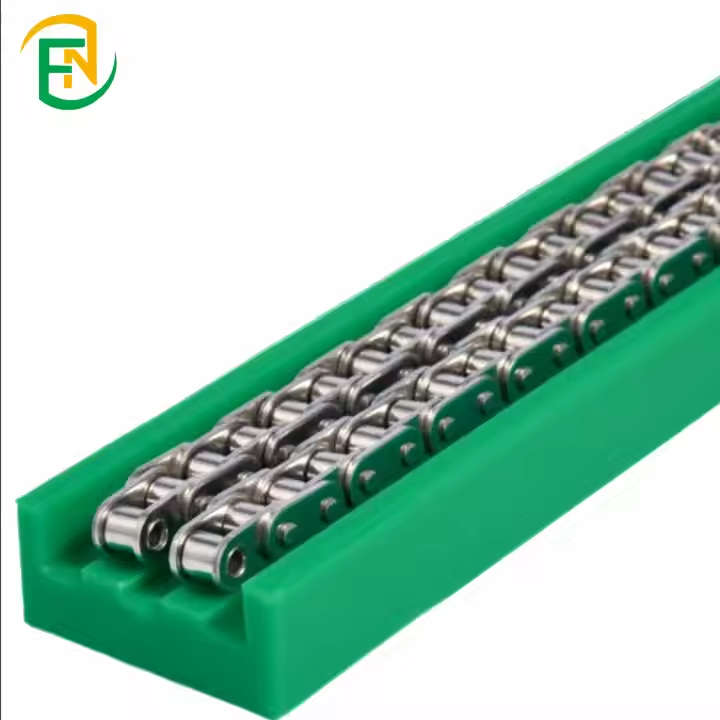
Understanding UHMW Wear Strip Basics
What is UHMW?
UHMW stands for Ultra-High Molecular Weight polyethylene. It is a type of thermoplastic polymer with an extremely high molecular weight, typically in the range of 3.5 to 9.2 million. This high molecular weight contributes to its extraordinary properties. UHMW has an incredibly low coefficient of friction, making it nearly as slippery as ice. It is also highly resistant to abrasion, chemicals, and impact.
These characteristics make UHMW an ideal material for wear strips. Its low friction allows components to move smoothly, reducing the energy required for operation. The high abrasion resistance ensures that the wear strip can withstand the constant rubbing and scraping it encounters in industrial applications, significantly extending its lifespan compared to other materials. For example, in a food processing conveyor system, the UHMW wear strip’s resistance to chemicals from food residues and its low friction help maintain the efficiency of the conveyor while also being easy to clean, meeting the strict hygiene standards of the industry.
Function of UHMW Wear Strip
UHMW wear strips play a crucial role in various mechanical systems. One of their primary functions is to reduce friction between moving parts. In conveyor belts, for instance, the UHMW wear strip acts as a smooth interface between the belt and the supporting structure. This reduces the frictional force, which in turn decreases the energy consumption of the conveyor system. With less friction, there is also less heat generated, preventing premature wear and tear of the components due to overheating.
They also serve to minimize wear on the equipment. In machinery with sliding or reciprocating parts, the UHMW wear strip absorbs the brunt of the abrasion, protecting the more expensive and harder – to – replace main components. For example, in a printing press, the UHMW wear strips on the moving plates prevent the metal surfaces from directly rubbing against each other, thus reducing the need for frequent plate replacements. This not only saves costs but also increases the overall uptime of the printing press, improving productivity. Additionally, in some applications, UHMW wear strips can also help with noise reduction, as they dampen the vibrations and impacts between moving parts, leading to a quieter operation.
Key Design Enhancements
Material Optimization
One of the significant advancements in UHMW wear strip design is material optimization. Manufacturers are now experimenting with various additives to enhance the already impressive properties of UHMW. For example, adding carbon fibers to the UHMW material can significantly increase its strength and wear resistance. Carbon fibers have a high strength – to – weight ratio, and when incorporated into UHMW, they create a composite material that can withstand even more demanding applications. In heavy – duty mining equipment, where wear strips are constantly exposed to abrasive materials like rocks and ores, these carbon – fiber – reinforced UHMW wear strips can last much longer than traditional ones.
Another additive that is being used is molybdenum disulfide (MoS₂). MoS₂ is a solid lubricant with excellent anti – friction properties. When added to UHMW, it further reduces the coefficient of friction, making the wear strip even more slippery. This is especially beneficial in applications where smooth movement is crucial, such as in precision machinery. In a high – speed printing press, the reduced friction provided by MoS₂ – enhanced UHMW wear strips can prevent jams and ensure the smooth operation of the moving parts, resulting in higher – quality prints and increased productivity.
Geometric Design Innovations
Geometric design plays a vital role in the performance of UHMW wear strips. New and innovative geometric shapes are being developed to improve their functionality. For instance, some wear strips now feature a trapezoidal cross – section instead of the traditional rectangular one. The trapezoidal shape allows for better load distribution, as it can direct the forces more effectively along the length of the wear strip. In conveyor systems that carry heavy loads, this improved load – distribution property can prevent premature wear and deformation of the wear strip.
Surface textures are also an area of innovation. Micro – grooved or dimpled surfaces on UHMW wear strips can enhance their performance in several ways. Grooves can act as channels to trap debris and reduce the risk of abrasive particles causing damage to the strip and the mating surface. Dimples, on the other hand, can increase the contact area between the wear strip and the moving part in a controlled manner, improving the overall stability of the system. In a linear guide system, a dimpled UHMW wear strip can provide better support to the moving carriage, reducing vibrations and ensuring more precise movement.
Attachment and Installation Improvements
Efficient attachment and installation methods are essential for the proper functioning of UHMW wear strips. New designs are focusing on making the installation process quicker and more secure. One such improvement is the use of snap – fit or self – adhesive attachment mechanisms. Snap – fit designs allow for easy and tool – free installation. They are designed with interlocking features that can be quickly snapped into place on the equipment. This is a great advantage in situations where time is of the essence, such as in a production line that needs to be up and running as soon as possible after maintenance.
Self – adhesive UHMW wear strips are also becoming increasingly popular. These strips come pre – coated with a high – strength adhesive that can bond firmly to the surface of the equipment. The adhesive is designed to withstand the mechanical stresses and environmental conditions that the wear strip will be exposed to. In a food processing plant, self – adhesive UHMW wear strips can be easily installed on conveyor components without the need for complex mechanical fasteners, which can be difficult to clean and may pose a risk of contamination. This not only simplifies the installation process but also helps to maintain the hygiene standards of the facility. Additionally, some wear strips now come with pre – drilled holes or mounting brackets that are designed to be compatible with standard industrial fasteners, making the installation process more straightforward and reducing the chances of installation errors.
Benefits Brought by Design Enhancements
Enhanced Durability
The design enhancements in UHMW wear strips have led to a significant increase in their durability. For example, the material optimization by adding carbon fibers makes the wear strip more resistant to the abrasive forces it encounters in industrial operations. In a construction site, where conveyor systems are used to transport heavy and rough – textured building materials like gravel and sand, the carbon – fiber – reinforced UHMW wear strips can endure the constant scraping and rubbing much better than traditional ones. This means that the wear strips do not need to be replaced as frequently. Reducing the replacement frequency not only saves the time and labor required for maintenance but also ensures the continuous operation of the equipment. In a manufacturing plant that operates 24/7, any unplanned downtime due to wear strip replacement can lead to significant losses in production output. With the enhanced durability of UHMW wear strips, such disruptions can be minimized.
Improved Operational Efficiency
The new geometric designs and material enhancements contribute to improved operational efficiency. The trapezoidal cross – section of some wear strips, as mentioned before, allows for better load distribution. This results in smoother movement of the components that the wear strip is supporting. In a large – scale packaging facility, where conveyor belts move products at high speeds, the smooth operation enabled by the improved wear strip design can prevent product jams and ensure a continuous flow of goods.
Moreover, the addition of molybdenum disulfide to the UHMW material further reduces the coefficient of friction. This reduction in friction means that less energy is required to move the components. In a factory with numerous conveyor systems and moving parts, the cumulative energy savings from using these improved wear strips can be substantial. Lower energy consumption also means a reduced environmental impact, as less electricity needs to be generated, which may involve burning fossil fuels. Additionally, the improved wear strips can contribute to better precision in machinery operation. In a precision – manufacturing process, such as making micro – electronic components, the enhanced stability provided by the dimpled or grooved UHMW wear strips can ensure that the production equipment operates with higher accuracy, reducing the number of defective products.
Cost – Savings in the Long Run
Although the initial investment in the enhanced UHMW wear strips may be higher compared to the traditional ones, they offer significant cost – savings in the long run. The reduced replacement frequency, as a result of enhanced durability, means lower maintenance costs over time. Consider a large – scale mining operation where wear strips are used in various types of equipment. The cost of purchasing and installing new wear strips, along with the labor cost for the replacement, can be quite high. By using the more durable and improved UHMW wear strips, the mining company can save a substantial amount of money on maintenance over the years.
The improved operational efficiency also leads to cost – savings. With lower energy consumption, companies can reduce their electricity bills. In a large industrial complex, the energy savings from using the new wear strips can amount to thousands of dollars annually. Additionally, the prevention of equipment failures and production disruptions due to the improved performance of the wear strips can save the company from incurring losses in production output and potential damage to products. For example, in a food processing plant, a production disruption due to a malfunctioning conveyor (caused by a worn – out wear strip) can lead to spoiled food products and lost revenue. By investing in the enhanced UHMW wear strips, such costly incidents can be avoided, resulting in long – term cost – savings for the company.

Real – World Applications and Case Studies
Case Study 1: Manufacturing Industry
After implementing the newly designed UHMW wear strips with carbon – fiber reinforcement and a trapezoidal cross – section, the situation improved dramatically. The carbon – fiber – reinforced material enhanced the wear resistance of the strips, allowing them to withstand the high – speed movement and heavy loads of the automotive parts being transported on the conveyors. The trapezoidal cross – section improved load distribution, resulting in smoother operation.
As a result, the replacement frequency of the wear strips decreased from once every two months to once every six months. The production line’s uptime increased by 15%, and the energy consumption of the conveyor systems reduced by 10% due to the smoother movement and lower friction. This translated into significant cost – savings for the manufacturing plant, both in terms of maintenance and energy costs.
Case Study 2: Mining Industry
In a large open – pit mining operation, the dump trucks and excavators were experiencing severe wear on their sliding and guiding components. The harsh mining environment, with abrasive rocks, dust, and high – impact forces, was taking a toll on the equipment. The traditional UHMW wear strips were unable to cope with these extreme conditions, leading to frequent breakdowns and costly repairs.
The mining company decided to try the new UHMW wear strips with a micro – grooved surface and improved attachment mechanisms. The micro – grooves on the wear strips effectively trapped the abrasive dust and small rock particles, preventing them from causing further damage to the strip and the equipment. The improved attachment mechanisms ensured that the wear strips remained firmly in place even under the high – impact vibrations experienced during mining operations.
Since the installation of these new wear strips, the equipment’s reliability has increased significantly. The number of unplanned maintenance stops due to wear – related issues has decreased by 40%. The lifespan of the wear – affected components has doubled, resulting in substantial cost – savings for the mining company. Additionally, the improved performance of the equipment has increased the overall productivity of the mining operation, as the trucks and excavators can operate more efficiently and with fewer interruptions.
Future Trends in UHMW Wear Strip Design
Predictions on Material Developments
In the future, we can expect even more exciting developments in UHMW wear strip materials. Scientists and material engineers are constantly researching and experimenting, and it is highly likely that new materials with even more superior properties will emerge. For example, there may be the development of UHMW – based nanocomposites. Nanoparticles, such as nanoparticles of ceramics or metals, could be incorporated into the UHMW matrix. These nanoparticles, with their unique size – dependent properties, could potentially enhance the wear resistance, strength, and even the self – healing ability of the wear strips. In applications where the wear strip is exposed to extremely harsh conditions, like in the aerospace industry for parts that experience high – velocity impacts and intense heat during re – entry into the Earth’s atmosphere, these nanocomposite UHMW wear strips could offer a significant advantage.
Another possible development is the creation of bio – based UHMW materials. With the increasing focus on sustainability, researchers may find ways to produce UHMW – like polymers from renewable resources such as plant – based materials. These bio – based UHMW wear strips would not only have similar performance characteristics to the traditional ones but also be more environmentally friendly. They could reduce the reliance on fossil – fuel – based polymers, which are non – renewable, and also have a lower carbon footprint during production. This would be particularly beneficial in industries that are under pressure to reduce their environmental impact, such as the food and beverage industry, where the use of more sustainable components in machinery can contribute to a greener overall operation.
Potential Technological Innovations
Technology is advancing at a rapid pace, and several potential technological innovations could revolutionize UHMW wear strip design. One such innovation could be the integration of smart sensor technology into wear strips. These sensors could be used to monitor the wear and tear of the strip in real – time. For example, they could detect the thickness of the wear strip as it gradually decreases over time due to abrasion. This data could then be transmitted wirelessly to a central monitoring system. In a large industrial facility with numerous pieces of equipment using UHMW wear strips, this real – time monitoring would allow maintenance teams to plan ahead for wear strip replacements. They could schedule maintenance during planned downtime, rather than having to deal with unexpected failures that could disrupt production.
3D printing technology also holds great potential for UHMW wear strip design. With 3D printing, it would be possible to create custom – designed wear strips with highly complex geometries that are tailored to the specific needs of a particular application. This could lead to even more optimized performance. For instance, in a unique conveyor system with irregular – shaped components, a 3D – printed UHMW wear strip could be designed to perfectly conform to the surfaces in contact, providing maximum protection and minimizing friction. Additionally, 3D printing could enable on – demand production of wear strips. Instead of maintaining large inventories of standard – sized wear strips, companies could simply print the required wear strips when they are needed, reducing storage costs and the risk of having obsolete inventory.

Conclusion
In conclusion, the design enhancements in UHMW wear strips have had a profound impact on various industrial applications. These improvements, from material optimization to geometric design innovations and attachment method improvements, have significantly enhanced the durability, operational efficiency, and cost – effectiveness of UHMW wear strips.
The real – world case studies in the manufacturing and mining industries clearly demonstrate the tangible benefits that these enhanced wear strips can bring to businesses. They not only improve the performance of equipment but also contribute to cost – savings and increased productivity.
Looking ahead, the future trends in UHMW wear strip design, such as the development of new materials and the integration of advanced technologies, hold great potential. The emergence of UHMW – based nanocomposites and bio – based materials could further revolutionize the industry, offering even better performance and more sustainable solutions. The integration of smart sensors and the use of 3D printing technology could also open up new possibilities for customized and more efficient wear strip designs.
It is crucial that industries continue to pay attention to these developments and invest in the adoption of the latest UHMW wear strip technologies. By doing so, they can stay competitive in an ever – evolving industrial landscape, improve the reliability and efficiency of their operations, and contribute to a more sustainable future. As research and development in this field continue to progress, we can expect to see even more remarkable advancements in UHMW wear strip design, further enhancing their role in modern industrial applications.