
- September 26, 2025
- Posted by: feinuojixie
- Category: Chain Guides News
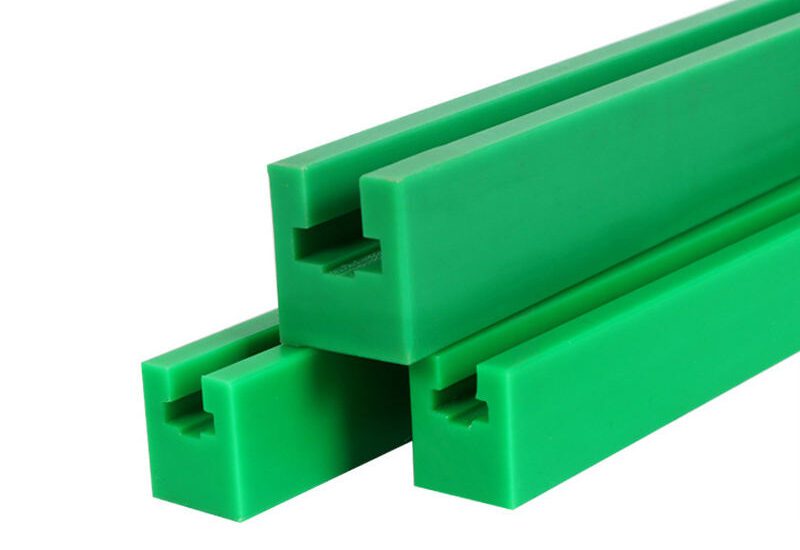
In the dynamic landscape of industrial operations, the role of UHMW guide rails has become increasingly prominent. These unassuming components are the unsung heroes that ensure the smooth and efficient movement of various machinery and equipment. As industries strive for enhanced productivity, reduced downtime, and improved overall performance, the choice of guide rail material becomes a critical decision. This article delves deep into a comparative analysis, exploring why UHMW guide rails outperform their metal and plastic counterparts. By examining key aspects such as durability, friction characteristics, chemical resistance, and cost – effectiveness, we aim to provide a comprehensive understanding of the distinct advantages that UHMW guide rails bring to the table. Whether you are in manufacturing, automotive, or any other industry relying on precision motion, this exploration will offer valuable insights to inform your material selection process.

What are UHMW Guide Rails?
Definition and Basic Composition
UHMW stands for Ultra High Molecular Weight, and UHMW guide rails are made from Ultra High Molecular Weight Polyethylene. This material is characterized by an extremely high molecular weight, typically in the range of 3.5 to 9.2 million. Such a high molecular weight endows UHMW with remarkable properties. It has an outstanding impact resistance, which allows it to withstand significant mechanical forces without breaking or deforming easily. Its low coefficient of friction is another notable feature. This means that objects moving along UHMW guide rails encounter less resistance, enabling smoother motion and reducing energy consumption. Additionally, UHMW is highly resistant to chemicals, making it suitable for use in environments where it may come into contact with various corrosive substances.
Common Applications
UHMW guide rails have found their way into a wide array of industries. In automation equipment, they play a crucial role in ensuring the precise movement of robotic arms and other moving parts. For example, in pick – and – place robots used in electronics manufacturing, UHMW guide rails enable the rapid and accurate positioning of components, contributing to high – speed and high – precision production. In logistics 输送系统,UHMW guide rails are used in conveyor belts to facilitate the smooth transportation of goods. Their low – friction property helps to reduce the energy required to move items along the conveyor, while their durability ensures a long – service life even under continuous use. In medical equipment, such as surgical tables and diagnostic imaging machines, UHMW guide rails provide smooth and quiet movement, which is essential for patient comfort and accurate medical procedures. The reasons for their widespread use lie in their combination of properties. Their ability to handle heavy loads, resist wear and tear, and operate smoothly make them an ideal choice for these diverse applications.
The Performance of Metal Guide Rails
Advantages of Metal Guide Rails
Metal guide rails, such as those made of steel or aluminum alloy, have long been staples in industrial applications. Steel guide rails are renowned for their high strength and rigidity. They can withstand extremely heavy loads, making them suitable for use in heavy – duty machinery like large – scale presses in the automotive manufacturing industry. In a car manufacturing plant, steel guide rails are used in the stamping machines that shape the metal body parts of vehicles. These guide rails ensure the precise movement of the stamping dies, which are subjected to high – impact forces during operation.
Aluminum alloy guide rails, on the other hand, offer a good balance between strength and weight. They are significantly lighter than steel, which is beneficial in applications where weight reduction is crucial, such as in aerospace equipment. In aircraft manufacturing, aluminum alloy guide rails are used in the movable parts of the aircraft’s interior components, like the sliding doors of overhead compartments. Their light weight helps to reduce the overall weight of the aircraft, thereby improving fuel efficiency. Another advantage of metal guide rails is their high – temperature resistance. Steel guide rails can operate effectively in high – temperature environments, such as in steel mills or foundries. In a steel – making furnace, the guide rails that transport the molten steel ladles need to withstand temperatures in excess of 1000°C. The high – temperature resistance of steel ensures the safe and continuous operation of these crucial transportation systems.
Disadvantages of Metal Guide Rails
Despite their advantages, metal guide rails also have several drawbacks. One of the most common issues is corrosion. Steel guide rails are prone to rust when exposed to moisture and oxygen. In marine applications, for example, the salty and humid environment can quickly corrode steel guide rails used in ship – borne equipment. This corrosion not only weakens the structural integrity of the guide rails but also affects the smooth operation of the machinery. Over time, the rust can cause the moving parts to stick or become misaligned, leading to increased maintenance requirements and potential equipment failures.
Metal guide rails generally have a relatively high coefficient of friction. This means that more energy is required to move objects along them. In conveyor systems, the high friction between metal guide rails and the conveyed items can result in increased power consumption. Additionally, the high friction can cause wear and tear on both the guide rails and the moving parts, shortening their lifespan. For instance, in a factory’s material – handling conveyor, the constant rubbing of metal – on – metal can lead to the need for frequent replacement of the guide rails and the conveyor rollers.
The weight of metal guide rails can be a significant disadvantage, especially in applications where weight – sensitive components are involved. In robotics, for example, the use of heavy metal guide rails can limit the speed and agility of the robotic arms. The additional weight requires more powerful motors and energy – intensive systems to move the robotic components, which can increase the overall cost and complexity of the robotic system.
Finally, the cost of metal guide rails, especially those made of high – quality steel or specialized alloys, can be quite high. The manufacturing process of metal guide rails often involves complex machining and heat – treatment processes, which contribute to their high price. This cost factor can be a deterrent for companies with budget constraints, especially in industries where large quantities of guide rails are required.
The Performance of Plastic Guide Rails
Advantages of Plastic Guide Rails
Plastic guide rails, particularly those made from common materials like regular polyethylene, offer several notable advantages. One of the most prominent benefits is their lightweight nature. This makes them an attractive option in applications where minimizing weight is crucial, such as in some electronic devices. In small – scale electronic equipment, like portable media players or lightweight laptops, plastic guide rails can be used in the sliding mechanisms of components such as battery compartments or expansion slots. Their low weight does not add significant mass to the overall device, contributing to its portability.
Plastic guide rails are generally more cost – effective compared to metal counterparts. The raw materials for plastic are often less expensive, and the manufacturing processes can be simpler and more energy – efficient. This cost advantage makes plastic guide rails a popular choice for budget – conscious industries. For example, in the production of low – cost consumer goods like toys or small household appliances, plastic guide rails are frequently used. In a toy car with a sliding door mechanism, plastic guide rails can provide the necessary functionality at a low cost, allowing the toy to be priced competitively in the market.
Plastic is an excellent insulator, which gives plastic guide rails good electrical insulation properties. This makes them suitable for use in electrical and electronic equipment where preventing electrical conductivity is essential. In circuit boards, plastic guide rails can be used to guide the movement of components while ensuring that there is no electrical interference between different parts of the circuit. This property also enhances the safety of the equipment, reducing the risk of short – circuits or electrical accidents.
Disadvantages of Plastic Guide Rails
Despite their advantages, plastic guide rails have several limitations. One of the main drawbacks is their relatively low strength. They are not as sturdy as metal guide rails and are more prone to deformation under heavy loads. In industrial machinery that requires the movement of large and heavy components, plastic guide rails may not be able to support the weight effectively. For instance, in a large – scale printing press where the printing plates need to be moved precisely under high – pressure conditions, plastic guide rails would quickly fail due to their inability to handle the mechanical stress.
Plastic guide rails also have poor wear resistance. The soft nature of plastic means that it can be easily scratched or abraded when in contact with moving parts. In conveyor systems that operate continuously, the constant friction between the plastic guide rails and the items being transported can lead to rapid wear and tear. Over time, this wear can cause the guide rails to become uneven, affecting the smooth movement of the conveyed items and potentially leading to jams or misalignments in the conveyor system.
Another significant disadvantage is their limited heat resistance. Most plastics start to soften or deform at relatively low temperatures. In environments where there is significant heat generation, such as near industrial furnaces or in some high – power electrical equipment, plastic guide rails cannot be used. In an automotive engine compartment, for example, the high temperatures generated during engine operation would quickly render plastic guide rails useless, as they would soften and lose their structural integrity. These limitations in strength, wear resistance, and heat resistance restrict the use of plastic guide rails to applications with relatively low – stress and low – temperature requirements.
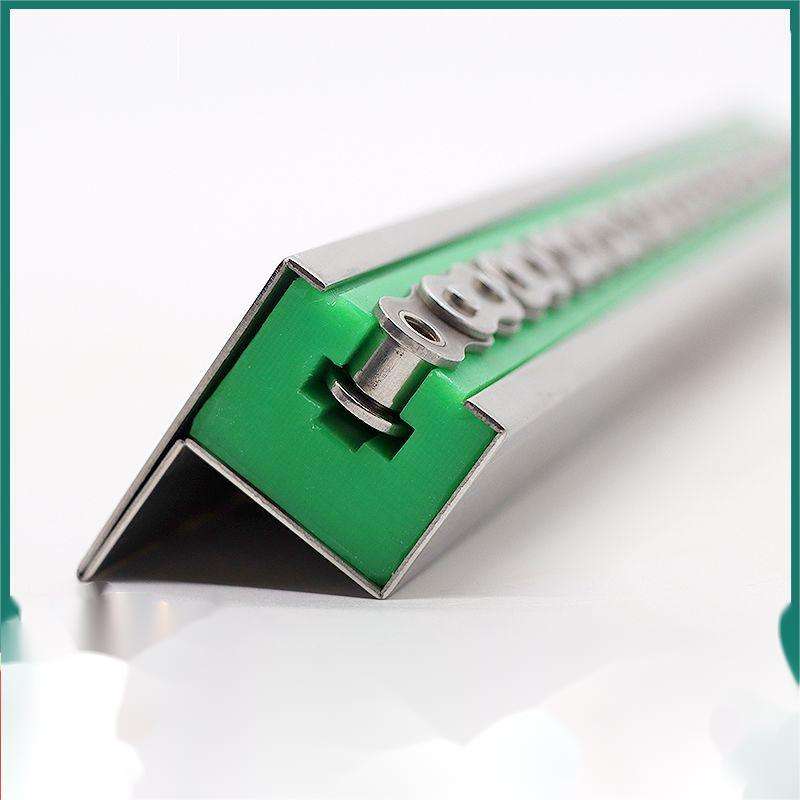
Why UHMW Guide Rails Outperform Metal and Plastic Alternatives
Exceptional Wear Resistance
UHMW guide rails stand out for their remarkable wear resistance, far surpassing that of both metal and plastic alternatives. The high molecular weight structure of UHMW polyethylene provides it with an inherent toughness. In a manufacturing plant that operates 24/7, for instance, UHMW guide rails in a conveyor system can last up to 5 – 10 times longer than metal guide rails. While metal guide rails may start to show signs of wear and tear after a few months of continuous use due to the constant friction from the conveyed items, UHMW guide rails can maintain their integrity for years. The wear rate of UHMW is often measured in microns per year, compared to metal guide rails which may experience wear in the range of millimeters per year under the same conditions. Plastic guide rails, on the other hand, are even more susceptible to wear. Their soft nature means that they can be easily scratched and abraded. In a printing press where there is high – speed movement of components, plastic guide rails would need to be replaced every few weeks, while UHMW guide rails can function smoothly for months or even years. This extended lifespan of UHMW guide rails not only reduces the frequency of maintenance but also minimizes downtime, leading to increased productivity in industrial operations.
Low Friction Coefficient
One of the most significant advantages of UHMW guide rails is their low friction coefficient. This property is crucial in reducing energy consumption and enhancing the overall efficiency of machinery. The coefficient of friction for UHMW is typically in the range of 0.05 – 0.1, which is much lower than that of metal guide rails. Steel guide rails, for example, have a friction coefficient of around 0.2 – 0.3. In a linear motion system, the lower friction of UHMW guide rails means that less force is required to move objects along them. This results in reduced energy consumption, as less power is needed to drive the motors that move the components. In an automated manufacturing line, the use of UHMW guide rails can lead to energy savings of up to 30% compared to metal guide rails.
Moreover, the low – friction property of UHMW guide rails contributes to improved precision and smooth operation. In precision – manufacturing equipment, such as semiconductor manufacturing machines, the smooth movement provided by UHMW guide rails is essential for accurate positioning of components. Even the slightest friction variation in metal guide rails can cause vibrations and inaccuracies in the movement, which can lead to defective products. Plastic guide rails, although they may have a relatively low friction coefficient in some cases, are not as consistent as UHMW guide rails. Their soft material can deform under pressure, causing changes in the friction characteristics over time. In contrast, UHMW guide rails maintain their low – friction properties consistently, ensuring reliable and accurate operation of machinery.
High Chemical Resistance
UHMW guide rails exhibit excellent chemical resistance, making them ideal for use in harsh chemical environments. This is in stark contrast to metal guide rails, which are highly susceptible to corrosion when exposed to various chemicals. In a chemical processing plant where acids, alkalis, and other corrosive substances are present, steel guide rails would quickly corrode and deteriorate. For example, in a sulfuric – acid production facility, steel guide rails would start to rust and weaken within a few weeks of exposure to the acidic environment. UHMW guide rails, on the other hand, can withstand these harsh chemicals without any signs of degradation for years.
Plastic guide rails also have limitations in terms of chemical resistance. While some plastics may have a certain degree of resistance to specific chemicals, they are generally not as resistant as UHMW. For instance, common plastics like polyethylene (PE) may be resistant to some weak acids and alkalis but can be easily damaged by strong oxidizing agents or solvents. In a pharmaceutical manufacturing plant where a variety of chemicals are used in the production process, UHMW guide rails can ensure the safe and continuous operation of equipment, as they are not affected by the chemicals used in the production. This high chemical resistance of UHMW guide rails not only extends their lifespan in chemical – intensive industries but also reduces the risk of contamination and equipment failure due to chemical corrosion.
Lightweight yet Strong
UHMW guide rails offer a unique combination of being lightweight and strong, which gives them a distinct advantage over metal guide rails. UHMW is significantly lighter than metal, with a density that is approximately one – seventh that of steel. This lightweight nature makes it an excellent choice for applications where weight reduction is crucial, such as in aerospace and robotics. In an aircraft, every kilogram of weight reduction can lead to significant fuel savings over the lifespan of the aircraft. By using UHMW guide rails in the movable parts of the aircraft’s interior, such as the sliding mechanisms of storage compartments, the overall weight of the aircraft can be reduced without sacrificing strength or functionality.
Despite its low weight, UHMW guide rails are remarkably strong. They have a high tensile strength and can withstand significant mechanical forces without breaking or deforming. In a robotic arm, for example, UHMW guide rails can support the movement of heavy – duty grippers and end – effectors while allowing for fast and precise movement. Plastic guide rails, although lightweight, often lack the strength required for such applications. They are more likely to deform or break under heavy loads, making them unsuitable for use in equipment that requires high – strength components. The combination of lightweight and high – strength properties in UHMW guide rails makes them a versatile option for a wide range of industries, from automotive to medical, where both weight and strength are important considerations.
Cost – effectiveness in the Long Run
When considering the total cost of ownership, UHMW guide rails prove to be highly cost – effective in the long run, even though their initial purchase price may be higher than some metal and plastic guide rails. The long lifespan of UHMW guide rails, due to their excellent wear resistance and chemical resistance, means that they need to be replaced less frequently. In a large – scale manufacturing facility, the cost of replacing metal guide rails every few months can add up significantly over time. In addition to the cost of the guide rails themselves, there are also the costs associated with downtime during replacement, labor costs for installation, and potential losses in production due to equipment unavailability.
UHMW guide rails’ low – friction properties result in reduced energy consumption, which also contributes to long – term cost savings. Over the years, these energy savings can amount to a substantial sum. In contrast, plastic guide rails, while initially inexpensive, have a short lifespan and high replacement frequency. They also may not perform as well in terms of energy efficiency, leading to higher overall costs in the long term. By choosing UHMW guide rails, companies can achieve a balance between upfront investment and long – term cost savings, making them a smart choice for industries looking to optimize their operations and reduce costs over the long haul.
Case Studies
Case 1: Automation Industry
In an automation industry case, a large – scale electronics manufacturing company was facing several challenges with its existing metal guide rails in the production lines. These metal guide rails were used to guide the movement of robotic arms responsible for picking and placing components on circuit boards.
The high coefficient of friction of the metal guide rails required the robotic arms’ motors to consume a significant amount of energy. This led to increased electricity bills, which were a major concern for the company in terms of operational costs. Additionally, the metal guide rails were prone to corrosion due to the presence of some chemicals in the manufacturing environment, such as flux used in soldering processes. The corrosion not only affected the smooth movement of the robotic arms but also increased the frequency of maintenance. The company had to regularly stop the production line to replace or repair the corroded guide rails, resulting in substantial downtime. The average downtime per month due to metal guide rail – related issues was around 40 hours.
After switching to UHMW guide rails, the company witnessed remarkable improvements. The low – friction coefficient of UHMW guide rails reduced the energy consumption of the robotic arm motors by approximately 35%. This reduction in energy usage translated into significant cost savings over time. Moreover, the high chemical resistance of UHMW guide rails eliminated the corrosion problem. As a result, the maintenance frequency decreased dramatically. The downtime related to guide rail maintenance was reduced to less than 5 hours per month. The overall equipment effectiveness (OEE) of the production line increased by 20%, as the robotic arms could operate more smoothly and with greater precision, leading to higher production output and fewer defective products.
Case 2: Food and Beverage Industry
A food and beverage production facility was using plastic guide rails in its conveyor systems for bottle and can transportation. While plastic guide rails were initially chosen for their relatively low cost, they soon proved to be unsuitable for the demanding requirements of the food and beverage industry.
The plastic guide rails had poor wear resistance. With the continuous movement of heavy bottles and cans along the conveyor, the plastic guide rails quickly wore out. This led to frequent replacements, which not only increased the cost of spare parts but also caused production disruptions. Additionally, plastic guide rails were difficult to clean thoroughly. In the food and beverage industry, strict hygiene standards are crucial to prevent contamination of the products. The grooves and scratches on the worn – out plastic guide rails could trap food particles and bacteria, making it a challenge to maintain the required cleanliness.
When the company switched to UHMW guide rails, the situation improved significantly. UHMW guide rails have excellent wear resistance, and they could withstand the continuous friction from the bottles and cans for a much longer time. The replacement frequency of the guide rails was reduced from every 2 – 3 months to once every 1 – 2 years. This not only saved the cost of replacement but also minimized production downtime.
Moreover, UHMW guide rails are easy to clean. Their smooth surface does not allow food particles or bacteria to adhere easily. A simple wash – down with cleaning agents and water is sufficient to keep them hygienic. This made it easier for the company to meet the strict food safety and hygiene regulations. The improved performance of the conveyor system with UHMW guide rails also led to a reduction in product damage during transportation. The overall efficiency of the production line increased by 15%, contributing to higher productivity and better – quality products in the food and beverage manufacturing process.
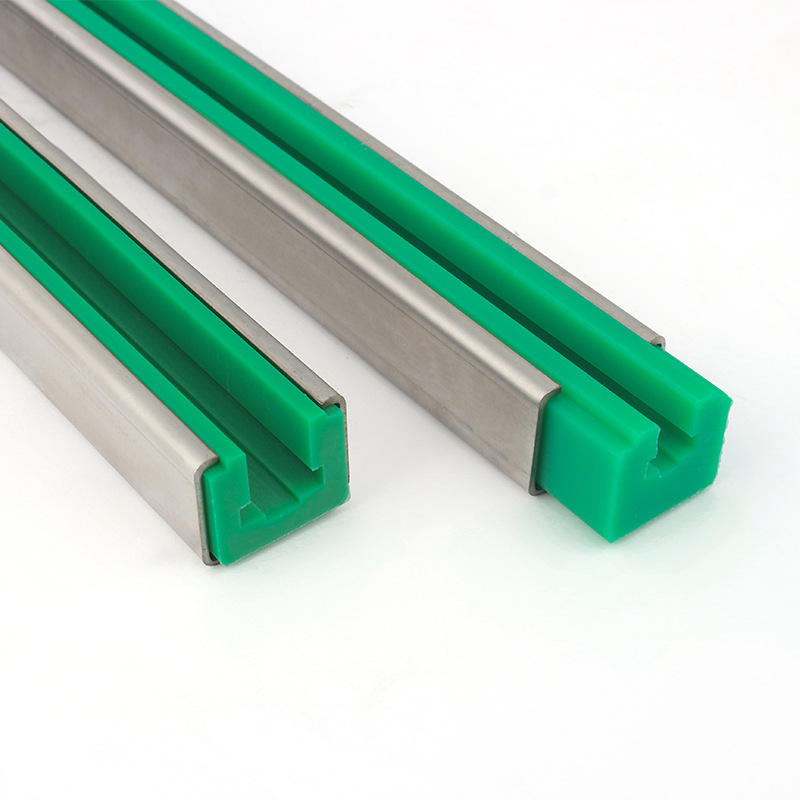
Considerations When Choosing Guide Rails
Application – specific Requirements
When choosing guide rails, the first and foremost consideration is the application – specific requirements. Different industries and operations have unique demands. For heavy – duty industrial machinery, such as large – scale manufacturing equipment, the load – bearing capacity of the guide rails is crucial. These machines often deal with massive components that can weigh several tons. In a steel – rolling mill, for example, the guide rails used to transport the hot – rolled steel sheets need to support the weight of the heavy steel plates during the rolling process. The weight of these steel plates can range from hundreds of kilograms to several tons, so the guide rails must be able to withstand such heavy loads without deforming or breaking.
Speed requirements also vary widely depending on the application. In high – speed automated assembly lines, the guide rails need to enable rapid movement of components. In a smartphone manufacturing plant, the robotic arms that assemble the small components of the phone need to move quickly and precisely along the guide rails. The speed of these robotic arms can reach several meters per second, and the guide rails must be able to support such high – speed motion while maintaining accuracy.
Precision is another critical factor, especially in industries like semiconductor manufacturing and medical equipment production. In semiconductor manufacturing, the placement of tiny electronic components on the circuit boards requires extremely high precision. The guide rails used in the pick – and – place machines must ensure that the components are placed with an accuracy of within a few microns. Even the slightest deviation can lead to defective products, which can be extremely costly in this industry.
Environmental conditions play a significant role in guide rail selection as well. In harsh industrial environments, such as those with high levels of dust, moisture, or chemicals, the guide rails need to be resistant to these elements. In a mining operation, for instance, the guide rails used in the equipment are exposed to large amounts of dust and abrasive particles. The guide rails must be able to withstand the abrasive action of these particles without wearing out quickly. In chemical processing plants, the guide rails need to be chemically resistant to the various corrosive substances present in the production environment.
Budget Constraints
Budget constraints are an important factor that cannot be overlooked when choosing guide rails. While it is essential to select guide rails that meet the performance requirements of the application, the cost also needs to be carefully considered. The initial purchase price of guide rails can vary significantly depending on the material, quality, and brand. Metal guide rails, especially those made of high – quality steel or specialized alloys, can be relatively expensive. For example, stainless – steel guide rails, which offer excellent corrosion resistance, are often more costly than regular carbon – steel guide rails.
However, the cost – effectiveness of guide rails should not be judged solely based on the initial purchase price. The long – term costs, such as maintenance, replacement, and energy consumption, also need to be taken into account. UHMW guide rails, although they may have a higher initial cost compared to some plastic guide rails, can be more cost – effective in the long run. Their excellent wear resistance means that they need to be replaced less frequently, reducing the cost of replacement parts and labor. Additionally, their low – friction coefficient results in lower energy consumption, which can lead to significant cost savings over time.
For companies with limited budgets, it may be necessary to find a balance between performance and cost. This could involve choosing a slightly lower – grade material that still meets the basic requirements of the application or opting for a more cost – effective brand without sacrificing too much on quality. It is also important to consider the potential savings that can be achieved through improved performance and reduced downtime. Sometimes, investing a bit more in high – quality guide rails can lead to significant long – term savings in terms of production efficiency and equipment lifespan.
Conclusion
In conclusion, the performance and cost – effectiveness of UHMW guide rails clearly set them apart from metal and plastic alternatives. Their exceptional wear resistance, low friction coefficient, high chemical resistance, and the unique combination of being lightweight yet strong make them an ideal choice for a wide range of applications. The case studies in the automation and food and beverage industries have vividly demonstrated the tangible benefits that UHMW guide rails can bring, from increased productivity and reduced downtime to cost savings in the long run. When considering guide rail selection, it is crucial to weigh application – specific requirements and budget constraints. However, for many industrial operations, UHMW guide rails offer the best balance between performance and cost. So, whether you are in a high – precision manufacturing environment or a harsh industrial setting, UHMW guide rails are worth considering for their ability to enhance the efficiency and reliability of your machinery and equipment.