
- September 28, 2025
- Posted by: feinuojixie
- Category: Chain Guides News
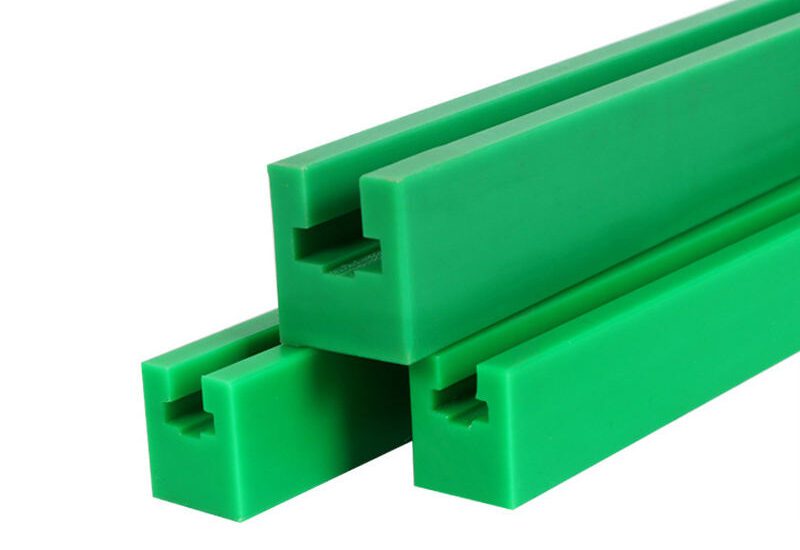
UHMW guide rails, short for Ultra – High Molecular Weight guide rails, are components made from ultra – high molecular weight polyethylene (UHMWPE). This material is a type of thermoplastic with a molecular weight typically ranging from 1 to 6 million, far higher than that of regular polyethylene. This high molecular weight gives UHMWPE unique properties that make it ideal for guide rail applications.
UHMW guide rails are designed to provide smooth linear motion in various mechanical systems. They are widely used in industrial equipment, such as conveyor systems, CNC machines, and automated machinery. In a conveyor system, for example, UHMW guide rails can guide the movement of products along the conveyor belt, ensuring stable and accurate transportation. In CNC machines, they support the movement of the cutting tools or the workpiece, contributing to high – precision machining operations.

Why Install UHMW Guide Rails?
There are several compelling reasons to install UHMW guide rails. Firstly, their outstanding wear – resistance is a major advantage. The high molecular weight structure of UHMWPE makes it extremely durable, able to withstand constant friction and mechanical stress. This means that UHMW guide rails have a much longer lifespan compared to guide rails made from other materials, reducing the need for frequent replacements and thus saving costs in the long run.
Secondly, UHMW guide rails have a very low coefficient of friction. This low friction allows for smooth and easy movement of the components they support. In machinery, this results in less energy consumption as less force is required to move parts along the guide rails. It also contributes to faster operation speeds, enhancing the overall efficiency of the equipment.
Another important feature is their excellent self – lubricating properties. UHMWPE can lubricate itself during operation, eliminating the need for frequent external lubrication. This not only simplifies maintenance but also reduces the risk of contamination from lubricants, which is crucial in some industries such as food processing and pharmaceutical manufacturing where cleanliness is essential.
Tools and Materials Needed
Essential Tools
- Screwdrivers: There are different types such as flat – head and Phillips – head screwdrivers. They are used to tighten or loosen screws that attach the UHMW guide rails and their mounting brackets. For example, a Phillips – head screwdriver is commonly used for cross – recessed screws, which are prevalent in many mechanical assemblies.
- Wrenches: Wrenches come in various sizes and types, like open – ended wrenches, adjustable wrenches, and socket wrenches. They are crucial for tightening nuts and bolts. An adjustable wrench can be adjusted to fit different bolt sizes, making it a versatile tool during the installation process. Socket wrenches, on the other hand, provide better grip and torque when dealing with stubborn fasteners.
- Measuring Tools:
-
- Tape Measure: A tape measure is used to accurately measure distances. When installing UHMW guide rails, you need to measure the length of the area where the rails will be installed, as well as the distance between mounting points. Precise measurements ensure that the guide rails are installed in the correct position and are evenly spaced.
-
- Level: A level is essential for ensuring that the UHMW guide rails are installed horizontally or vertically, depending on the application. It helps to prevent misalignment, which can lead to uneven wear and inefficient operation of the equipment. For instance, in a conveyor system, an unlevel guide rail can cause products to veer off – course.
-
- Drilling Machine: If the installation surface does not already have pre – drilled holes, a drilling machine is required to create holes for the mounting bolts. Different drill bits may be needed depending on the material of the installation surface, such as wood, metal, or plastic.
Required Materials
- UHMW Guide Rails: These are the core components of the installation. The UHMW guide rails are chosen based on the specific requirements of the application, such as load – bearing capacity, length, and width. They are designed to provide a smooth and durable surface for the movement of other components.
- Mounting Bolts, Nuts, and Washers: Mounting bolts are used to attach the UHMW guide rails to the mounting brackets or directly to the installation surface. Nuts are tightened onto the bolts to secure the components in place. Washers are placed between the bolt head or nut and the surface of the component being fastened. They distribute the load evenly, prevent the fasteners from loosening due to vibration, and protect the surface from damage.
- Lubricant: Although UHMW guide rails have self – lubricating properties, an additional lubricant can further reduce friction and wear, especially in high – stress or high – speed applications. A suitable lubricant, such as a silicone – based or synthetic lubricant, can be applied to the guide rails and the moving parts that interact with them.
- Sealant (Optional): In some cases, where the installation needs to be protected from dust, moisture, or other contaminants, a sealant can be used. For example, if the UHMW guide rails are installed in a humid environment, a waterproof sealant can be applied around the mounting points to prevent corrosion of the fasteners and damage to the guide rails.
Step – by – Step Installation Process
Step 1: Preparation and Planning
Before starting the installation, carefully inspect the UHMW guide rails and all the accompanying accessories. Check for any signs of damage, such as cracks or dents on the guide rails, and ensure that all the nuts, bolts, and brackets are present. This pre – installation check can prevent delays and potential issues during the installation process.
Clean the installation surface thoroughly. Remove any dirt, dust, grease, or debris that could affect the adhesion or stability of the guide rails. For example, if the installation surface is a metal frame in a factory setting, use a degreaser and a clean cloth to wipe it down.
Based on the space available and the requirements of the equipment that will use the guide rails, plan the layout. Mark the positions where the mounting brackets and the guide rails will be installed. This can be done using a pencil or a marking tool. Measuring twice and marking once is a good rule of thumb to ensure accuracy. If the guide rails are being installed in a CNC machine, the layout should be designed to support the precise movement of the cutting tools or the workpiece.
Step 2: Mounting the Brackets
Once the installation surface is prepared and the positions are marked, it’s time to mount the brackets. Place the brackets at the marked positions on the installation surface. For metal surfaces, you may need to drill holes first and then use bolts and nuts to secure the brackets. For wooden surfaces, screws can be directly driven into the pre – drilled holes.
Use a level to ensure that the brackets are perfectly horizontal or vertical, depending on the application. This is crucial for the proper alignment of the UHMW guide rails later on. If the brackets are not level, the guide rails may not function smoothly, leading to uneven wear and potential malfunctions in the equipment.
When tightening the fasteners, follow the manufacturer’s recommended torque values. Using a torque wrench can help achieve the correct tightness. Over – tightening can damage the brackets or the installation surface, while under – tightening may cause the brackets to loosen during operation. For example, if the torque value for a particular bolt is specified as 10 Nm, use the torque wrench to reach this value precisely.
Step 3: Installing the UHMW Guide Rails
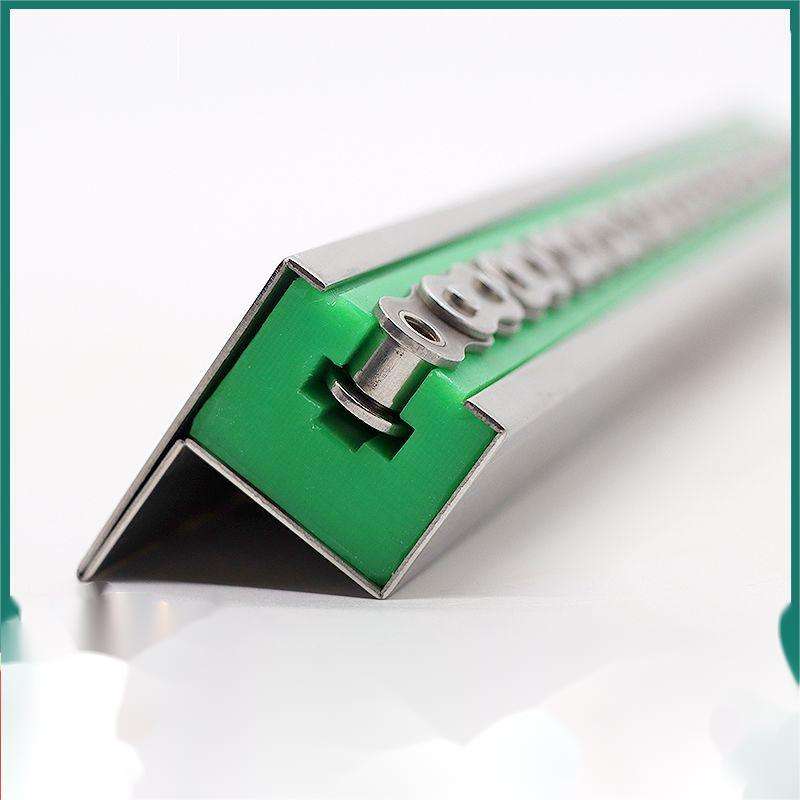
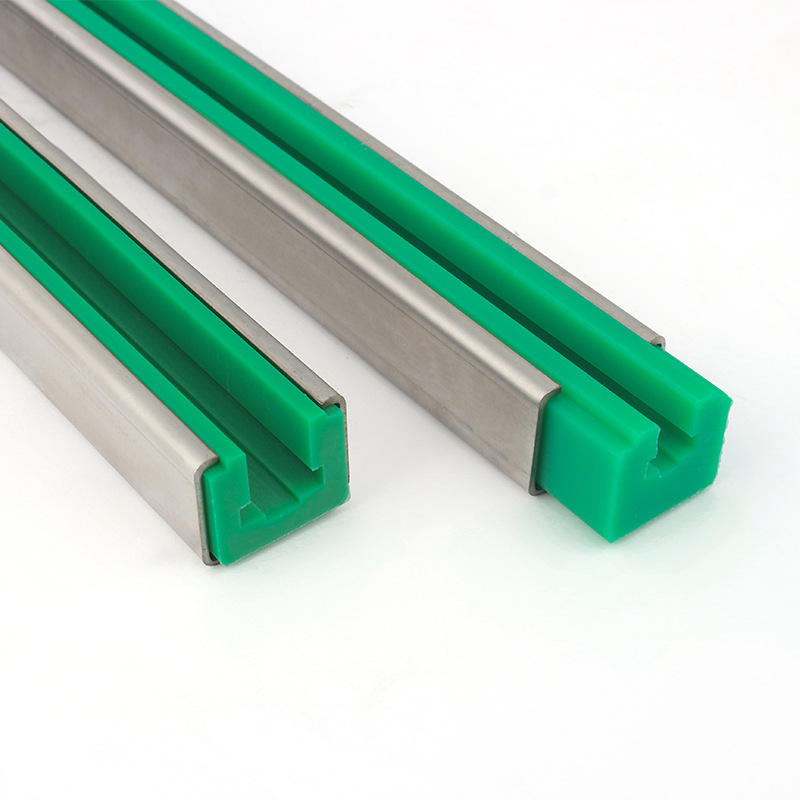
After the brackets are securely mounted, slide the UHMW guide rails into the brackets. Some guide rails may have a groove – and – rail system that allows for easy sliding, while others may need to be bolted directly to the brackets. If bolting, make sure to use the appropriate washers and lock nuts to prevent the bolts from loosening due to vibration.
Once the guide rails are in place, carefully adjust their position to ensure perfect straightness and 垂直度. A straight – edge can be used to check the straightness of the guide rails, and a square can be used to verify the perpendicularity. If the guide rails are slightly misaligned, gently tap them into place using a rubber mallet or make small adjustments to the mounting bolts.
To ensure accurate alignment, you can also use a laser alignment tool. This tool projects a laser beam along the length of the guide rail, allowing you to detect and correct any deviations easily. In high – precision applications, such as in semiconductor manufacturing equipment, using a laser alignment tool is highly recommended to achieve the required level of accuracy.
Step 4: Final Checks and Adjustments
After the UHMW guide rails are installed, perform a series of final checks. First, check all the connection points between the guide rails and the brackets, as well as any joints between multiple sections of the guide rails. Make sure that all the bolts and nuts are tightly fastened. You can use a wrench to give each fastener a final check – tighten.
Next, test the movement of the components that will run along the guide rails. Manually move a test object (such as a slider or a carriage) back and forth along the guide rails. The movement should be smooth, with no signs of binding, sticking, or excessive resistance. If there are any issues, stop immediately and identify the source of the problem.
Use measuring tools, such as a dial indicator, to measure the run – out and alignment of the guide rails. If the measurements are not within the acceptable tolerance range, make further adjustments. This may involve loosening and re – tightening the mounting bolts, or making small shimming adjustments under the brackets to correct the alignment. Once all the checks and adjustments are complete, you can be confident that the UHMW guide rails are installed correctly and are ready for use in your equipment.
Tips for a Smooth Installation
Precautions during Installation
- Avoid Over – Tightening Bolts: When fastening the bolts that secure the UHMW guide rails and mounting brackets, it’s crucial not to over – tighten them. Over – tightening can cause stress on the guide rails, leading to deformation. This deformation may, in turn, affect the smooth movement of the components along the guide rails. Using a torque wrench with the correct torque settings specified by the manufacturer can prevent over – tightening. For example, if the recommended torque for a particular bolt is 8 Nm, exceeding this value can cause problems.
- Prevent Foreign Objects from Entering: During the installation process, take measures to prevent foreign objects such as dust, small metal shavings, or debris from getting into the guide rails. These foreign objects can increase friction, cause scratches on the surface of the guide rails, and ultimately reduce the lifespan of the guide rails. Before installation, cover the surrounding area to minimize the presence of dust. After installation, consider using protective covers for the guide rails if the operating environment is dusty.
- Wear Appropriate Safety Gear: Safety should always be a top priority. When using tools like wrenches, screwdrivers, and drilling machines, wear safety goggles to protect your eyes from flying debris. If you are working in an area with potential electrical hazards, wear insulated gloves. Additionally, if the installation involves working at heights, use proper fall – protection equipment such as safety harnesses.
Troubleshooting Common Issues
- Uneven Guide Rails: One common problem is that the UHMW guide rails may not be perfectly level or straight after installation. This can be caused by improper alignment during the installation process, uneven mounting surfaces, or incorrect tightening of the mounting bolts. To solve this issue, first, re – check the alignment using a straight – edge and a level. If the problem is due to an uneven mounting surface, use shims to level the surface. Loosen and re – tighten the mounting bolts while ensuring proper alignment.
- Loose Fasteners: If the bolts or nuts that secure the guide rails and brackets become loose during operation, it can lead to unstable movement and potential damage to the equipment. This can be caused by vibration, improper tightening during installation, or the use of inappropriate fasteners. To address this, regularly check the tightness of all fasteners. If a fastener is loose, remove it, clean the threads, and re – tighten it to the correct torque value. If the problem persists, consider using lock washers or thread – locking compounds to prevent the fasteners from loosening.
- Difficulty in Component Movement: If the components moving along the UHMW guide rails experience excessive resistance or binding, it could be due to misalignment, foreign objects in the guide rails, or improper lubrication. First, visually inspect the guide rails for any signs of misalignment or the presence of foreign objects. Clean the guide rails thoroughly to remove any debris. If the problem is related to lubrication, apply an appropriate lubricant according to the manufacturer’s recommendations. In some cases, the guide rails may need to be realigned to ensure smooth movement.
Maintenance and Long – Term Care
Regular Maintenance Practices
Regular maintenance is crucial for ensuring the optimal performance and longevity of UHMW guide rails. The following are some essential maintenance practices:
- Cleaning: Clean the UHMW guide rails at least once a week, more frequently in dusty or dirty environments. Use a clean, dry cloth to wipe away dust, debris, and any other contaminants that may have accumulated on the surface of the guide rails. If there are stubborn stains or grease, a mild detergent can be used, but make sure to rinse the guide rails thoroughly with clean water and dry them completely to prevent corrosion. For example, in a manufacturing plant where metal shavings are produced during machining processes, daily cleaning may be necessary to keep the guide rails free from debris that could cause scratches or increased friction.
- Inspecting for Wear: Conduct a visual inspection of the guide rails every month. Look for signs of wear, such as scratches, grooves, or uneven surfaces. Pay special attention to areas where the moving components make contact with the guide rails. Measuring the thickness of the guide rails periodically can also help detect wear. If the wear exceeds the manufacturer’s recommended tolerance, it may be time to consider replacing the guide rails. For instance, if the original thickness of a guide rail is 10 mm and the manufacturer indicates that a wear of 2 mm is the maximum acceptable, once the measured thickness reaches 8 mm, replacement should be on the horizon.
- Lubrication: Even though UHMW guide rails have self – lubricating properties, adding a suitable lubricant can further enhance their performance. Apply a thin layer of lubricant every 3 – 6 months, depending on the operating conditions. A silicone – based or synthetic lubricant is often a good choice as it can reduce friction and wear. When applying the lubricant, make sure to distribute it evenly along the length of the guide rails. In high – speed or high – load applications, more frequent lubrication may be required.
Extending the Lifespan of UHMW Guide Rails
To maximize the lifespan of UHMW guide rails, the following suggestions can be followed:
- Proper Equipment Operation: Operate the equipment with the UHMW guide rails within its designed parameters. Avoid sudden starts, stops, or extreme movements that can put excessive stress on the guide rails. For example, in a conveyor system, ensure that the speed of the conveyor belt is set within the recommended range and that products are loaded and unloaded smoothly without jolting the system.
- Avoid Overloading: Do not exceed the maximum load – bearing capacity of the UHMW guide rails. Overloading can cause excessive wear, deformation, and even failure of the guide rails. Check the manufacturer’s specifications for the load – bearing limit and always stay within it. If the application requires handling heavier loads, consider using guide rails with a higher load – bearing capacity or additional support mechanisms.
- Replace Worn Components Promptly: If any components that interact with the UHMW guide rails, such as sliders or rollers, show signs of wear, replace them immediately. Worn components can transfer uneven forces to the guide rails, leading to accelerated wear. Regularly check these components during maintenance inspections and have replacement parts on hand to minimize downtime.
- Protect from Harsh Environments: If possible, protect the UHMW guide rails from harsh environmental conditions. In humid environments, use a moisture – resistant coating or enclosure to prevent corrosion. In areas with high temperatures, ensure proper cooling to prevent the degradation of the UHMW material. For example, in a food processing plant where humidity is high, enclosing the guide rails in a moisture – proof housing can significantly extend their lifespan.
Conclusion
Recap of the Installation Process
Installing UHMW guide rails involves a series of well – defined steps. It begins with thorough preparation, which includes inspecting the guide rails and accessories, cleaning the installation surface, and carefully planning the layout. Mounting the brackets accurately is crucial, as it provides the foundation for the guide rails. Ensuring that the brackets are level and tightened to the correct torque values is essential.
Next, the UHMW guide rails are installed onto the brackets. Precise alignment is key during this step to guarantee smooth movement of the components along the guide rails. Using tools like straight – edges, squares, and even laser alignment tools can significantly improve the alignment accuracy. After installation, final checks and adjustments are carried out, such as checking the tightness of all fasteners and testing the movement of the components.
Encouragement for DIY or Professional Installation
Whether you are a DIY enthusiast or prefer to hire professionals, the installation of UHMW guide rails can be a rewarding project. If you have the necessary skills, tools, and confidence, a DIY installation can be a cost – effective option. It allows you to have a hands – on understanding of the equipment and can be a great learning experience. However, if you are unsure about any aspect of the installation process or if the application requires a high level of precision, it is advisable to seek professional help.
Regardless of the approach you choose, remember that proper installation of UHMW guide rails is essential for the optimal performance of your equipment. Well – installed guide rails can enhance the efficiency, durability, and accuracy of machinery, leading to long – term cost savings and improved productivity. So, take the time to plan, execute the installation carefully, and maintain the guide rails regularly to enjoy the full benefits of this remarkable component.