
- October 9, 2025
- Posted by: feinuojixie
- Category: Chain Guides News
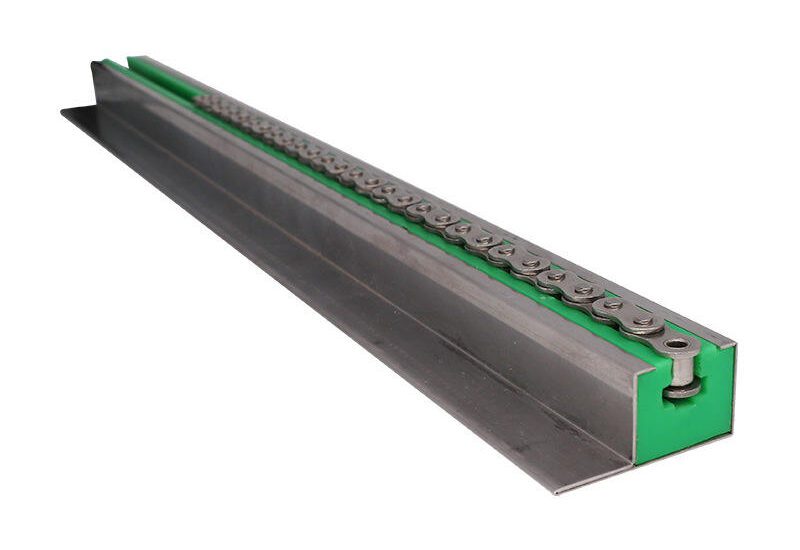
In industrial settings, the performance and durability of components are crucial for smooth operations. Among these components, guide wear strips play a vital role. They are used in various machinery to reduce friction, support moving parts, and ensure accurate movement. In harsh conditions, which can include extreme temperatures, high humidity, abrasive environments, or constant mechanical stress, the durability of guide wear strips becomes even more critical. A worn – out guide wear strip can lead to increased friction, misalignment of moving parts, and ultimately, equipment failure. This not only causes production downtime but also incurs high repair and replacement costs. Therefore, understanding which guide wear strip materials last the longest in harsh conditions is essential for industries such as manufacturing, automotive, aerospace, and more. In this blog post, we will explore and compare different guide wear strip materials to help you make an informed decision for your specific applications.

Common Types of Guide Wear Strip Materials
1. Metal – Based Guide Wear Strips
Metal – based guide wear strips are commonly used in industrial applications. Materials such as steel, bronze, and aluminum are frequently chosen for their high strength and durability. Steel guide wear strips, for example, offer excellent load – bearing capacity and resistance to abrasion. They can withstand high mechanical stress, making them suitable for heavy – duty machinery like large – scale manufacturing equipment and construction machinery. However, in harsh conditions, they also have some drawbacks. In high – humidity environments, steel is prone to rust, which can weaken its structure and reduce its lifespan. Bronze guide wear strips are known for their good self – lubricating properties and corrosion resistance. They can operate smoothly in applications where lubrication may be difficult to maintain. But bronze is relatively soft compared to some other metals, so it may wear out faster under high – load and high – friction conditions. Aluminum guide wear strips are lightweight, which is beneficial in applications where weight reduction is crucial, such as in the aerospace industry. However, they have lower strength compared to steel and may not be suitable for applications with extremely high loads.
2. Polymer – Based Guide Wear Strips
Polymer – based guide wear strips are made from materials like nylon, polyurethane, and PTFE (Polytetrafluoroethylene). Nylon guide wear strips are popular due to their good mechanical properties, including high tensile strength and toughness. They have a relatively low coefficient of friction, which helps in reducing wear and energy consumption during the movement of the machinery parts. In harsh conditions, nylon can resist moisture to a certain extent, but it may absorb water over time, causing dimensional changes and potentially affecting its performance. Polyurethane guide wear strips offer excellent abrasion resistance and flexibility. They can adapt well to irregular surfaces and provide good shock absorption. They are often used in applications where there is a need to handle abrasive materials or where the guide wear strip needs to withstand impacts. However, polyurethane may degrade under high – temperature conditions, limiting its use in environments with extreme heat. PTFE, also known as Teflon, is famous for its extremely low coefficient of friction, which makes it an ideal choice for applications where smooth movement is essential. It has excellent chemical resistance and can operate in a wide range of chemical environments. But PTFE has relatively low mechanical strength, so it may not be suitable for high – load applications on its own and often needs to be combined with other materials or reinforced.
3. Composite Guide Wear Strips
Composite guide wear strips are designed to combine the advantages of different materials. They typically consist of a matrix material, such as a polymer, and reinforcement materials like fibers (e.g., carbon fiber, glass fiber). The reinforcement fibers enhance the mechanical properties of the composite, such as increasing its strength and stiffness. For example, carbon fiber – reinforced polymer (CFRP) guide wear strips offer a high strength – to – weight ratio. The carbon fibers provide excellent tensile strength, while the polymer matrix provides good chemical resistance and a low coefficient of friction. In harsh conditions, these composites can resist high temperatures better than many pure polymers, and their high strength allows them to handle heavy loads. Glass fiber – reinforced polymers (GFRP) are also commonly used. Glass fibers are more cost – effective than carbon fibers and can still significantly improve the mechanical properties of the polymer matrix. GFRP guide wear strips can withstand abrasive environments well due to the reinforcement provided by the glass fibers. The combination of materials in composite guide wear strips allows them to adapt to a wider range of harsh conditions compared to single – material guide wear strips, making them a popular choice for high – performance applications.
Factors Affecting Durability in Harsh Conditions
1. Temperature Extremes
Temperature extremes can have a significant impact on the durability of guide wear strips. In high – temperature environments, metal – based guide wear strips, such as steel, may experience softening. When the temperature approaches the metal’s annealing or melting point, its mechanical properties degrade. For example, in some industrial furnaces or engines with high – temperature operations, steel guide wear strips may lose their hardness and strength, leading to increased wear and deformation.
Polymer – based guide wear strips also face challenges in high – temperature conditions. As mentioned before, polyurethane may degrade, and its chemical structure can break down, reducing its abrasion resistance and flexibility. Nylon can also experience a decrease in mechanical properties at elevated temperatures, and it may become more prone to creep, where it slowly deforms under a constant load. PTFE, while having a relatively high continuous – use temperature, still has limits. If the temperature exceeds its recommended range, it can start to lose its low – friction properties.
In low – temperature environments, metal – based guide wear strips can become brittle. Steel, for instance, may experience a significant reduction in its impact toughness at very low temperatures, which can cause it to crack or break under sudden impacts or mechanical stress. Polymer – based guide wear strips can also become stiff and lose their flexibility. Nylon, for example, may become more brittle and less able to absorb shocks, increasing the risk of failure.
2. Chemical Exposure
Chemical exposure is another crucial factor in harsh conditions. In many industrial settings, guide wear strips are exposed to various chemicals, such as acids, alkalis, and solvents. Metal – based guide wear strips are vulnerable to chemical corrosion. Steel, in the presence of acidic or alkaline substances, can undergo electrochemical reactions that lead to the formation of rust and the degradation of its surface. Bronze, although more corrosion – resistant than steel in some environments, can still be attacked by certain chemicals, especially strong acids.
Polymer – based guide wear strips have different levels of chemical resistance. PTFE is highly resistant to most chemicals due to its stable chemical structure. It can be used in chemical processing plants where it may come into contact with a wide range of corrosive substances. Nylon, on the other hand, has limited chemical resistance. It can be attacked by strong acids and some solvents, which can cause swelling, softening, or degradation of the material. Polyurethane also has its limitations in chemical – resistant applications. It may be affected by certain solvents and oxidizing agents, which can reduce its lifespan.
Composite guide wear strips, depending on their composition, can offer improved chemical resistance. For example, if the polymer matrix in a composite is a chemically resistant material like PTFE and is reinforced with fibers that are also resistant to the chemicals in the environment, the composite can withstand chemical exposure better. However, if there are any defects in the composite structure, such as poor bonding between the matrix and the reinforcement, chemicals may penetrate and cause damage.
3. Mechanical Stress
Continuous mechanical stress is a common factor in industrial applications that affects the durability of guide wear strips. Metal – based guide wear strips, especially those made of high – strength materials like steel, can handle high – load mechanical stress well initially. However, over time, under repeated loading and unloading, they may experience fatigue. Fatigue is a process where small cracks form and grow in the material due to cyclic stress. Eventually, these cracks can lead to the failure of the guide wear strip. In applications with high – frequency reciprocating motion, such as in some hydraulic cylinders, the constant mechanical stress can accelerate the fatigue process in steel guide wear strips.
Polymer – based guide wear strips, with their relatively lower strength compared to metals, may deform more easily under high mechanical stress. Nylon guide wear strips, although tough, can experience plastic deformation if the applied stress exceeds their yield strength. Polyurethane, while having good shock – absorption properties, may gradually wear out under continuous high – load mechanical stress. PTFE, due to its low mechanical strength, is not suitable for applications with high mechanical stress without reinforcement.
Composite guide wear strips, with their high strength – to – weight ratio, can handle mechanical stress more effectively in many cases. The reinforcement fibers in the composite help to distribute the stress evenly and prevent the material from deforming or failing easily. However, if the stress is applied in a direction that is not aligned with the orientation of the reinforcement fibers, the effectiveness of the composite may be reduced, and it may still be prone to failure.
Real – World Case Studies
Case 1: Industrial Machinery in High – Temperature Environments
In a steel manufacturing plant, there was a continuous casting machine that operated at high temperatures. The guide wear strips on this machine were crucial for the smooth movement of the casting molds. Initially, steel guide wear strips were used. However, due to the high – temperature environment, which often reached temperatures close to 500°C, the steel strips started to soften after a few months of operation. This led to increased friction between the molds and the guide wear strips, resulting in inaccurate casting and the need for frequent maintenance.
Later, the plant decided to test carbon fiber – reinforced polymer (CFRP) guide wear strips. These composite strips showed much better performance in the high – temperature environment. They maintained their mechanical properties even at the high operating temperatures of the casting machine. Over the course of a year, the CFRP guide wear strips only showed minimal wear, while the steel ones had to be replaced several times. The CFRP strips not only reduced maintenance costs but also improved the efficiency and quality of the casting process, as the consistent performance of the guide wear strips ensured more accurate movement of the molds.
Case 2: Marine Applications with High Humidity and Salt Exposure
A shipbuilding company was looking for reliable guide wear strips for the moving parts of cranes used on board ships. These cranes were constantly exposed to high humidity and salt – laden air, which were extremely harsh conditions. They first installed bronze guide wear strips. While bronze has some corrosion – resistance properties, over time, the continuous exposure to the marine environment caused the bronze strips to corrode. Pitting and surface degradation were observed, and within six months, the performance of the guide wear strips deteriorated, leading to increased noise and reduced efficiency of the crane operation.
Next, they tried PTFE – based composite guide wear strips. The PTFE provided excellent chemical resistance to the salt – water and the humid air. The reinforcement in the composite added the necessary mechanical strength. These PTFE – based composite guide wear strips lasted for over two years without significant wear or degradation. They maintained a low coefficient of friction, ensuring smooth operation of the crane’s moving parts. The shipbuilding company found that by using these more durable guide wear strips, they could reduce the downtime of the cranes for maintenance, which was crucial for the ship’s operations at sea where any equipment failure could cause significant disruptions.
How to Choose the Right Guide Wear Strip Material
1. Assessing Your Operating Conditions
The first step in choosing the right guide wear strip material is to accurately assess your operating conditions. If your machinery operates in a high – temperature environment, like in foundries or power plants, you can rule out materials that are sensitive to heat, such as some polymers. Instead, materials like high – temperature – resistant metals or heat – stable composites should be considered. For applications in chemical processing plants where there is chemical exposure, materials with high chemical resistance, like PTFE – based polymers or certain corrosion – resistant metals, are essential. In high – humidity environments, such as in paper mills or some food – processing facilities, materials that are resistant to moisture and won’t rust or degrade due to water absorption are preferred. Understanding the mechanical stress levels, including the type of load (static or dynamic), the frequency of movement, and the magnitude of the force applied, also helps in narrowing down the suitable materials. For example, in heavy – duty machinery with high – load cyclic operations, high – strength metal or composite materials are more likely to be suitable.
2. Balancing Cost and Durability
Cost is always a significant factor in any purchasing decision. While it may be tempting to choose the cheapest guide wear strip material available, this may not always be the best long – term solution. Cheaper materials, such as some basic polymers or low – grade metals, may have a shorter lifespan in harsh conditions. This can lead to more frequent replacements, which not only involves the cost of the new guide wear strips but also the cost of downtime for equipment maintenance and potential production losses. On the other hand, more durable materials, like high – performance composites or premium – grade metals, may have a higher upfront cost but can save money in the long run due to their longer lifespan and reduced need for replacement. It’s important to calculate the total cost of ownership, including the initial purchase price, maintenance costs, and the cost of any production disruptions caused by the failure of the guide wear strips. For applications with a tight budget but relatively less – harsh conditions, a balance can be struck by choosing a moderately priced material that still meets the minimum durability requirements. However, for critical applications in extremely harsh conditions, sacrificing a bit more in terms of cost for a highly durable material is often a more cost – effective choice over time.

Conclusion
In conclusion, the durability of guide wear strips in harsh conditions depends on a variety of factors and the material used. Metal – based guide wear strips offer high strength and load – bearing capacity but may be prone to issues like rust in humid environments or softening at high temperatures. Polymer – based guide wear strips have advantages such as low friction and good chemical resistance in some cases, but their mechanical strength and heat resistance can be limitations. Composite guide wear strips, by combining the benefits of different materials, often show great potential in harsh conditions, with high strength – to – weight ratios and better adaptability to multiple harsh factors.
When it comes to making a decision on which guide wear strip material to choose, there is no one – size – fits – all answer. It is crucial to thoroughly assess your specific operating conditions, including temperature, chemical exposure, and mechanical stress. Balancing the upfront cost with the long – term durability and the cost of potential equipment failures and maintenance is also essential. By carefully considering these aspects, you can select the guide wear strip material that best suits your needs, ensuring the smooth operation and longevity of your industrial equipment in even the most challenging environments.