
- October 14, 2025
- Posted by: feinuojixie
- Category: Chain Guides News

A chain guide wear strip, also known as a wear strip for chain guide, is a crucial component in mechanical systems that utilize chains. It is typically a long, thin strip made of materials like high – density polyethylene (HDPE), nylon, or other wear – resistant polymers, and sometimes even metal in heavy – duty applications.
Positioned along the path that the chain travels, its primary function is to guide the chain smoothly. By providing a stable and consistent surface for the chain to run on, it ensures that the chain moves in the intended direction. This is essential for the overall efficiency of the mechanical system. For example, in a conveyor belt system used in a factory to move products along an assembly line, the chain guide wear strip keeps the chain on track, allowing for the seamless transfer of items.
Another vital function is to reduce friction. As the chain moves, there is constant contact between its links and the surrounding components. Without a wear strip, this friction would not only cause excessive wear on the chain itself but also on other parts of the system. The wear strip acts as a buffer, minimizing the friction between the chain and the guide, which in turn reduces heat generation and energy consumption. This is similar to how a lubricant reduces friction in an engine; the wear strip serves a similar role in the chain – guide system.
Moreover, the chain guide wear strip helps prevent the chain from derailing. In high – speed or high – load applications, there is a risk of the chain jumping off its track. The wear strip, with its precisely designed shape and placement, acts as a barrier, keeping the chain firmly in place. This is especially important in machinery such as motorcycles, where a derailed chain can lead to sudden loss of power or even accidents. Overall, the chain guide wear strip plays a fundamental role in maintaining the proper operation and longevity of any chain – driven mechanical system.
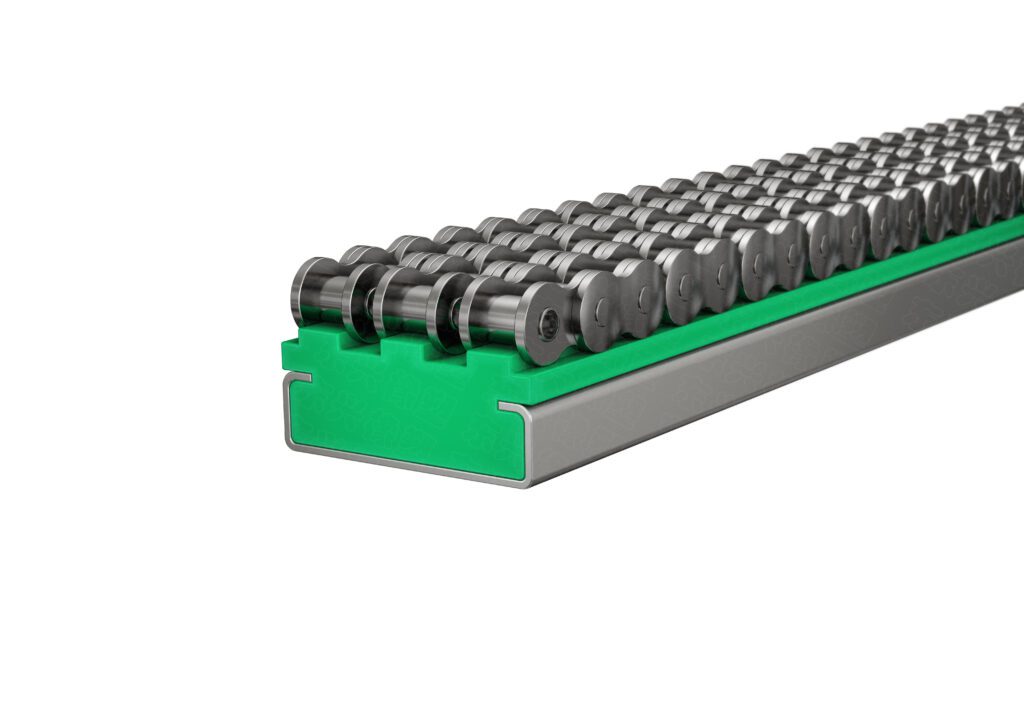
The Normal Lifespan of a Chain Guide Wear Strip
The lifespan of a chain guide wear strip can vary significantly depending on several factors. Under normal operating conditions in a standard industrial setting with moderate usage, a high – quality chain guide wear strip made of HDPE or nylon can last anywhere from 1 to 5 years. For example, in a small – scale packaging factory where the conveyor system runs for about 8 hours a day, 5 days a week, a well – maintained wear strip might have a lifespan of around 3 years.
However, the working frequency has a major impact on its lifespan. In a continuous – operation manufacturing plant where the chain – driven equipment runs 24/7, the wear strip will naturally experience more cycles of friction and stress. In such cases, the lifespan could be reduced to as little as 6 months to 1 year. The constant movement of the chain over the wear strip accelerates the wear process, leading to more rapid degradation.
The load size also plays a crucial role. When a chain is carrying heavy loads, the pressure exerted on the wear strip is much higher. Consider a mining operation where the chain is used to transport large amounts of ore. The wear strip in this scenario will wear out much faster compared to a system with light – duty loads, perhaps only lasting a few months. High – load applications increase the frictional forces between the chain and the wear strip, causing more material to be worn away over time.
Working temperature and humidity are additional factors. In high – temperature environments, above 60°C, the material properties of the wear strip can change. For instance, some polymers may become softer, making them more prone to wear. In a bakery where the chain – driven ovens operate at high temperatures, the wear strip may need to be replaced more frequently, maybe every 1 – 2 years. Humid conditions, especially when combined with high temperatures, can also cause corrosion in metal – based wear strips or affect the integrity of polymer materials, potentially shortening their lifespan as well.
Signs that Scream “Replace Me!”
Visible Wear and Tear
One of the most straightforward signs that it’s time to replace your chain guide wear strip is visible wear and tear. Over time, the constant contact with the chain will cause the surface of the wear strip to show signs of degradation. You may notice deep scratches running along the length of the strip. These scratches are a result of the chain’s links dragging across the surface, and if they are numerous and deep, they can significantly affect the smooth operation of the chain.
Grooves are another common sign of wear. As the chain repeatedly runs in the same position on the wear strip, it can cut into the material, creating grooves. If these grooves are more than 2 – 3 mm deep in a standard – sized wear strip, it’s a strong indication that replacement is necessary. A simple way to measure the depth of these grooves is by using a depth gauge, which is a relatively inexpensive tool available at most hardware stores.
The wear strip may also become visibly thinner. A new wear strip typically has a uniform thickness, but as it wears, the material is gradually worn away. If the thickness of the wear strip has decreased by more than 30 – 40% of its original value, it’s no longer providing adequate support and protection for the chain, and replacement is advisable. You can measure the thickness using a caliper, which can give you an accurate reading of how much material has been lost.
Excessive Noise
Excessive noise from the chain – guide system is a clear signal that something is amiss, often indicating that the chain guide wear strip needs replacement. When the wear strip is in good condition, the chain moves smoothly over it, producing only a faint, consistent sound. However, as the wear strip wears out, the nature of the noise changes.
A high – pitched, screeching or scraping sound is often a sign of increased friction. This occurs because the smooth surface of the wear strip has been worn away, and the chain is now rubbing directly against a rougher, more uneven surface. The lack of a proper lubricating layer (which the intact wear strip provides) leads to this noisy friction. For example, in a bicycle with a worn – out chain guide wear strip, you may hear this sharp noise every time you pedal, especially when shifting gears.
Another type of noise is a clicking or rattling sound, which can be a sign of the chain jumping or vibrating due to an uneven wear strip. This could be caused by grooves or uneven wear patterns that make the chain’s movement inconsistent. In a conveyor system, this clicking noise might be accompanied by a slight jerking motion of the items being transported, indicating that the chain is not moving as smoothly as it should.
Chain Derailment or Misalignment
Chain derailment or misalignment is a serious issue that can be directly related to a worn – out chain guide wear strip. The wear strip plays a crucial role in keeping the chain on its intended path. When it becomes worn, it loses its ability to guide the chain effectively.
As the wear strip wears, the chain may start to drift to one side. This misalignment can be observed by simply watching the chain as it moves. If you notice that the chain is not running in the center of the sprockets or is consistently rubbing against the sides of the guide, it’s likely due to a worn – out wear strip. In extreme cases, the chain may even jump off the sprockets completely, which is a clear indication that the wear strip needs immediate replacement.
In a motorcycle, for instance, chain derailment can be extremely dangerous. A misaligned chain caused by a worn wear strip can lead to sudden loss of power transmission, skidding, or even damage to other components of the bike. In industrial machinery, a derailed chain can halt production, leading to costly downtime. Regularly checking the chain’s alignment and ensuring that it runs smoothly within the guide can help you catch wear – strip problems early and prevent more serious issues.
The Consequences of Delaying Replacement
Accelerated Chain Wear
Delaying the replacement of a chain guide wear strip can have a significant impact on the chain itself, leading to accelerated wear. When the wear strip is worn out, the smooth and protective surface it once provided for the chain is compromised. The chain, no longer running on an even and low – friction surface, experiences increased friction as it moves along the worn – out wear strip.
As the chain’s links slide over the rough or grooved surface of the deteriorated wear strip, the contact points between the chain and the wear strip become areas of high stress. This high – stress contact causes the chain’s rollers to experience uneven forces. Over time, the rollers start to wear down unevenly, which can lead to an increase in the chain’s pitch. The pitch of a chain is the distance between consecutive pins, and an increase in pitch means that the chain becomes longer and looser.
A longer and looser chain is more prone to further damage. It can start to bounce or skip on the sprockets, causing additional wear on both the chain and the sprockets. In a bicycle chain, for example, if the chain guide wear strip is not replaced in a timely manner, the increased friction can cause the chain to stretch prematurely. This stretched chain may then start to slip on the gears, making it difficult to shift smoothly and reducing the overall efficiency of the bike’s drivetrain. In industrial applications, such as in a manufacturing plant’s conveyor system, an accelerated – wear chain can lead to frequent replacements, which not only disrupts production but also increases maintenance costs.
Equipment Malfunction
The wear of a chain guide wear strip doesn’t just affect the chain; it can also cause significant malfunctions in the entire equipment. One of the primary issues is a reduction. With a worn – out wear strip, the chain is not guided properly, and there is more energy wasted in overcoming the increased friction. This inefficiency can be seen in a decrease in the power transmitted from the driving component to the driven component.
For instance, in a power – transmission system in a factory, if the chain guide wear strip is worn, the motor has to work harder to move the chain, which in turn leads to higher energy consumption. The equipment may also start to experience. As the chain moves over the uneven surface of the worn – out wear strip, it can get momentarily stuck or jerked. This can cause the items being transported by the chain, such as products on a conveyor belt, to move erratically. In extreme cases, these jerks can cause products to fall off the conveyor, leading to product damage.
Another possible malfunction is complete. If the chain derails due to a severely worn – out wear strip, the equipment will come to a halt. In a manufacturing facility, this unplanned downtime can be extremely costly. It can disrupt the production schedule, lead to missed deadlines, and require significant resources to repair the equipment and get it back up and running. Moreover, repeated malfunctions due to a worn – out wear strip can also cause damage to other components of the equipment, such as bearings, shafts, and sprockets, further increasing the cost and complexity of repairs.
Safety Hazards
Safety is a major concern when the replacement of a chain guide wear strip is delayed. A worn – out wear strip can lead to a higher risk of chain. As the chain experiences increased stress and uneven wear due to the lack of proper guidance from the worn – out wear strip, the links become weaker. Eventually, a link may break under the stress, especially in high – load or high – speed applications.
In industrial machinery, a broken chain can cause serious damage to the equipment. It can fly off and hit other components, causing them to break or malfunction. In a worst – case scenario, if the machinery is not properly guarded, a broken chain can also pose a significant threat to workers. It can strike them, causing cuts, bruises, or even more serious injuries.
Chain is another safety hazard associated with a worn – out wear strip. When the wear strip can no longer keep the chain on its proper path, the chain may jump off the sprockets. In a moving vehicle, such as a motorcycle, a derailed chain can cause the rider to lose control. The sudden loss of power transmission can lead to a skid or a collision. In industrial settings, a derailed chain can also start to whip around, potentially hitting workers or getting caught in other parts of the machinery, leading to equipment damage and safety risks. Overall, neglecting to replace a worn – out chain guide wear strip can have serious safety implications for both people and equipment.

Steps to Replace Your Chain Guide Wear Strip
Preparation
Before you start the replacement process of your chain guide wear strip, it’s essential to gather the right tools and materials. First and foremost, you’ll need a set of wrenches, typically in metric or standard sizes depending on the equipment. These will be used to loosen and tighten the bolts that secure the chain guide and the wear strip. A screwdriver, either flat – head or Phillips – head, is also necessary for removing any screws that might be holding the components in place.
You’ll need a new chain guide wear strip. Make sure it’s the correct size and type for your specific equipment. Check the manufacturer’s specifications to ensure compatibility. Some wear strips come with additional hardware, such as screws or washers, but if yours doesn’t, you’ll need to source these separately. It’s also a good idea to have some lubricant on hand. After the replacement, you’ll want to lubricate the chain and the new wear strip to ensure smooth operation.
Safety should always be a priority. Wear a pair of work gloves to protect your hands from cuts and abrasions. Safety goggles are also recommended, especially if there’s a risk of small parts flying off during the removal or installation process. If you’re working on a large piece of industrial equipment, make sure it’s properly isolated from the power source to prevent any accidental starts.
Removal of the Old Wear Strip
Once you’re prepared, you can begin removing the old chain guide wear strip. Start by locating the bolts or screws that hold the wear strip in place. These are usually located along the length of the chain guide. Using the appropriate wrench or screwdriver, slowly loosen these fasteners. Be careful not to over – tighten or strip the threads, as this can make reinstallation more difficult.
As you loosen the fasteners, support the wear strip to prevent it from falling suddenly. Once all the fasteners are removed, gently slide the old wear strip out from the chain guide. In some cases, the wear strip may be stuck due to built – up grime or corrosion. If this is the case, you can use a gentle pry bar or a small amount of penetrating oil to help loosen it. However, be extremely careful when using a pry bar to avoid damaging the chain guide or other nearby components.
Inspect the removed wear strip closely. Note the areas of excessive wear, such as deep grooves or thin spots. This can give you an idea of any underlying issues with the chain or the chain guide system. Also, check the chain guide itself for any signs of damage, such as bent edges or worn – out mounting points. If you notice any problems with the chain guide, it may need to be repaired or replaced as well.
Installation of the New Wear Strip
Installing the new chain guide wear strip is a relatively straightforward process if you follow the correct steps. First, align the new wear strip with the chain guide. Make sure that the holes in the wear strip line up precisely with the mounting holes in the chain guide. This alignment is crucial for proper installation and the long – term performance of the wear strip.
Insert the screws or bolts through the holes in the wear strip and into the chain guide. Start by hand – tightening them to hold the wear strip in place. Then, use a wrench or screwdriver to gradually tighten the fasteners. Tighten them evenly, going back and forth between the different bolts or screws. This ensures that the wear strip is seated evenly and doesn’t become distorted during the tightening process.
After the wear strip is securely fastened, it’s time to make some adjustments. Check the gap between the chain and the new wear strip. The gap should be uniform along the entire length of the chain. If the gap is too wide, the chain may not be properly guided, leading to potential derailment. If the gap is too narrow, it can cause excessive friction and wear. You can use a feeler gauge to measure the gap accurately. If adjustments are needed, loosen the fasteners slightly and re – position the wear strip until the gap is correct. Then, retighten the fasteners.
Post – Installation Checks
Once the new chain guide wear strip is installed and adjusted, it’s important to perform some post – installation checks to ensure everything is working correctly. First, visually inspect the chain and the wear strip. Make sure that the chain is running smoothly along the wear strip and that there are no signs of misalignment or interference.
Next, start the equipment and let the chain run for a short period. Listen carefully for any abnormal noises. A smooth – running chain should produce only a faint, consistent sound. If you hear any scraping, clicking, or rattling noises, it could indicate a problem with the installation, such as a misaligned wear strip or a chain that’s not properly tensioned.
Check the chain’s tension. A chain that’s too loose can cause skipping and excessive wear, while a chain that’s too tight can put unnecessary stress on the chain, sprockets, and the wear strip. There are various methods to check chain tension, depending on the type of equipment. Some chains have a built – in tension gauge, while for others, you can use a simple ruler to measure the amount of slack in the chain. If the tension is not within the recommended range, adjust it according to the manufacturer’s instructions.
Finally, run the equipment for an extended period to ensure that the new wear strip is functioning properly under normal operating conditions. Monitor the chain, the wear strip, and the overall performance of the equipment during this test run. If everything seems to be working well, you can be confident that your chain guide wear strip replacement was successful, and your equipment is now ready for reliable operation.
Keeping Your Machinery in Top Shape
In conclusion, understanding when to replace your chain guide wear strip is crucial for the optimal performance and safety of your machinery. Visible wear and tear, excessive noise, and chain derailment or misalignment are clear signs that it’s time for a replacement. Delaying this replacement can lead to accelerated chain wear, equipment malfunction, and serious safety hazards.
Regularly checking the condition of your chain guide wear strip should be an integral part of your equipment maintenance routine. By doing so, you can catch potential problems early and address them promptly, saving yourself from costly repairs and unplanned downtime. Remember, a well – maintained chain guide wear strip not only ensures the smooth operation of the chain but also contributes to the overall efficiency and longevity of your machinery.
When it comes to the replacement process, following the proper steps of preparation, removal of the old strip, installation of the new one, and post – installation checks is essential. This will guarantee that the new wear strip is correctly installed and functions as it should. So, take the time to care for your chain guide wear strip and keep your machinery in top – notch condition.