
- October 15, 2025
- Posted by: feinuojixie
- Category: Chain Guides News
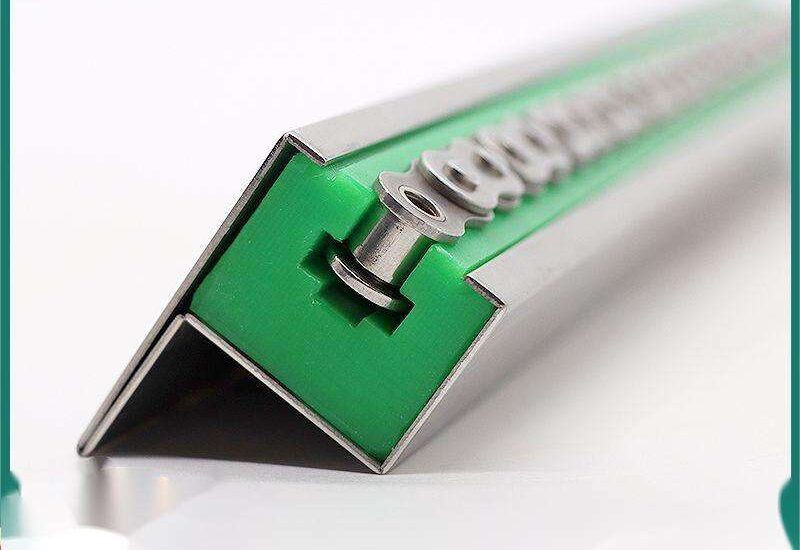
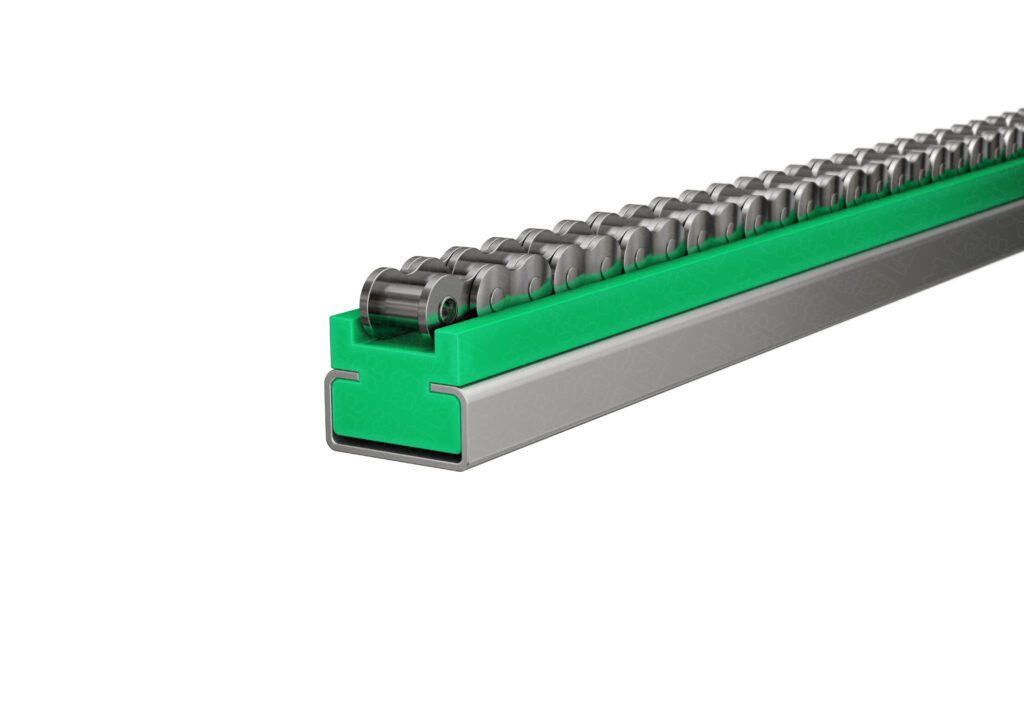
Chain guide wear strips play a crucial role in the smooth operation of machinery. These are components designed to reduce friction and wear between the chain and the guide. By acting as a buffer, they prevent direct contact between the chain and the guide, which could otherwise lead to premature wear and tear of both parts.
The basic working principle is simple yet highly effective. When a chain moves along a guide, the wear strip provides a low – friction surface. This allows the chain to glide smoothly, minimizing the energy wasted in overcoming friction. Additionally, it absorbs the lateral forces exerted by the chain during operation, keeping the chain in proper alignment.
For example, in conveyor systems used in factories, the chain guide wear strips ensure that the chains can transport heavy loads continuously without getting damaged easily. Without these wear strips, the chains would quickly degrade, leading to frequent breakdowns and costly repairs. In essence, chain guide wear strips are like the silent protectors of your machinery’s chain – guide system, ensuring long – term reliability and efficient operation.
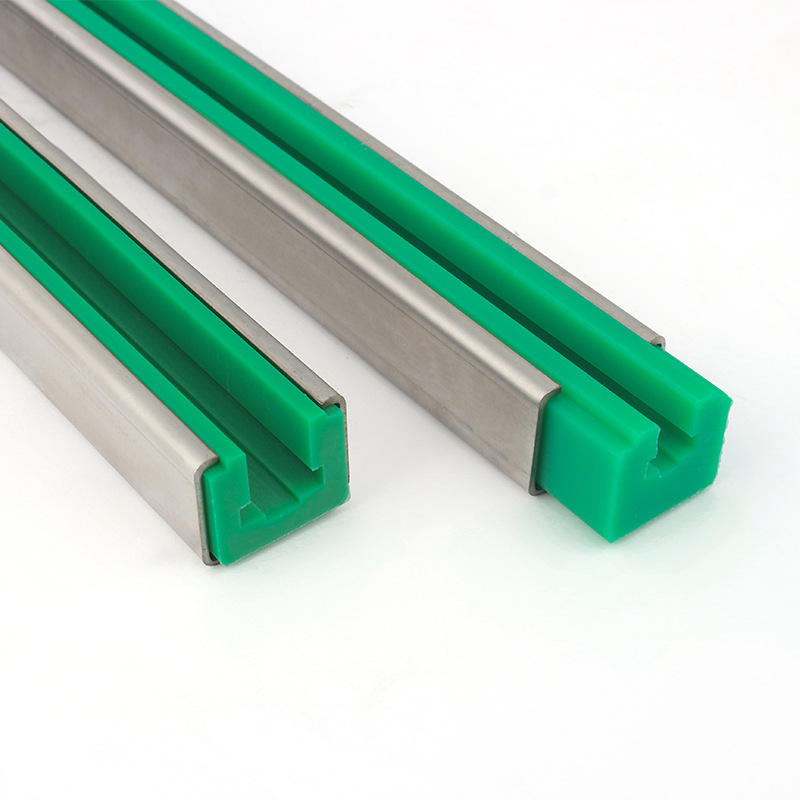
Types of Chain Guide Wear Strips
1. Material – Based Types
Plastic Chain Guide Wear Strips
Plastic chain guide wear strips are popular due to their lightweight nature. They are significantly lighter than their metal counterparts, which makes them an ideal choice for machinery where weight reduction is crucial, such as in some conveyor systems that need to operate with minimal energy consumption.
Cost – effectiveness is another major advantage. They are generally more affordable to produce and purchase, making them suitable for budget – conscious businesses. Additionally, plastic wear strips have a low coefficient of friction. This means that the chain can move more smoothly over them, reducing the amount of energy required to drive the chain and minimizing wear on the chain itself. They are often used in light – duty machinery like small – scale packaging equipment, where the loads are not extremely heavy, and the focus is on smooth and efficient operation. However, their relatively low strength compared to metal and some composite materials limits their use in high – stress applications.
Metal Chain Guide Wear Strips
Metal chain guide wear strips are known for their high strength. They can withstand heavy loads and high – stress operations without deforming or breaking easily. For example, in mining machinery where chains are used to haul large amounts of ore, metal wear strips are essential. Their excellent wear resistance ensures a long service life even in harsh environments with abrasive materials.
Moreover, metal wear strips can tolerate high temperatures. In industrial furnaces or some automotive engine components where chains operate under extreme heat, metal is the material of choice. Metals like steel or stainless steel are commonly used. Steel offers great strength and wear resistance at a relatively low cost, while stainless steel provides additional corrosion resistance, making it suitable for applications where exposure to moisture or corrosive substances is expected, such as in food processing plants where hygiene and durability are both important.
Composite Chain Guide Wear Strips
Composite chain guide wear strips are engineered to combine the best properties of different materials. They often consist of a combination of fibers (such as carbon fiber or glass fiber) embedded in a matrix (like a polymer resin). This results in a material that has high strength from the fibers and good formability and chemical resistance from the matrix.
In complex industrial settings with a combination of high loads, chemical exposure, and the need for low – friction operation, composite wear strips shine. For instance, in the aerospace industry, where components need to be lightweight yet strong and resistant to a variety of environmental factors, composite wear strips can be found in some chain – driven mechanisms. They can handle the vibrations, temperature variations, and mechanical stresses encountered during flight, ensuring the reliable operation of critical systems.
2. Design – Based Types
Standard – Design Wear Strips
Standard – design chain guide wear strips have a common and widely recognized structure and shape. They usually come in simple rectangular or trapezoidal profiles that can fit a wide range of chain – guide systems. These wear strips are mass – produced, which makes them readily available in the market.
Their universality is their biggest advantage. They can be easily installed in most standard – sized chain – guide setups without the need for extensive modifications. This makes them a popular choice for general – purpose machinery, such as those used in basic manufacturing processes like woodworking or small – scale metal fabrication. Many small – to – medium – sized enterprises prefer standard – design wear strips as they are cost – effective and easy to replace when worn out.
Custom – Designed Wear Strips
Custom – designed chain guide wear strips are tailored to meet the specific requirements of unique machinery. When a machine has an unusual chain path, non – standard chain dimensions, or operates under highly specialized conditions, standard wear strips won’t suffice.
For example, in a custom – built automated assembly line with a complex chain – driven component transfer system, the chain might have to navigate around tight corners or pass through narrow spaces. Custom – designed wear strips can be engineered to precisely fit these complex geometries. They can be made with specific cutouts, angles, or thicknesses to ensure optimal performance. This personalized design not only improves the efficiency of the machinery but also extends the lifespan of the chain – guide system, as the wear strips are perfectly matched to the operating conditions. Although custom – designed wear strips are more expensive due to the additional engineering and manufacturing efforts, they are indispensable for high – performance and specialized machinery.
Key Benefits of Choosing the Right Chain Guide Wear Strip
1. Enhanced Machinery Performance
When you select the appropriate chain guide wear strip, you’re directly contributing to improved machinery performance. Friction between the chain and the guide is a major energy – waster in machinery. A high – quality wear strip, with its low – friction properties, reduces this energy loss. For example, in a printing press, where chains are used to move the paper through the various printing mechanisms, a proper wear strip ensures that the chain moves smoothly. This allows the press to operate at higher speeds without the risk of the chain slipping or getting jammed. As a result, the printing process becomes more efficient, with higher – quality prints and faster production times. In essence, the right wear strip optimizes the mechanical transmission efficiency, leading to better overall performance of the machinery.
2. Extended Machinery Lifespan
One of the most significant benefits of choosing the correct chain guide wear strip is the extension of the machinery’s lifespan. Wear and tear are natural enemies of any mechanical component. By reducing the friction between the chain and the guide, the wear strip effectively minimizes the rate at which these parts degrade. Consider a large – scale industrial conveyor system that operates continuously for long hours. Without a proper wear strip, the constant rubbing of the chain against the guide would cause the surfaces to wear down quickly. This would lead to the need for frequent replacements of both the chain and the guide. However, with a well – chosen wear strip, the amount of wear is significantly reduced. The chain and guide can maintain their integrity for a much longer time, reducing the frequency of part replacements. This not only keeps the machinery in operation for longer periods but also reduces the overall stress on the system, contributing to a longer lifespan.
3. Cost – Savings in the Long Run
Although high – quality chain guide wear strips may have a higher initial cost compared to cheaper alternatives, they offer substantial long – term cost savings. In the short term, businesses might be tempted to opt for the least expensive wear strips to cut down on immediate expenses. However, these cheaper options often wear out quickly. As a result, there will be more frequent breakdowns of the machinery, leading to unplanned downtime. During this downtime, production halts, which can result in significant losses, especially in industries where time is money, such as manufacturing or logistics. Additionally, the need to replace worn – out components more often adds to the cost. In contrast, investing in a good – quality wear strip means fewer repairs, less downtime, and longer – lasting components. Over time, the savings in terms of reduced repair costs, increased productivity due to less downtime, and the extended lifespan of the machinery far outweigh the initial higher investment.

Factors to Consider When Choosing Chain Guide Wear Strips
1. Machinery Operating Conditions
Temperature
The operating temperature of the machinery is a critical factor. In high – temperature environments, such as in industrial ovens or some metal – processing equipment, the wear strip material needs to be heat – resistant. For instance, if the temperature regularly exceeds 100°C, plastic wear strips made of common materials like polyethylene may start to deform or degrade. In such cases, materials like high – temperature – resistant polymers such as PEEK (Polyether Ether Ketone) or metal – based wear strips are more suitable. PEEK can withstand temperatures up to around 260°C continuously and still maintain its mechanical properties, ensuring the wear strip functions properly and doesn’t compromise the performance of the chain – guide system. On the other hand, in extremely cold conditions, materials need to remain flexible and not become brittle. Some plastics may become too hard and break easily in sub – zero temperatures, so choosing a material with good low – temperature performance is essential.
Load
The load that the machinery bears has a significant impact on the choice of chain guide wear strips. Heavy – duty machinery, like construction equipment or large – scale industrial cranes, exerts substantial forces on the chain – guide system. For these applications, wear strips with high strength are required. Metal wear strips, especially those made of high – strength steel alloys, are often the best choice. They can handle the heavy loads without deforming or wearing out quickly. In contrast, for light – duty machinery such as small office equipment or some home appliances that use chain – driven components, plastic wear strips are sufficient. These can provide the necessary friction – reduction and wear – protection functions at a lower cost, as the loads involved are much lighter.
Speed
The speed at which the chain operates is another important consideration. When the chain moves at high speeds, the friction between the chain and the wear strip can generate a significant amount of heat. To minimize this heat generation and ensure smooth operation, wear strips with a low coefficient of friction are needed. For example, in high – speed conveyor systems used in the food – packaging industry, where chains can move at speeds of several meters per second, plastic wear strips made of materials like ultra – high – molecular – weight polyethylene (UHMWPE) are preferred. UHMWPE has an extremely low coefficient of friction, allowing the chain to move rapidly while reducing wear and heat build – up. If a wear strip with a high friction coefficient is used in a high – speed application, it can cause excessive wear on the chain, increase energy consumption, and potentially lead to mechanical failures due to overheating.
2. Compatibility with Other Machinery Components
Ensuring compatibility between the chain guide wear strip and other machinery components is of utmost importance. The wear strip must be compatible with the chain it serves. For example, if the chain has a specific pitch or link design, the wear strip’s groove or contact surface should be designed to match it precisely. A mismatch could cause the chain to derail, leading to serious mechanical failures. Similarly, the wear strip should be compatible with the guide or track on which it is installed. If the materials of the wear strip and the guide are not compatible, there could be issues such as excessive wear on the guide, chemical reactions between the two materials (in cases where the materials are reactive with each other), or poor adhesion if the wear strip is meant to be bonded to the guide. In some cases, the lubricants used in the machinery also need to be considered. The wear strip material should not be adversely affected by the lubricant; otherwise, it could lead to degradation of the wear strip over time.
3. Budget Constraints
Budget is often a limiting factor when choosing chain guide wear strips. For businesses with tight budgets, cost – effectiveness is a key consideration. While high – end materials like some advanced composite wear strips may offer superior performance, they also come with a high price tag. In such situations, plastic wear strips can be a viable option. They are generally more affordable and can still provide satisfactory performance in many light – to – medium – duty applications. However, it’s important not to sacrifice quality entirely for cost. A very cheap wear strip may wear out quickly, leading to more frequent replacements and potentially higher overall costs due to downtime and the cost of new parts. It’s advisable to look for a balance between cost and performance. Some manufacturers offer mid – range products that provide a good compromise. These may be made of slightly less expensive materials but are still engineered to meet the basic requirements of the application, providing a reasonable lifespan and performance at a more affordable price. Additionally, considering the long – term cost – savings potential of a higher – quality wear strip (such as reduced downtime and longer machinery lifespan) can also help in making a more informed decision within budget constraints.
Step – by – Step Guide to Selecting the Right Chain Guide Wear Strip
1. Assess Your Machinery’s Needs
The first step in choosing the right chain guide wear strip is to thoroughly assess your machinery’s needs. Start by examining the operating conditions. Measure the temperature range in which the machinery operates. If it’s a high – temperature environment, note the maximum and average temperatures. For the load, determine the maximum weight the chain has to carry and the typical loads during normal operation. Calculate the speed of the chain; this could involve measuring the linear speed (in meters per second) if it’s a straight – line movement or the rotational speed (in revolutions per minute) if the chain is part of a rotating mechanism. Also, consider the frequency of operation. Is the machinery used continuously for long hours or only intermittently? By understanding these aspects, you can clearly define what your machinery requires from a wear strip in terms of material properties and durability.
2. Research Available Options
Once you have a clear understanding of your machinery’s needs, it’s time to research the available chain guide wear strip options. The internet is a great starting point. Look for manufacturers’ websites; they often provide detailed information about their products, including technical specifications, material properties, and application examples. Online industrial marketplaces can also offer a wide range of products from different suppliers, allowing you to compare features. Additionally, reach out to local industrial suppliers. They can provide physical samples, offer expert advice based on their experience, and may even have insights into products that are particularly suitable for your region or industry. Read product reviews and case studies. These can give you real – world feedback on how well a particular wear strip performs in different applications similar to yours.
3. Compare and Evaluate
After gathering information about different chain guide wear strips, it’s crucial to compare and evaluate them. First, look at the performance characteristics. Compare the coefficient of friction of different wear strips; a lower coefficient generally means smoother operation and less energy loss. Examine the wear resistance data provided by manufacturers. Some wear strips may claim to have a longer lifespan under certain conditions, so check if these conditions match yours. Consider the chemical resistance if your machinery operates in an environment with corrosive substances.
Next, look at the price. Calculate the cost – effectiveness by not just considering the upfront price but also factoring in the expected lifespan and the potential savings in terms of reduced downtime and maintenance. For example, a more expensive wear strip that lasts three times longer than a cheaper one may actually be more cost – effective in the long run. Also, evaluate the brand reputation. Brands with a long – standing presence in the industry and positive customer reviews are more likely to offer reliable products. Check if the manufacturer provides good after – sales support, such as technical assistance or warranty coverage.
4. Make the Final Decision
Based on the assessment of your machinery’s needs, the research, and the comparison, it’s time to make the final decision. When making this decision, don’t just focus on one factor. Consider the overall balance of performance, cost, and reliability. If possible, consult with other professionals in your industry or colleagues who have experience with similar machinery. They may offer valuable insights or share their experiences with different wear strips. Once you’ve made the choice, ensure that the installation process is carried out correctly. Follow the manufacturer’s installation guidelines carefully. If there are any uncertainties, reach out to the supplier or manufacturer for clarification. Keep in mind that the right choice of chain guide wear strip, combined with proper installation, will go a long way in ensuring the smooth operation and longevity of your machinery.
Maintenance and Care for Chain Guide Wear Strips
1. Regular Inspection
Regular inspection of chain guide wear strips is essential for the smooth operation of machinery. By regularly checking the wear strips, you can detect early signs of wear and tear, allowing you to take timely measures to prevent more serious problems. The frequency of inspection depends on the operating conditions of the machinery. For machinery that operates continuously or under heavy – load conditions, inspections should be carried out more frequently, perhaps once a week or even daily. In contrast, for light – duty machinery used intermittently, monthly inspections may be sufficient.
To conduct an inspection, visually examine the wear strip for any signs of visible wear, such as grooves, scratches, or uneven surfaces. Check for any signs of cracking or deformation. You can also measure the thickness of the wear strip using a caliper. If the wear strip has worn down significantly, it may be time to consider replacement. Additionally, pay attention to the chain’s movement. If the chain is not moving smoothly or is making unusual noises, it could indicate a problem with the wear strip.
2. Cleaning and Lubrication
Proper cleaning of chain guide wear strips helps to maintain their performance and lifespan. Over time, dust, dirt, and debris can accumulate on the wear strip, increasing friction and causing premature wear. To clean the wear strip, first, turn off the machinery and ensure it is in a safe state. Use a soft brush or a clean cloth to gently remove the loose debris. For stubborn dirt, you can use a mild detergent diluted in water. Avoid using harsh chemicals as they may damage the wear strip material. After cleaning, make sure to dry the wear strip thoroughly before restarting the machinery.
Lubrication is also crucial. A suitable lubricant reduces friction between the chain and the wear strip, further minimizing wear and ensuring smooth operation. When choosing a lubricant, consider the operating conditions of the machinery. For high – temperature applications, use a high – temperature – resistant lubricant. In food – processing or medical equipment, ensure that the lubricant is food – grade or meets the relevant hygiene standards. The frequency of lubrication depends on factors like the speed of the chain and the load. As a general rule, for high – speed and heavy – load machinery, lubrication may be required every few days, while for light – duty machinery, lubricating once a month might be enough. Apply the lubricant evenly along the length of the wear strip, following the manufacturer’s instructions.
3. Replacement Timing
Knowing when to replace chain guide wear strips is key to preventing mechanical failures. One of the main criteria for replacement is excessive wear. If the wear strip has worn down to a point where it no longer provides adequate protection to the chain and guide, replacement is necessary. This could be determined by comparing the current thickness of the wear strip with the original specifications. If the thickness has decreased by a significant percentage (usually around 50% or more, depending on the manufacturer’s recommendations), it’s time to replace it.
Another sign is visible damage. Cracks, large – scale deformation, or chunks missing from the wear strip indicate that it has lost its structural integrity and can no longer function properly. Additionally, if despite regular cleaning and lubrication, the chain continues to experience problems such as excessive noise, jerking movement, or difficulty in moving smoothly, the wear strip may need to be replaced. By replacing the wear strip at the right time, you can avoid costly breakdowns and ensure the continued reliable operation of your machinery.
Conclusion
In conclusion, choosing the right chain guide wear strip for your machinery is far from a trivial decision. It is a choice that directly impacts the performance, lifespan, and cost – efficiency of your equipment.
Throughout this guide, we have explored the different types of chain guide wear strips, their key benefits, the factors to consider during selection, and the proper maintenance and care they require. From understanding the various material – based and design – based types to assessing your machinery’s operating conditions, compatibility needs, and budget constraints, each step is crucial in making an informed decision.
Remember, the right chain guide wear strip can enhance machinery performance, allowing it to operate more smoothly and efficiently. It can significantly extend the machinery’s lifespan, saving you from the hassle and cost of frequent repairs and replacements. And in the long run, it can lead to substantial cost – savings by reducing downtime and optimizing productivity.