
- November 7, 2025
- Posted by: feinuojixie
- Category: Injection Molding News
In today’s rapidly evolving manufacturing landscape, the choice between injection molding parts and 3D printing has become a defining decision for designers, engineers, and product developers. Both technologies have revolutionized the way products are created, yet they serve different purposes depending on the project’s goals, scale, and budget. Injection molding remains the gold standard for mass production, known for its precision and repeatability, while 3D printing has emerged as a flexible, low-cost solution for prototypes and small batches.
Choosing between the two isn’t simply a matter of preference — it’s a strategic decision that can affect your product’s quality, performance, and profitability. Understanding how each process works, along with their respective strengths and limitations, is key to making an informed choice that aligns with your project’s needs.
Understanding Injection Molding Parts: Traditional Strength Meets Modern Precision
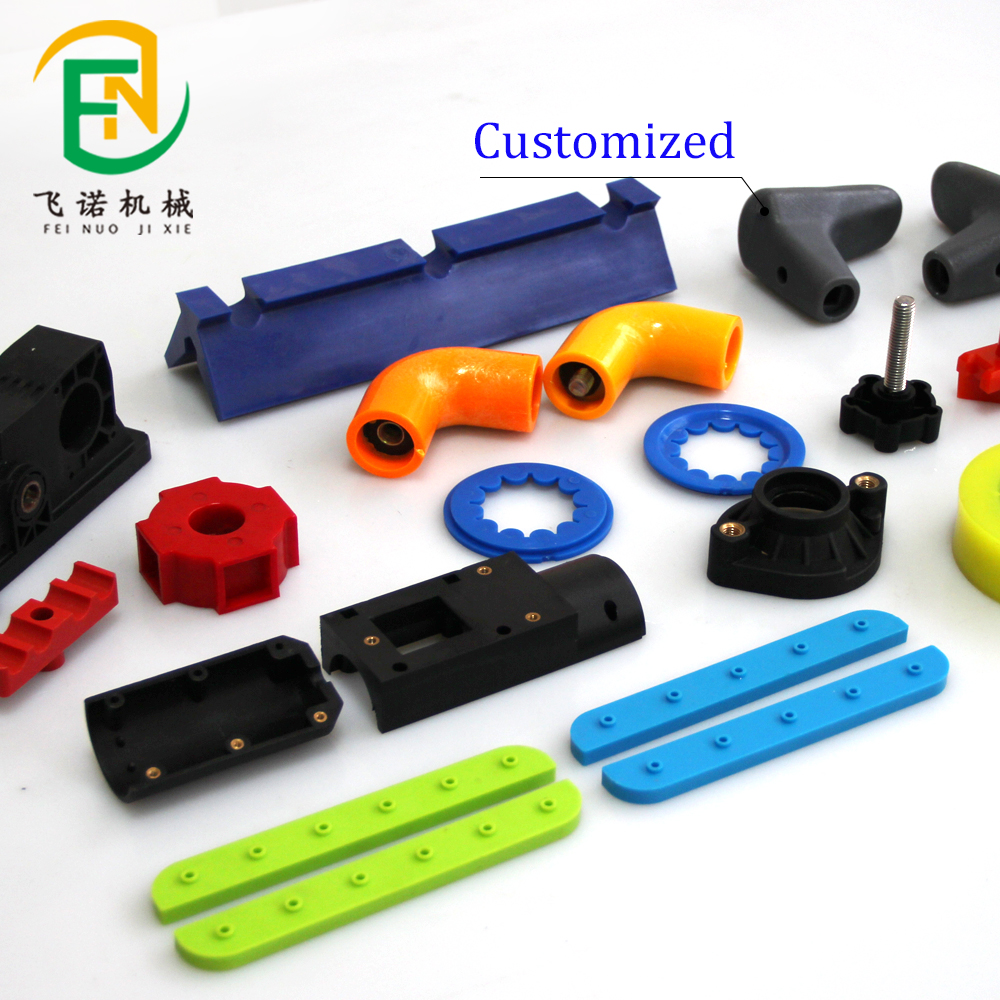
Injection molding is one of the most established and efficient methods of manufacturing plastic components. It involves injecting molten resin into a custom-designed mold cavity, where it cools and solidifies into the desired shape. This process is ideal for producing injection molding parts that require tight tolerances, consistent dimensions, and high structural integrity.
One of the main advantages of injection molding lies in its scalability. Once the mold is built, manufacturers can produce thousands or even millions of identical parts with minimal variation. The initial tooling investment may be high, but the per-part cost decreases significantly with volume, making it highly economical for large-scale production. Additionally, a wide range of materials — from flexible thermoplastics to high-performance engineering resins — ensures that injection molding can meet diverse performance requirements, whether for consumer goods, automotive components, or medical devices.
What Is 3D Printing? The Rise of Additive Manufacturing
3D printing, also known as additive manufacturing, represents a completely different approach to creating parts. Instead of using molds, it builds objects layer by layer from digital models. This method allows for exceptional flexibility in design and rapid iteration — qualities that make it a favorite for product development, prototyping, and small-scale production.
Unlike traditional manufacturing, 3D printing eliminates the need for tooling, which drastically reduces setup time and cost for one-off parts or limited runs. Designers can experiment with complex geometries that would be difficult or even impossible to achieve with molds. However, while 3D printing offers great versatility, it typically falls short in producing large quantities efficiently. The slower build speed and higher per-unit material cost make it better suited for projects where customization and agility matter more than volume.
Cost Comparison: Initial Investment vs. Long-Term Value
When comparing costs, injection molding parts and 3D printing differ greatly in how expenses are distributed. Injection molding requires a significant upfront investment in tooling and mold creation, which can cost thousands of dollars depending on the part’s complexity. However, once the mold is made, the per-part production cost drops dramatically, making it highly cost-effective for large batches.
In contrast, 3D printing has virtually no setup cost. This means it’s perfect for low-volume production or prototype testing, where only a handful of units are needed. The downside is that the cost per part remains relatively high as production scales, primarily due to slower print speeds and material expenses. As a general rule, 3D printing is cheaper for small quantities, while injection molding delivers far greater value for mass production.
Production Speed and Scalability: When Time Matters
Speed is another key factor separating these two methods. Once the mold is ready, injection molding parts can be produced at an impressive rate — sometimes within seconds per cycle. This speed, combined with automation, enables manufacturers to produce thousands of identical parts quickly and efficiently.
On the other hand, 3D printing’s layer-by-layer process is inherently slower. Even though modern printers have become faster, printing a batch of parts can still take hours or days, depending on the size and complexity. For small runs or rapid prototyping, this is acceptable, but for large-scale production, it becomes impractical. If time-to-market and scalability are top priorities, injection molding clearly holds the advantage.
Material Options and Mechanical Performance
The range and performance of materials also distinguish injection molding parts from 3D-printed components. Injection molding supports a vast selection of thermoplastics and thermosetting polymers, including those with advanced mechanical, chemical, and thermal properties. These materials offer superior strength, durability, and resistance, making injection molding ideal for demanding applications in industries such as automotive, aerospace, and healthcare.
3D printing materials have improved significantly in recent years, offering options like toughened nylon, resin, and even metal powders. However, most 3D-printed parts still cannot match the mechanical consistency or long-term stability of molded parts. The layer-based structure of 3D printing can also create weak points, especially when subjected to high stress or temperature variations.
Design Flexibility and Customization
When it comes to design freedom, 3D printing shines. Since it doesn’t require molds or tools, it can produce intricate geometries, internal channels, and lightweight lattice structures that are impossible or costly to achieve with traditional molding. Designers can modify digital models instantly, allowing rapid experimentation and product iteration.
By contrast, injection molding parts are limited by mold design constraints. Any change to the part requires expensive mold adjustments or complete retooling. However, injection molding ensures consistency and repeatability across thousands of units, which is critical for mass production. In many modern workflows, companies use both methods together — leveraging 3D printing for prototyping and testing before moving to injection molding for large-scale manufacturing.
Surface Finish and Aesthetic Quality
Another significant difference lies in the surface quality of finished parts. Injection molding parts typically have a smooth, glossy surface straight out of the mold. Molds can be polished or textured to achieve various finishes, from matte to mirror-like, without additional post-processing.
3D printing, in contrast, often leaves visible layer lines on the surface. While post-processing techniques like sanding, polishing, or coating can improve appearance, they add time and cost. For products that require a premium look or tight visual consistency, injection molding remains the superior choice. However, for prototypes or internal parts where appearance is secondary, 3D printing’s finish is often acceptable.
Environmental Impact and Sustainability
As sustainability becomes a greater priority, it’s essential to consider how each process affects the environment. Injection molding parts generally produce more waste during setup and mold creation but are highly efficient in high-volume production. The ability to recycle sprues and runners helps reduce material loss, and many molding facilities are implementing energy-efficient machinery and eco-friendly materials.
3D printing is often viewed as a more sustainable option because it creates less waste — material is only used where needed. It also enables localized, on-demand production, reducing shipping and storage needs. However, the energy consumption of some printers and the limited recyclability of certain printing materials can offset these environmental benefits. In practice, both methods can be sustainable if managed thoughtfully.
Choosing the Right Manufacturing Method for Your Project
Selecting between injection molding parts and 3D printing depends on your project’s priorities. If you need hundreds or thousands of identical parts with strong mechanical properties and a professional finish, injection molding is the clear winner. It’s the best choice for large-scale manufacturing where consistency and cost efficiency are critical.
If your project focuses on rapid prototyping, customization, or short production runs, 3D printing is likely the better fit. It allows quick design validation, low upfront costs, and freedom to experiment with new ideas. Many companies today use both — starting with 3D printing for prototypes and switching to injection molding for full-scale production once designs are finalized.
The Future of Manufacturing Is Hybrid
The debate between injection molding parts and 3D printing isn’t about which one is absolutely better — it’s about which one is better for your specific needs. Injection molding offers unbeatable efficiency, precision, and cost savings for large volumes, while 3D printing delivers speed, creativity, and flexibility for small batches and prototypes.
In the future, the most successful manufacturing strategies will likely blend both technologies. 3D printing will continue to push innovation at the design stage, while injection molding will remain the backbone of mass production. Together, they represent the perfect balance of innovation and efficiency — shaping the next generation of manufacturing excellence.