
- January 7, 2026
- Posted by: feinuojixie
- Category: Chain Guides News

Modern automation systems are built on speed, accuracy, and reliability. As production lines become faster and more complex, even small mechanical components play a decisive role in overall system performance. One such component is the Roller Chain Guide, which has evolved far beyond its traditional function of simply supporting and directing chain movement.
In today’s automated environments, a Roller Chain Guide must ensure consistent chain alignment, minimize friction, and maintain smooth operation under continuous loads. Any deviation or instability can lead to increased wear, unexpected downtime, and reduced production efficiency. This is why innovation in Roller Chain Guide design has become a key factor in shaping modern automation.
Advancements in materials, engineering methods, and system integration have transformed the Roller Chain Guide into a precision component that actively contributes to operational stability. By improving noise control, energy efficiency, and durability, innovative Roller Chain Guide solutions help automated systems meet higher performance standards while reducing maintenance demands.

The Evolving Role of Roller Chain Guide in Automated Systems
In early conveyor and transmission systems, a Roller Chain Guide mainly served as a basic support element to prevent chain derailment. Its purpose was largely passive, offering simple guidance without significantly influencing system performance. However, as automation technology matured, this role began to change rapidly.
Today, a Roller Chain Guide actively contributes to motion accuracy and operational consistency. Automated systems rely on precise synchronization between mechanical components, and even minor chain misalignment can disrupt workflows. A well-designed Roller Chain Guide ensures stable chain travel, reduces lateral movement, and supports repeatable positioning, which is essential for robotics, assembly automation, and material handling systems.
This evolution reflects a broader shift in automation design philosophy, where every component is expected to enhance performance rather than merely prevent failure. The modern Roller Chain Guide is now a functional element that supports speed, precision, and reliability across automated operations.
Material Innovations Driving the Next Generation of Roller Chain Guide
Material development has played a major role in advancing Roller Chain Guide performance. Traditional metal solutions often introduced high friction, noise, and wear, which limited efficiency in continuous operation. Modern automation demands materials that can perform reliably under high load while minimizing maintenance requirements.
Engineered polymers have transformed Roller Chain Guide design by offering excellent wear resistance, low friction characteristics, and self-lubricating properties. These materials help maintain smooth chain movement without the need for constant external lubrication, which is especially valuable in clean or sensitive production environments.
In addition, advanced material formulations allow a Roller Chain Guide to perform consistently across a wide temperature range and under varying operational conditions. This reliability supports automation systems that operate around the clock, ensuring predictable performance and extended service life.
Precision Engineering and Design Advancements in Roller Chain Guide
Beyond materials, precision engineering has significantly influenced Roller Chain Guide innovation. Modern manufacturing techniques enable tighter dimensional tolerances and more refined guide profiles, which directly improve chain stability and tracking accuracy.
Optimized geometry allows a Roller Chain Guide to distribute load more evenly along the chain path. This reduces localized stress points and minimizes premature wear on both the chain and the guide surface. As a result, automated systems benefit from smoother motion and reduced vibration, even at higher operating speeds.
Modular design concepts have also emerged, allowing a Roller Chain Guide to be easily integrated, replaced, or reconfigured within complex automation layouts. This flexibility supports scalable system design and simplifies future upgrades.
How Smart Manufacturing Influences Roller Chain Guide Development
Smart manufacturing has reshaped how mechanical components are designed and evaluated. Digital simulation and data-driven analysis now play a critical role in Roller Chain Guide development, enabling engineers to predict wear patterns, friction behavior, and load distribution before physical production begins.
By leveraging virtual testing, designers can optimize a Roller Chain Guide for specific automation scenarios, reducing trial-and-error during installation. This approach leads to more reliable performance from the first day of operation and minimizes commissioning time.
Smart manufacturing also encourages closer integration between mechanical and digital systems. While a Roller Chain Guide remains a mechanical component, its design increasingly aligns with the demands of intelligent automation platforms that prioritize efficiency, uptime, and predictive maintenance.
Roller Chain Guide Innovations for Noise Reduction and Smooth Operation
Noise control is a growing concern in modern automated facilities, especially where high-speed operation and human interaction coexist. Roller Chain Guide innovation has contributed significantly to quieter system performance.
Low-friction materials and refined surface finishes reduce chain vibration and impact noise during operation. A properly engineered Roller Chain Guide absorbs micro-movements and prevents resonance, creating a smoother and more controlled motion profile.
This quieter operation not only improves workplace conditions but also indicates reduced mechanical stress. Lower noise often correlates with lower wear, making Roller Chain Guide innovation an important factor in long-term system reliability.
Enhancing Energy Efficiency Through Advanced Roller Chain Guide Solutions
Energy efficiency is a key objective in modern automation, and Roller Chain Guide design plays a subtle yet important role in achieving it. Excessive friction within a conveyor or drive system increases power consumption and reduces overall efficiency.
An advanced Roller Chain Guide minimizes resistance by maintaining accurate chain alignment and providing a consistent sliding surface. This reduction in friction allows motors to operate more efficiently, lowering energy demand across the entire system.
Over time, these efficiency gains can result in meaningful cost savings, especially in large-scale automation where systems operate continuously. Investing in a high-quality Roller Chain Guide becomes a strategic decision rather than a simple component choice.
Custom Roller Chain Guide Solutions for Industry-Specific Automation Needs
Different industries place unique demands on automation systems, and a standardized Roller Chain Guide may not always deliver optimal performance. Customization has therefore become a major trend in Roller Chain Guide innovation.
In food processing and packaging automation, for example, material selection and cleanability are critical. In logistics and warehousing, durability and impact resistance take priority. A tailored Roller Chain Guide can be designed to address these specific requirements without compromising system efficiency.
By aligning Roller Chain Guide design with application-specific needs, manufacturers can achieve better performance, longer service intervals, and improved overall system reliability.
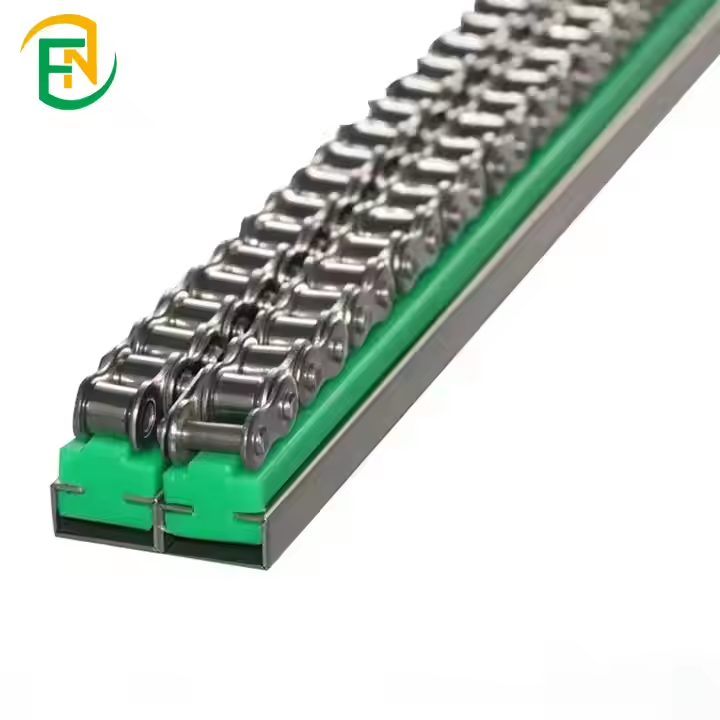
Sustainability and Long-Term Reliability in Roller Chain Guide Design
Sustainability has become an essential consideration in industrial design, and Roller Chain Guide innovation supports this goal in several ways. Longer-lasting materials reduce replacement frequency, which lowers material consumption and waste generation.
Low-maintenance Roller Chain Guide solutions also reduce the need for lubrication and chemical cleaning agents, contributing to a cleaner and more environmentally responsible operation. Some modern materials are even recyclable, supporting circular manufacturing practices.
From a reliability perspective, a durable Roller Chain Guide minimizes unexpected failures and downtime. This long-term stability aligns sustainability with operational efficiency, benefiting both manufacturers and end users.
The Future Outlook of Roller Chain Guide in Intelligent Automation
Looking ahead, the role of the Roller Chain Guide in automation will continue to expand. As systems become more intelligent and interconnected, mechanical components must support higher precision and consistency.
Future Roller Chain Guide development is likely to focus on even lower friction, improved material science, and closer alignment with automated system design standards. Integration with digital design tools will further enhance performance predictability and system optimization.
In intelligent automation environments, the Roller Chain Guide will remain a foundational element that quietly ensures smooth, accurate, and reliable motion.
Why Investing in Innovative Roller Chain Guide Technology Pays Off
Roller Chain Guide innovation is shaping the way modern automation systems perform, scale, and evolve. What was once a simple guiding component has become a critical contributor to precision, efficiency, and reliability.
By embracing advancements in material, engineering, and design, manufacturers can significantly improve system stability, reduce energy consumption, and extend equipment life. A well-chosen Roller Chain Guide supports not only current operational demands but also future automation growth.