
- December 11, 2025
- Posted by: feinuojixie
- Category: Chain Guides News
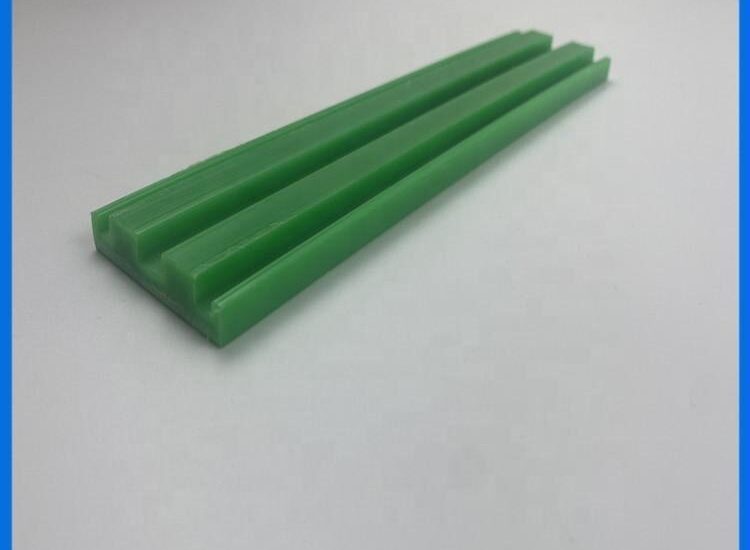
In modern engineering systems, the performance of many machines depends on how smoothly and reliably their moving component operate. A Plastic Guide plays a critical role in managing this movement by providing stable direction, reducing friction, and minimizing contact wear. When engineers select the right Plastic Guide, they improve equipment efficiency, extend service life, and prevent unexpected downtime. Poor material or design choice, on the other hand, can cause premature wear, noise, misalignment, or even safety issues. This is why a structured and informed selection process is essential.
A Plastic Guide is not merely a supporting part—it is a functional component that affects motion quality, energy consumption, and maintenance cost across conveyor system, automation equipment, packaging line, and many other industrial applications. As machinery becomes faster, lighter, and more precise, understanding how to select the appropriate Plastic Guide has become a key engineering skill.
Understanding the Function of a Plastic Guide in Engineering Systems
How a Plastic Guide Supports Motion Control
A Plastic Guide serves as a stable pathway that directs moving component such as chain, belt, or slider. Its purpose is to maintain alignment while minimizing friction between surfaces. By providing controlled motion, it helps prevent vibration, reduces operational resistance, and protects the mechanical structure from damage. This stability is especially valuable in high-speed or continuous production equipment where smooth flow is essential.
Why a Plastic Guide Performs Better Than Traditional Material in Many Applications
Compared with metal alternatives, a Plastic Guide offers natural lubrication, excellent wear resistance, and the ability to absorb vibration. It is much quieter in operation, resists corrosion, and does not damage the mating part. These advantages make it ideal for food processing, chemical environments, and systems that demand long service life with minimal maintenance. For engineers focused on extending machine reliability, a well-chosen Plastic Guide can outperform traditional material in both cost and performance.
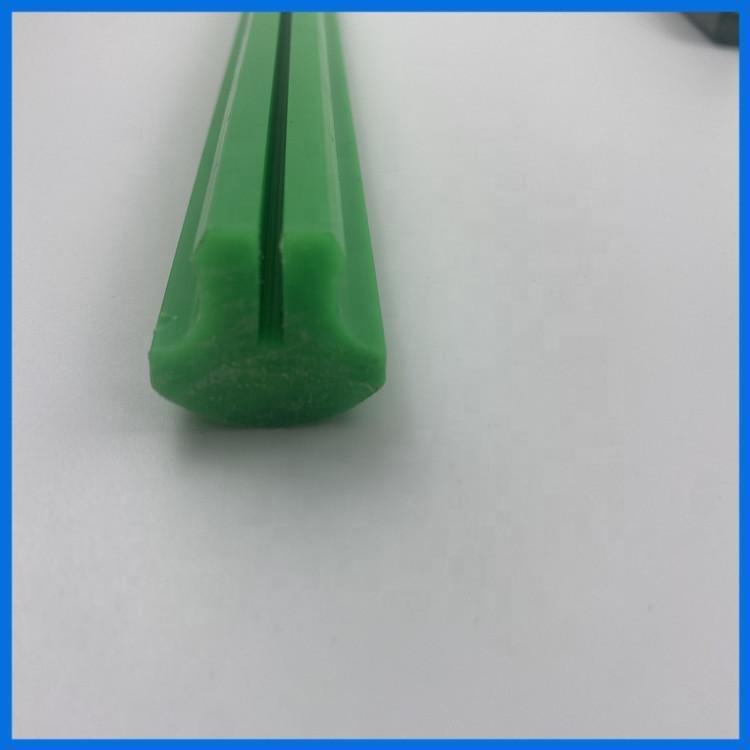
Key Material Factors Engineers Should Evaluate for a Plastic Guide
Assessing Load Requirement for a Plastic Guide
The first engineering consideration is load. A Plastic Guide must support both static and dynamic forces without deforming. Engineers should calculate expected load based on weight, contact area, and movement frequency. Choosing a Plastic Guide with insufficient load capacity leads to bending, excessive wear, or failure. High-density and reinforced plastics are often preferred for heavy-duty applications.
Evaluating Temperature Resistance in a Plastic Guide
Temperature influences plastic behavior more than most material. A Plastic Guide must maintain shape and stability even under continuous frictional heat or environmental temperature changes. Selecting a material with inadequate thermal resistance could cause warping, softening, or performance decline. For high-speed machinery or equipment operating near heat sources, temperature-rated engineering plastics are essential.
Understanding Wear and Friction Characteristics of a Plastic Guide
Wear resistance dictates how long a Plastic Guide can perform reliably. Engineers should examine the material’s coefficient of friction and its ability to withstand continuous motion. A lower friction coefficient reduces energy consumption, extends lifespan, and ensures smoother operation. UHMW and certain modified polymers excel in this category.
Chemical Resistance and Contamination Risk in a Plastic Guide
In sectors like food production, chemical processing, or medical equipment, a Plastic Guide must resist oils, solvents, moisture, and cleaning agents. Some plastics degrade or swell when exposed to chemicals. Choosing the wrong material can result in contamination, premature wear, or safety hazards. Chemical-resistant plastics help ensure stable, long-term operation.
Different Types of Plastic Guide and Their Engineering Uses
A Plastic Guide for Conveyor System
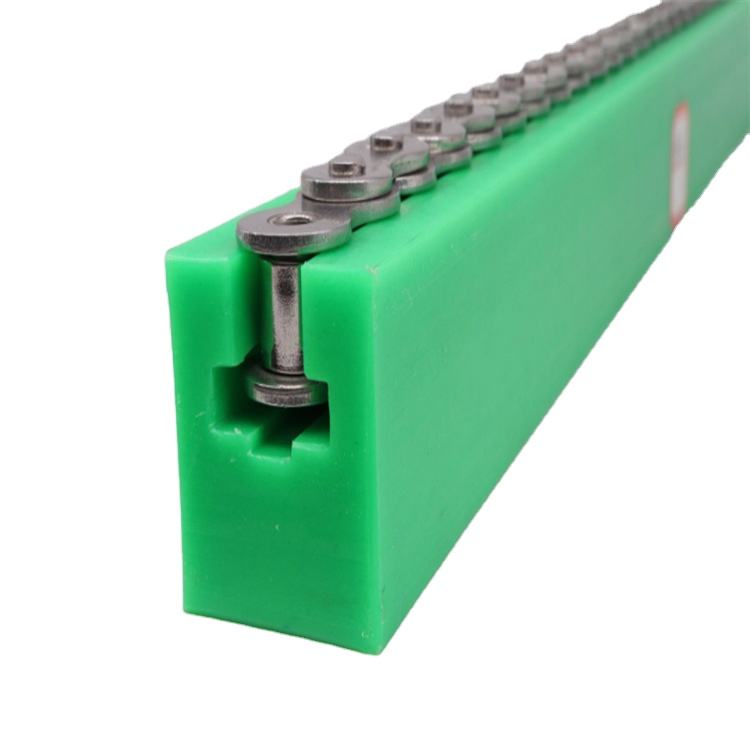
Conveyor lines rely heavily on Plastic Guide for chain, belt, and roller support. UHMW is commonly used for its low friction and excellent wear behavior. HDPE and nylon may be selected for medium-load or general-purpose needs. The type chosen depends on speed, load, and environmental condition.
A Plastic Guide for High-Speed Automation
Automation system requires precise and consistent guidance. A Plastic Guide used in these applications must deliver dimensional stability, reduced friction, and minimal noise. Engineering plastics designed for precision, such as acetal or special modified polymers, offer excellent performance for robotic paths and indexing systems.
A Plastic Guide for Heavy-Duty Industrial Machinery
For higher impact and heavier loads, a reinforced Plastic Guide provides the strength needed to prevent failure. These are used in mining machinery, large conveyor system, and industrial automation where shock load is common. Fiber-reinforced plastics or thicker profile designs are often used to ensure durability.
Design Considerations When Selecting a Plastic Guide
The Importance of Geometry and Profile in a Plastic Guide
The shape and profile of a Plastic Guide influence how well it supports and directs motion. Engineers must consider thickness, surface curvature, and edge design. A properly designed profile ensures even load distribution, better wear resistance, and smoother operation.
Tolerances and Fit Requirement for a Plastic Guide
Precision in tolerance is crucial. If a Plastic Guide fits too loosely, vibration and noise increase. If it fits too tightly, friction rises and wear accelerates. Engineers need to define suitable clearance based on the mating component and motion style to achieve optimal performance.
Mounting Method and Hardware Compatibility
A Plastic Guide must be installed securely using compatible fasteners or mounting channels. Poor installation leads to misalignment, uneven wear, or instability. Engineers should consider thermal expansion, mounting stiffness, and hardware placement to ensure long-term reliability.
Performance Metrics Engineers Should Analyze
Coefficient of Friction in a Plastic Guide
This metric determines how efficiently moving parts slide across the guide. A lower coefficient reduces energy loss, heat generation, and operating noise. Engineers should review material specifications and conduct real-world testing when necessary.
Impact Strength and Shock Absorption
Some applications involve sudden force or irregular movement. A Plastic Guide with strong impact resistance prevents cracking or chipping under load. Shock absorption helps reduce vibration transmitted to machinery, improving overall stability.
Noise Reduction Capability
A significant advantage of a Plastic Guide is its ability to lower machine noise. Its inherent damping characteristic minimizes vibration during motion, contributing to a quieter working environment and better equipment longevity.
Choosing a Plastic Guide Based on Application Environment
A Plastic Guide for Wet or Corrosive Condition
In moist or corrosive environments, the chosen Plastic Guide must resist water absorption, rust, and chemical attack. Material like UHMW and certain engineered polymers outperform metal in these conditions due to their non-corrosive nature.
A Plastic Guide for Clean or Sterile Environment
For food, beverage, pharmaceutical, or clean-room systems, hygiene is critical. A Plastic Guide should be non-toxic, easy to clean, and compliant with relevant standards. It must not shed particles or react with cleaning chemicals.
A Plastic Guide for Outdoor or Temperature-Fluctuating Condition
Outdoor applications require resistance to UV exposure, temperature swings, and environmental stress. Plastics with UV stabilizer or high thermal stability ensure consistent performance in changing conditions.
Cost vs Performance: How to Balance Budget and Engineering Requirement
Cost should never be the only factor in selecting a Plastic Guide. Engineers must evaluate long-term performance, maintenance intervals, and replacement cost. A guide with higher initial price may offer better wear resistance and reduce downtime, resulting in lower total ownership cost. Balancing these factors ensures efficient and economical decision-making.
Common Mistakes Engineers Make When Selecting a Plastic Guide
Common mistakes include overlooking load requirement, choosing a material incompatible with chemicals, ignoring thermal expansion, or using poor mounting design. Engineers also sometimes select a Plastic Guide based solely on cost, which may lead to premature failure. Understanding these pitfalls helps avoid costly errors.
How to Work with a Supplier to Specify the Right Plastic Guide
Effective communication with a supplier improves selection accuracy. Engineers should provide application details, operating condition, motion style, load data, and dimensional drawings. Requesting samples or prototype testing helps validate performance before large-scale use. A knowledgeable supplier can offer material recommendations and design guidance.
Making an Informed Plastic Guide Selection
Selecting the right Plastic Guide is more than choosing a piece of plastic—it is a strategic engineering decision that influences machine efficiency, noise level, reliability, and operational cost. By understanding material property, environmental condition, load requirement, and design factors, engineers can choose a guide that delivers optimal performance and long-term value. A careful and well-informed selection process ensures that machinery operates smoother, quieter, and more efficiently across a wide range of industrial applications.