
- December 26, 2025
- Posted by: feinuojixie
- Category: Chain Guides News
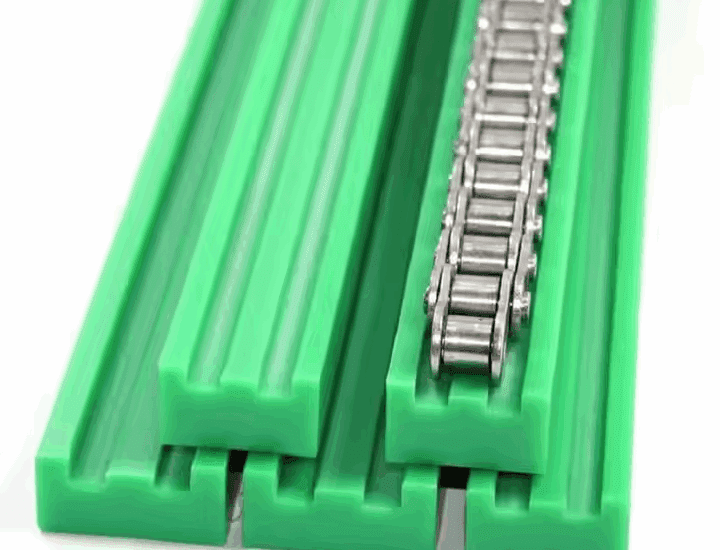
Chain guides for roller chain play a critical role in the engineered interaction between moving chain components and the surrounding mechanical structure. From an engineering standpoint, their primary function is to control chain movement with precision while maintaining consistent alignment throughout operation. This guidance reduces unpredictable motion that can lead to accelerated wear, inefficiency, and mechanical failure.
In engineered systems, uncontrolled chain deflection often results in uneven load distribution across the chain and sprocket interface. Chain guides for roller chain are designed to counteract this issue by supporting the chain along its travel path, ensuring that tensile forces remain evenly managed. This engineered support becomes especially important in long conveyor runs or systems with frequent directional changes.
Another essential engineering function of chain guides for roller chain is motion stabilization. By limiting lateral and vertical movement, the guide helps maintain smooth power transmission and reduces dynamic stress on surrounding components. This stability directly contributes to improved system reliability and predictable performance over extended operating cycles.
From a system design perspective, chain guides for roller chain are not secondary accessories but integral engineered components. When correctly selected and applied, they form a critical link between mechanical theory and real-world operational efficiency, laying the foundation for optimal system performance.
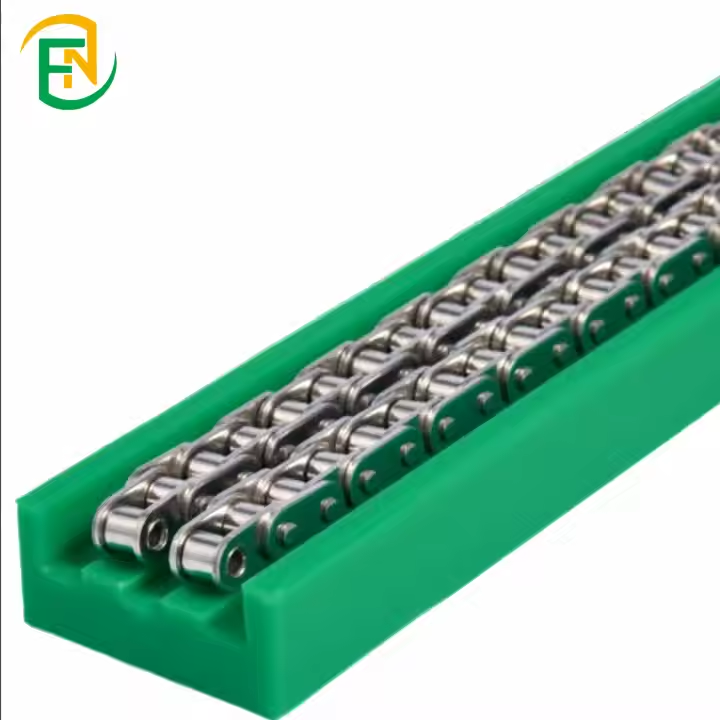
Why Chain Guides for Roller Chain Matter in Modern Power Transmission Systems
In modern power transmission systems, precision and consistency are essential for achieving dependable output. Chain guides for roller chain contribute directly to this goal by controlling the chain path and preventing unwanted movement during operation. From an engineering perspective, this guidance improves force transfer efficiency while reducing mechanical uncertainty.
As equipment becomes more compact and automated, design tolerances tighten. Chain guides for roller chain help engineers maintain control within these constraints by stabilizing chain travel even under fluctuating loads. This controlled motion supports smoother engagement between chain and sprocket, which enhances overall system predictability.
In applications where uptime is critical, the engineering value of chain guides for roller chain becomes even more apparent. Reduced misalignment leads to fewer unplanned shutdowns, making the guide an important contributor to system availability and productivity.
Key Design Principles Behind High-Performance Chain Guides for Roller Chain
The engineering performance of chain guides for roller chain begins with thoughtful design. One of the most important principles is consistent load distribution along the chain path. Properly engineered geometry ensures that contact forces are spread evenly rather than concentrated at specific points.
Another critical principle is alignment control. Chain guides for roller chain are designed to maintain the correct chain position relative to sprockets and structural components. This alignment reduces side loading and helps preserve the integrity of the entire drive system.
Surface interaction is also a core design consideration. The profile and finish of chain guides for roller chain are engineered to allow controlled sliding while minimizing resistance. This balance supports smooth motion without introducing excessive friction.
Material Engineering Considerations for Chain Guides for Roller Chain
Material selection plays a defining role in the performance of chain guides for roller chain. Engineers evaluate factors such as wear resistance, load capacity, temperature tolerance, and chemical compatibility when choosing materials for specific applications.
Engineered polymers are frequently selected due to their low friction characteristics and ability to operate without external lubrication. These materials allow chain guides for roller chain to perform reliably while reducing maintenance demands and energy loss.
In heavier-duty environments, material engineering focuses on structural stability and long-term durability. The right material choice ensures that chain guides for roller chain maintain dimensional accuracy even under continuous stress, preserving consistent chain control over time.
Managing Friction and Wear Through Chain Guides for Roller Chain Engineering
Friction management is a central engineering objective when designing chain guides for roller chain. Excessive friction not only increases energy consumption but also accelerates wear on both the chain and guide surfaces.
Through optimized contact geometry and material properties, chain guides for roller chain are engineered to create controlled sliding conditions. This reduces heat generation and prevents surface degradation during prolonged operation.
Wear management also contributes to predictable maintenance cycles. By slowing wear progression, chain guides for roller chain help engineers plan service intervals more accurately and avoid unexpected component failure.
The Impact of Chain Guides for Roller Chain on Noise, Vibration, and Stability
Mechanical noise and vibration are often indicators of poor system control. Chain guides for roller chain play an important role in dampening these effects by stabilizing chain motion and limiting oscillation.
From an engineering standpoint, reduced vibration translates into lower dynamic stress on bearings, shafts, and frames. Chain guides for roller chain help isolate movement, improving system smoothness and extending component life.
Noise reduction is another valuable benefit. By minimizing impact and chatter, chain guides for roller chain contribute to quieter operation, which is increasingly important in modern industrial and automated environments.
Engineering Chain Guides for Roller Chain in High-Speed and High-Load Applications
High-speed and high-load conditions place significant demands on mechanical systems. In these environments, chain guides for roller chain must be engineered to withstand elevated forces without deformation or instability.
Engineers address these challenges through reinforced guide profiles and carefully selected materials that maintain performance under stress. Chain guides for roller chain designed for demanding applications provide consistent guidance even as operating conditions fluctuate.
Thermal management also becomes important at higher speeds. Properly engineered chain guides for roller chain limit friction-related heat buildup, helping maintain system efficiency and reliability.
Installation Precision and Its Influence on Chain Guides for Roller Chain Performance
Even the most advanced design depends on precise installation. Chain guides for roller chain must be mounted accurately to achieve their intended engineering function.
Alignment accuracy ensures uniform contact between the chain and guide surface. When chain guides for roller chain are installed correctly, they prevent uneven loading and reduce localized wear.
Engineers also consider mounting rigidity during installation. Secure support allows chain guides for roller chain to maintain stable positioning, which is essential for consistent long-term performance.
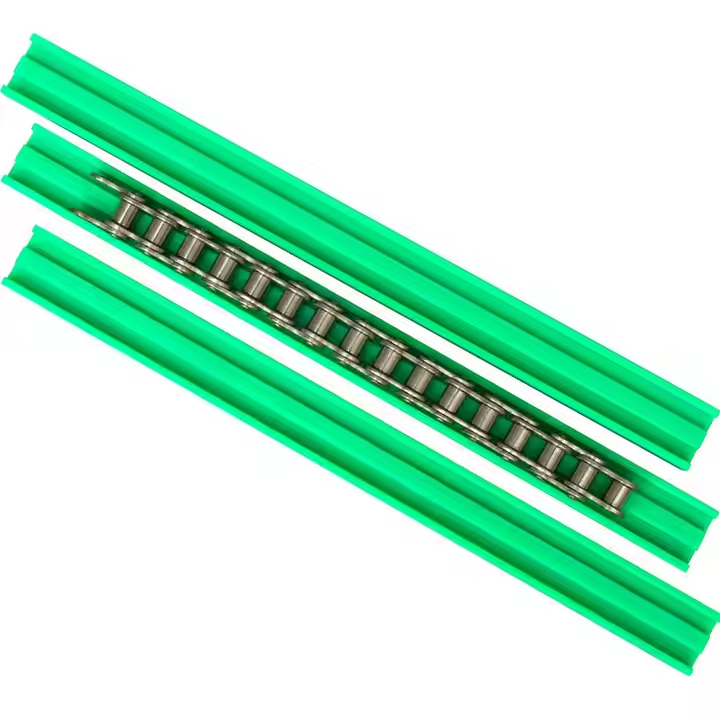
Maintenance Engineering Strategies for Extending Chain Guides for Roller Chain Service Life
Effective maintenance begins with understanding engineered wear patterns. Regular inspection allows engineers to identify early signs of degradation in chain guides for roller chain before performance is affected.
Cleaning and basic condition monitoring help preserve surface integrity and prevent contamination-related wear. These simple practices allow chain guides for roller chain to operate as designed throughout their service life.
From an engineering strategy standpoint, proactive maintenance ensures that chain guides for roller chain continue supporting optimal system behavior rather than reacting to failure after it occurs.
Future Engineering Trends Shaping Chain Guides for Roller Chain
Advancements in material science and manufacturing are shaping the future of chain guides for roller chain. New engineered polymers and composite materials offer improved wear resistance and lower friction characteristics.
Design innovation is also evolving through simulation and data-driven analysis. Engineers are using advanced modeling tools to refine chain guides for roller chain geometry for greater efficiency and durability.
As industrial systems continue to demand higher performance and reliability, chain guides for roller chain will remain a key engineered component, bridging mechanical design principles with real-world operational excellence.