
- December 24, 2025
- Posted by: feinuojixie
- Category: Chain Guides News
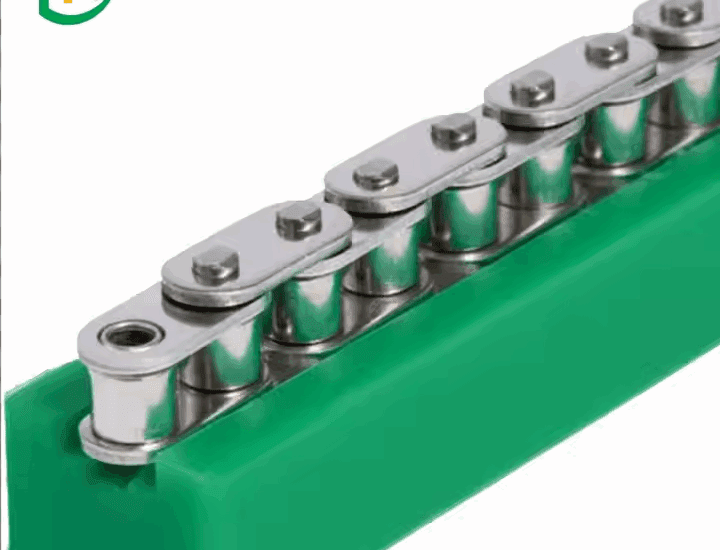
In modern industrial systems, efficiency and reliability are no longer optional—they are essential. Chain guides for roller chain play a foundational role in ensuring smooth operation across conveyor systems, automated production lines, and mechanical drive applications. While often overlooked, these components directly influence equipment lifespan, noise levels, and maintenance frequency.
Chain guides for roller chain are designed to control the path of the chain, minimize unwanted lateral movement, and reduce metal-to-metal contact. By providing a stable guiding surface, they help maintain consistent chain alignment even under varying loads and speeds. This stability becomes especially important as production environments demand higher throughput and longer operating hours.
As industries continue to push for reduced downtime and improved safety, understanding how to properly select and use chain guides for roller chain becomes a critical engineering consideration. From choosing the right material to applying correct installation techniques, each decision impacts overall system performance.
Understanding the Core Function of Chain Guides for Roller Chain
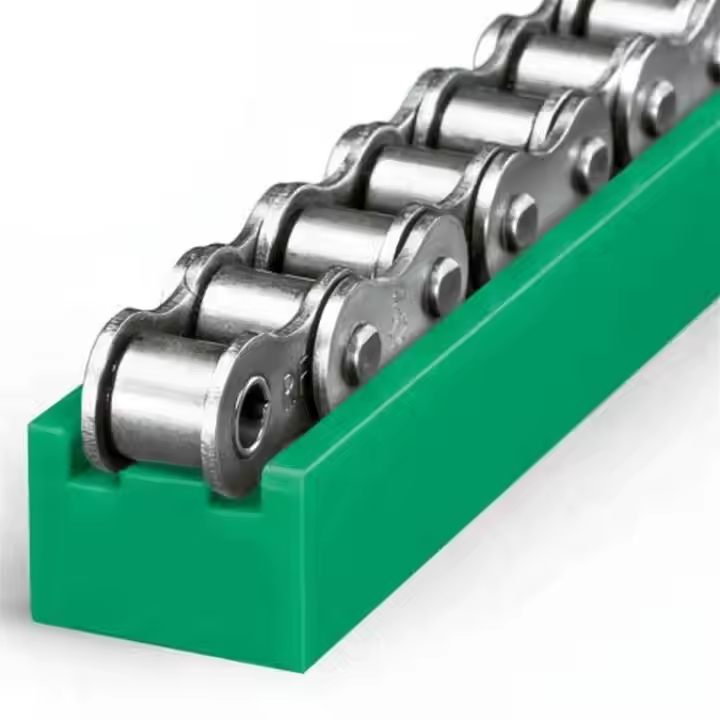
At their core, chain guides for roller chain serve as a controlled interface between the moving chain and the machine structure. Instead of allowing the chain to contact metal frames or unsupported surfaces, the guide provides a low-friction channel that directs movement in a predictable and repeatable manner.
One of the most important functions of chain guides for roller chain is wear reduction. By limiting vibration and misalignment, the guide minimizes uneven loading on chain links and sprockets. This leads to smoother power transmission and significantly extends component life.
In addition, chain guides for roller chain help control noise and vibration. The consistent contact between the chain and the guide dampens impact forces that would otherwise generate excessive sound and mechanical stress. This makes them especially valuable in environments where operator comfort and regulatory noise limits are concerns.
Common Applications That Rely on Chain Guides for Roller Chain
Chain guides for roller chain are widely used across many industries because of their adaptability and performance benefits. Conveyor systems are one of the most common applications, where guides maintain chain tracking over long distances and complex layouts.
In packaging and material handling equipment, chain guides for roller chain ensure precise movement during indexing, accumulation, and transfer operations. Their ability to maintain alignment is essential for avoiding jams and ensuring consistent product flow.
Heavy industrial machinery also depends on chain guides for roller chain to manage high loads and continuous operation. In these environments, the guide not only supports the chain but also protects surrounding structures from wear and damage caused by uncontrolled movement.
Material Selection Basics for Chain Guides for Roller Chain
Selecting the right material is one of the most important decisions when specifying a chain guide for roller chain. The material determines how the guide handles friction, load, impact, and long-term wear. A well-chosen material allows the guide to operate smoothly alongside the chain while protecting both components from premature damage.
Plastic-based solutions are widely preferred because they offer low friction and self-lubricating properties. Compared with metal alternatives, a plastic chain guide for roller chain reduces noise and minimizes abrasion on the chain surface. This makes material selection a balance between mechanical strength, durability, and environmental compatibility rather than simple hardness.
Comparing Plastic Options Used in Chain Guides for Roller Chain
Different plastic materials provide different performance advantages when used in a chain guide for roller chain. UHMW material is known for excellent wear resistance and very low friction, making it ideal for continuous sliding contact. Nylon offers higher stiffness and load-bearing capability, which is beneficial in applications where structural support is critical.
Reinforced polymer options combine strength and dimensional stability, helping a chain guide for roller chain maintain accurate alignment under fluctuating loads. Each option serves a specific purpose, and selecting the wrong material can lead to increased wear or operational instability.
How Load and Speed Influence Chain Guides for Roller Chain Material Choice
Operating load and chain speed directly affect how a chain guide for roller chain performs over time. Higher loads place greater pressure on the contact surface, requiring materials with strong compressive strength and resistance to deformation.
Speed also plays a key role. At higher speeds, frictional heat builds up more quickly, so a chain guide for roller chain must be made from a material capable of maintaining stability under elevated temperatures. Matching material characteristics to real operating conditions helps prevent early failure and unexpected downtime.
Environmental Factors That Affect Chain Guides for Roller Chain Performance
Environmental exposure can dramatically influence the lifespan of a chain guide for roller chain. Temperature extremes may cause certain plastics to soften or become brittle, while moisture can affect dimensional stability if the material is not properly selected.
Chemical exposure is another important consideration. In washdown or chemical processing environments, a chain guide for roller chain must resist corrosion and degradation to ensure consistent performance. Understanding the operating environment allows engineers to select materials that maintain reliability over time.
Design Considerations When Specifying Chain Guides for Roller Chain
Proper design ensures that a chain guide for roller chain supports smooth movement without introducing unnecessary resistance. Groove geometry must closely match the chain profile to prevent binding while maintaining adequate control.
Mounting design is equally important. A chain guide for roller chain should be securely supported along its length to avoid flexing or vibration. Attention to tolerance and alignment during the design phase reduces installation challenges and improves long-term performance.
Common Design Mistakes in Chain Guides for Roller Chain
One common mistake is undersizing the guide, which limits its ability to properly support the chain. An improperly sized chain guide for roller chain may cause uneven wear or unstable movement.
Another frequent issue is neglecting thermal expansion. Plastic materials expand differently than metal frames, and failing to allow for movement can cause stress buildup. Avoiding these design oversights leads to more reliable and predictable operation.
Preparing Equipment Before Installing Chain Guides for Roller Chain
Before installation begins, the equipment should be thoroughly inspected. Surfaces must be clean, flat, and free from damage that could affect alignment. Proper preparation ensures the chain guide for roller chain sits correctly and performs as intended.
Checking sprocket alignment and chain condition is also essential. Installing a new chain guide for roller chain into a misaligned system reduces its effectiveness and shortens service life.
Best Practices for Installing Chain Guides for Roller Chain
Correct installation ensures the chain guide for roller chain delivers consistent guidance and wear protection. Fasteners should be evenly spaced and tightened to specification to avoid distortion.
Clearance must be carefully controlled so the chain moves freely without excessive side play. Accurate alignment during installation allows the chain guide for roller chain to reduce friction and vibration from the first cycle of operation.
How Improper Installation Affects Chain Guides for Roller Chain
Improper installation often leads to uneven wear patterns and increased noise. A misaligned chain guide for roller chain can force the chain against one side of the groove, accelerating material loss.
Over-tightening fasteners may also restrict thermal movement, causing cracking or deformation. These issues highlight why installation quality is just as important as material selection.
Maintenance Tips to Extend the Life of Chain Guides for Roller Chain
Routine inspection is the most effective way to extend the life of a chain guide for roller chain. Visual checks for wear, debris buildup, or unusual contact patterns help identify issues early.
Cleaning the guide surface and monitoring chain condition also support long-term performance. A well-maintained chain guide for roller chain reduces unexpected downtime and keeps the entire system running smoothly.
Troubleshooting Common Issues with Chain Guides for Roller Chain
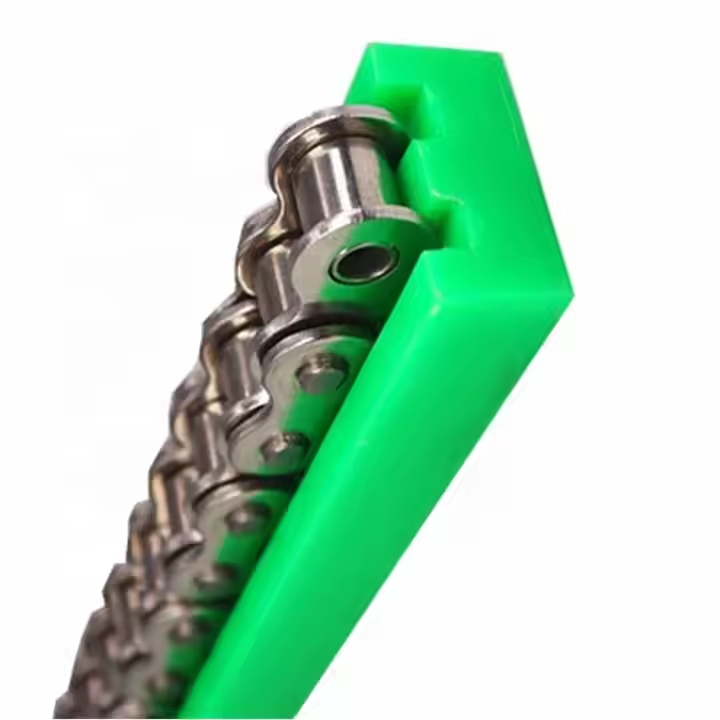
Excessive noise is often the first sign of a problem. When a chain guide for roller chain begins to wear unevenly, vibration and sound levels typically increase.
Irregular wear patterns may indicate alignment issues or improper material selection. Addressing these symptoms early prevents more serious system damage and costly repairs.
How High-Quality Chain Guides for Roller Chain Reduce Total Cost of Ownership
Investing in a high-quality chain guide for roller chain delivers long-term financial benefits. Reduced wear on the chain and sprockets lowers replacement frequency and maintenance labor.
Improved stability also minimizes unplanned downtime, allowing production schedules to remain consistent. Over time, the right chain guide for roller chain contributes directly to lower operating costs and higher system efficiency.
Making Smarter Decisions with Chain Guides for Roller Chain
Chain guide for roller chain selection and installation are critical factors in achieving reliable and efficient mechanical systems. From material choice to installation accuracy, each step influences performance, durability, and maintenance needs.
By understanding operating conditions and applying best practices, engineers and maintenance teams can ensure that a chain guide for roller chain delivers maximum value. Making informed decisions today leads to smoother operation, longer service life, and more dependable equipment tomorrow.