
- January 7, 2026
- Posted by: feinuojixie
- Category: Chain Guides News

In modern industrial systems, roller chain is expected to operate faster, carry heavier loads, and run for longer periods with minimal downtime. As production demands increase, even small inefficiencies in chain guidance can lead to major operational problems. Excessive wear, misalignment, noise, and unexpected stoppages are often traced back to one overlooked component: improper chain guidance.
A well-designed Roller Chain Guide addresses these issues at their source. Rather than reacting to failures after they occur, it provides continuous control over chain movement, ensuring stability, accuracy, and reliability throughout operation. By understanding the problems it solves, engineers and maintenance teams can make smarter design choices that significantly improve system performance.
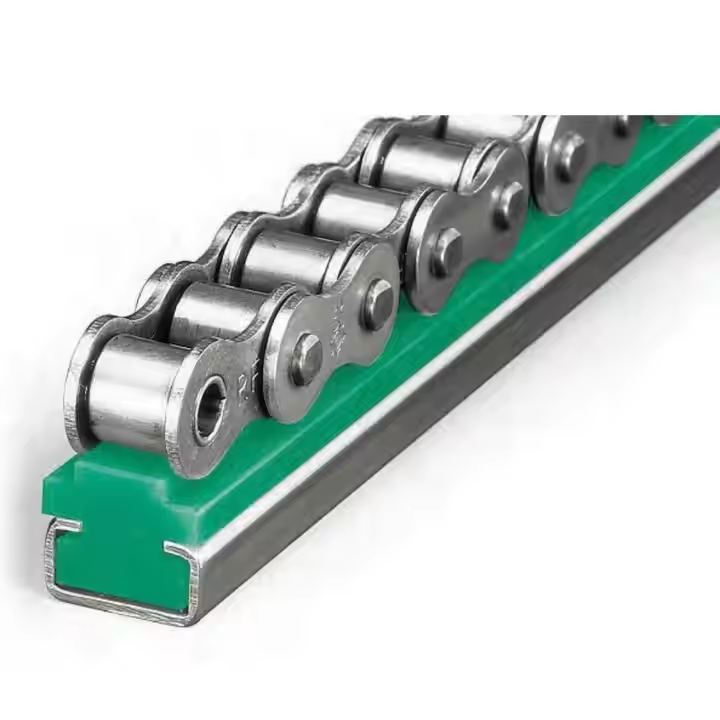
Excessive Chain Wear Caused by Poor Chain Control
One of the most common and costly problems in chain-driven systems is accelerated chain wear. When a chain is allowed to wander, vibrate, or oscillate during operation, metal-to-metal contact increases at unintended points. This leads to uneven wear on chain links, pins, and bushings, shortening the overall service life of the chain.
A properly engineered Roller Chain Guide maintains consistent chain alignment and contact surfaces. By supporting the chain along its intended path, it reduces lateral movement and prevents unnecessary friction. This controlled motion distributes load more evenly, allowing the chain to wear predictably and last significantly longer, even in demanding applications.
Chain Misalignment and Tracking Issues in Conveyor Systems
Misalignment is another frequent issue, especially in long or complex conveyor layouts. Without precise guidance, chain can drift off its intended track, causing uneven load distribution and placing stress on sprockets and bearings. Over time, this misalignment leads to reduced efficiency and increased risk of mechanical failure.
A well-positioned Roller Chain Guide ensures the chain remains properly seated throughout its travel path. It provides physical guidance that corrects minor deviations before they escalate into major tracking problems. This results in smoother operation, improved load handling, and greater confidence in system reliability.
Noise and Vibration Problems in High-Speed Operation
As operating speeds increase, uncontrolled chain movement often results in excessive noise and vibration. These issues are not only disruptive to the working environment but also indicate mechanical instability within the system. Vibration accelerates fatigue in both the chain and surrounding components, while persistent noise often signals friction or misalignment.
A carefully designed Roller Chain Guide dampens vibration by maintaining constant contact between the chain and the guiding surface. This controlled interaction minimizes sudden impacts and resonance during operation. The result is quieter performance, smoother motion, and improved comfort for operators working near the equipment.
Unexpected Downtime from Chain Derailment
Chain derailment is one of the most disruptive failures in conveyor and transmission systems. When chain jumps off its intended path, production often stops immediately, requiring manual intervention and system inspection. These incidents can also cause secondary damage to sprockets, guards, and nearby components.
A reliable Roller Chain Guide provides continuous directional support that prevents derailment before it can occur. By physically constraining the chain within a defined path, it eliminates the conditions that allow chain to lift, twist, or disengage. This proactive guidance significantly reduces unplanned downtime and improves overall system dependability.
Inconsistent Product Flow and Reduced Throughput
In conveyor applications, unstable chain motion directly affects product flow. Sudden speed fluctuations, hesitation, or lateral movement can disrupt spacing and positioning, leading to reduced throughput and compromised process quality. These inconsistencies become especially problematic in automated or synchronized production lines.
The use of a precision-engineered Roller Chain Guide ensures smooth and consistent chain travel. By stabilizing motion throughout the conveyor path, it helps maintain uniform speed and predictable movement. This consistency supports higher throughput, improved product handling, and better coordination between system components.
Increased Maintenance Costs and Labor Demands
Systems without proper chain guidance often require frequent adjustments, inspections, and component replacement. Maintenance teams spend valuable time correcting alignment issues, replacing worn chain, and addressing noise or vibration complaints. Over time, these recurring tasks drive up labor costs and reduce overall equipment availability.
A durable Roller Chain Guide minimizes these demands by preventing many common failure modes. With controlled chain movement and reduced wear, maintenance intervals become longer and more predictable. This allows teams to focus on planned maintenance rather than reactive repairs, lowering total cost of ownership.
Premature Sprocket and Component Damage
Poor chain control does not only affect the chain itself. Misalignment and instability place uneven loads on sprockets, shafts, and bearings, accelerating wear across the entire system. Once these components begin to fail, repair costs rise sharply and system reliability declines.
By maintaining proper chain engagement, a well-designed Roller Chain Guide protects critical components from unnecessary stress. It ensures smooth entry and exit at sprockets, reducing impact forces and extending the service life of surrounding mechanical parts.
Challenges in Harsh or Contaminated Environments
Many industrial systems operate in environments exposed to dust, moisture, chemicals, or extreme temperatures. In these conditions, chain instability is often amplified, leading to faster degradation and unpredictable performance.
A thoughtfully selected Roller Chain Guide addresses these challenges through appropriate material choice and structural design. Wear-resistant polymers or engineered materials help maintain guidance performance even under harsh conditions. This ensures reliable operation where traditional guidance solutions may fail.
Design Features That Make a Roller Chain Guide Effective
Not all guidance solutions deliver the same results. Key design factors such as material durability, low-friction surfaces, precise profile geometry, and secure mounting all contribute to performance. A well-designed Roller Chain Guide balances strength with smooth interaction, allowing the chain to move freely while remaining fully controlled.
Attention to these design details ensures consistent guidance, reduced energy loss, and long-term reliability across a wide range of operating conditions.
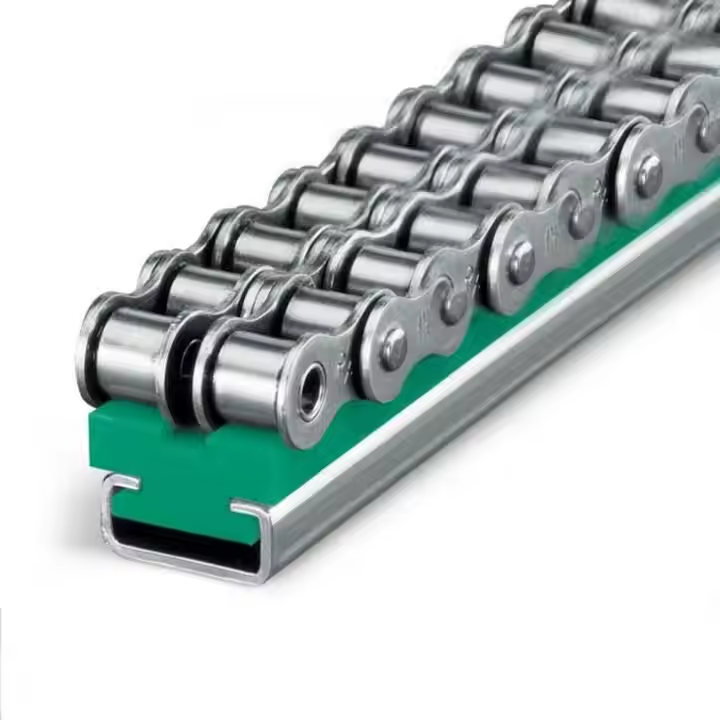
How to Choose the Right Roller Chain Guide for Your Application
Selecting the correct guidance solution requires understanding system requirements. Load capacity, operating speed, environmental exposure, and layout constraints all influence the ideal Roller Chain Guide design. Choosing a guide that matches these conditions ensures optimal performance and minimizes the risk of future issues.
By evaluating application demands early in the design process, engineers can integrate a guidance solution that supports efficiency, safety, and durability from day one.
Turning Common Chain Problems into Long-Term Reliability
Many of the most persistent issues in chain-driven systems stem from inadequate guidance. Excessive wear, noise, misalignment, and downtime are not inevitable problems but symptoms of poor chain control. A well-designed Roller Chain Guide directly addresses these challenges, transforming unstable systems into reliable, high-performing operations.
By investing in proper guidance, manufacturers and system designers gain longer service life, lower maintenance costs, and smoother operation. In the long run, a thoughtfully engineered Roller Chain Guide is not just a supporting component but a critical contributor to industrial reliability and efficiency.