
- September 5, 2025
- Posted by: feinuojixie
- Category: Chain Guides News

When it comes to improving the performance and lifespan of industrial equipment, few components play as critical a role as a wear strip. This simple yet essential part helps reduce friction, protect surfaces from damage, and ensure the smooth movement of chains, belts, or mechanical parts. While small in size, the choice of wear strip material can make a big difference in efficiency, noise control, and overall maintenance cost. Among the most common options are rubber, UHMW, and metal, each offering unique advantages and trade-offs. Understanding their strengths and weaknesses is the first step toward selecting the option that best fits your application.

Understanding the Role of a Wear Strip
A wear strip is designed to act as a protective guide between moving parts and the surface they come into contact with. By reducing direct friction, it helps minimize wear on expensive machinery components and prolongs their service life. The right material choice is not only about durability but also about factors like energy efficiency, noise reduction, and ease of maintenance. A poorly chosen wear strip can lead to unnecessary downtime, faster equipment failure, and increased costs, while the right one can improve workflow and extend the lifespan of entire systems.
Rubber Wear Strip: Flexibility and Shock Absorption
Rubber wear strip is valued for its ability to absorb vibration and provide cushioning. Its flexibility makes it ideal for systems that operate with constant impact or in environments where grip is important. Industries that involve material handling or shock-prone operations often benefit from rubber because it can protect both the conveyor and the products being transported. However, rubber has limitations in terms of long-term durability. It can wear down more quickly under high loads or continuous abrasion, and exposure to oils or certain chemicals may accelerate its degradation. This makes rubber most suitable for light- to medium-duty applications where vibration damping is a priority.
UHMW Wear Strip: Lightweight and Low Friction
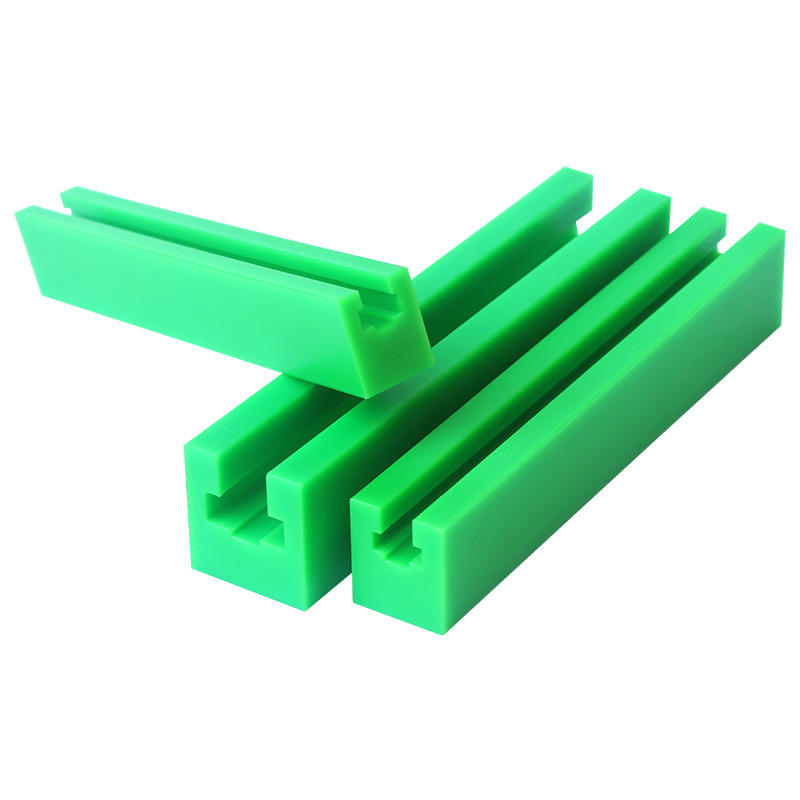
UHMW (ultra-high molecular weight polyethylene) wear strip is widely used because of its excellent balance of properties. It is lightweight, easy to handle, and offers an extremely low coefficient of friction, which helps reduce energy consumption and noise during operation. Its corrosion resistance makes it suitable for environments where moisture or cleaning chemicals are present, such as food processing or packaging. Another advantage is its self-lubricating nature, which reduces the need for constant maintenance. The drawback, however, is that UHMW does not provide the same load-bearing capacity as metal. In heavy-duty settings where extreme pressure is applied, UHMW may deform over time, making it more appropriate for medium-load applications where smooth sliding and quiet operation are key.
Metal Wear Strip: Strength and Longevity
Metal wear strip is the go-to option for high-load, heavy-duty industrial applications. Whether made from stainless steel, hardened steel, or aluminum, metal provides superior strength and resistance to abrasion. It can handle extreme pressure without deforming, making it the most durable choice among the three. Metal wear strip is often found in mining, construction, or large-scale manufacturing equipment where longevity and toughness are critical. On the downside, metal tends to be noisier and heavier than rubber or UHMW, and it may require additional lubrication to keep operations smooth. Costs can also be higher, but the long service life often offsets the initial investment.
Key Factors to Consider When Choosing a Wear Strip Material
When deciding between rubber, UHMW, and metal, it is important to evaluate your specific operating conditions. Consider the weight and pressure applied to the strip, as this will influence whether flexibility, low friction, or strength is most important. The operating environment also plays a major role: high temperatures, moisture, or chemical exposure may quickly eliminate certain materials from consideration. Noise reduction may be crucial in some industries, making UHMW a preferred option, while budget and replacement cycles should also be factored in to avoid unnecessary expenses over time.
Comparing Wear Strip Options Side by Side
Rubber wear strip provides flexibility and shock absorption but sacrifices long-term durability under heavy wear. UHMW wear strip delivers smooth, quiet, and corrosion-resistant performance, making it ideal for medium-load conveyor and packaging systems. Metal wear strip stands out for strength and longevity in the most demanding environments but comes with higher noise levels and potential lubrication needs. By comparing these factors side by side, it becomes clear that each material excels in certain situations while falling short in others.
Which Wear Strip Material is Right for You?
There is no universal answer when it comes to selecting a wear strip. Rubber, UHMW, and metal each bring unique advantages that make them the right choice in specific applications. The key is to carefully assess your load requirements, operating conditions, and maintenance priorities before making a decision. Choosing the right wear strip material not only protects your equipment but also saves time and money in the long run. For best results, consult with an experienced supplier or engineer who can guide you toward the most cost-effective and durable solution for your operation.