
- September 3, 2025
- Posted by: feinuojixie
- Category: Chain Guides News
No Comments
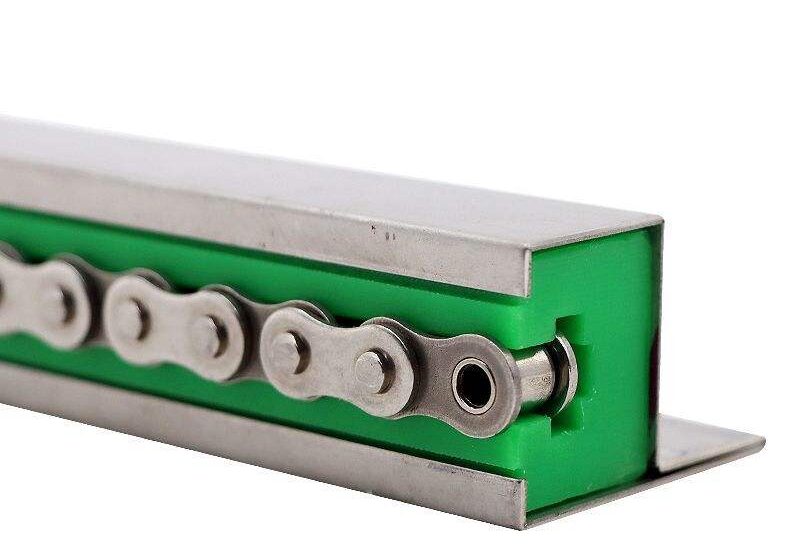
This section introduces the critical role of guide rail for conveyors in ensuring smooth, safe, and efficient material movement. It explains that while conveyor belts or chains often take the spotlight, guide rail for conveyors prevents product misalignment, reduces damage, and maintains workflow consistency. A brief overview of the blog’s purpose—exploring materials, designs, and applications to help readers make informed decisions—is provided, along with a hook about the impact of well-chosen guide rail for conveyors on operational costs and productivity.

What Is Guide Rail for Conveyors? Defining Its Core Function and Importance
This part breaks down the basic definition of guide rail for conveyors, describing it as a structural component installed along conveyor paths to guide, stabilize, or contain products. It emphasizes key functions: preventing product skew, protecting fragile items from collisions, and ensuring alignment with downstream equipment (e.g., sorters or packaging stations). The section also highlights why guide rail for conveyors is non-negotiable—avoiding costly downtime from jams, reducing product waste, and enhancing workplace safety by minimizing spillage or falling items.
Exploring Materials for Guide Rail for Conveyors: Pros, Cons, and Ideal Use Cases
This section dives into the most common materials used for guide rail for conveyors, each with a detailed analysis of advantages, disadvantages, and suitable applications. Subsections include:
- Metal Guide Rail for Conveyors (Steel, Aluminum): Discussing high durability and load-bearing capacity for heavy or abrasive products (e.g., automotive parts), but noting potential weight and corrosion risks (addressed with coatings like galvanization).
- Plastic Guide Rail for Conveyors (UHMWPE, Nylon): Covering low friction, chemical resistance, and quiet operation for light to medium products (e.g., food packaging or pharmaceuticals), while mentioning limitations in high-temperature or heavy-load scenarios.
- Wooden Guide Rail for Conveyors: Exploring cost-effectiveness and shock absorption for non-abrasive, low-speed applications (e.g., lumber or paper), but highlighting susceptibility to moisture and wear over time.
- Composite Guide Rail for Conveyors: Explaining hybrid materials (e.g., fiberglass-reinforced plastic) that combine strength and corrosion resistance, ideal for harsh environments (e.g., mining or wastewater treatment), with notes on higher upfront costs.
Key Design Considerations for Guide Rail for Conveyors: Tailoring to Your System
This part focuses on design elements that customize guide rail for conveyors to specific conveyor types and product needs. Subsections include:
- Guide Rail for Conveyors: Height and Width Specifications: Explaining how product size (e.g., small boxes vs. large pallets) dictates rail dimensions—too short rails risk product tipping, while overly wide rails waste space.
- Guide Rail for Conveyors: Mounting Options: Covering fixed mounts (for consistent product paths) vs. adjustable mounts (for flexible production lines handling multiple product sizes), and how mounting position (side-mounted vs. top-mounted) impacts accessibility.
- Guide Rail for Conveyors: Curvature and Angle Design: Discussing the need for smooth curves (to avoid product jams on curved conveyors) and angled rails (for incline/decline conveyors to prevent product slippage), with examples of radius calculations for different product weights.
- Guide Rail for Conveyors: Edge and Surface Treatments: Exploring rounded edges (to prevent product scuffing) and textured surfaces (for added grip on slippery products like glass), as well as friction-reducing coatings (to minimize product drag).
Real-World Applications of Guide Rail for Conveyors: Industry-Specific Use Cases
This section showcases how guide rail for conveyors is implemented across diverse industries, with practical examples to illustrate versatility. Subsections include:
- Guide Rail for Conveyors in Manufacturing (Automotive, Electronics): Describing how metal guide rails stabilize heavy components (e.g., engine parts) on assembly line conveyors, ensuring precise alignment with robotic arms.
- Guide Rail for Conveyors in Food and Beverage Industry: Explaining plastic or stainless steel guide rails (to meet hygiene standards) that guide bottles, cans, or food packages through washdown zones, preventing contamination and product damage.
- Guide Rail for Conveyors in Logistics and Warehousing: Covering adjustable plastic guide rails that handle varying box sizes on sorting conveyors, reducing mis-sorts and ensuring efficient order fulfillment.
- Guide Rail for Conveyors in Mining and Heavy Industry: Discussing reinforced metal or composite guide rails that withstand abrasive materials (e.g., coal or gravel) on heavy-duty conveyors, minimizing wear and extending rail lifespan.
- Guide Rail for Conveyors in Pharmaceuticals and Healthcare: Exploring smooth, easy-to-clean plastic guide rails that transport sensitive items (e.g., vials or medical devices) without particle generation, complying with FDA regulations.
How to Select the Right Guide Rail for Conveyors: A Step-by-Step Decision Guide
This practical section walks readers through a systematic process to choose guide rail for conveyors that aligns with their needs. Subsections include:
- Step 1: Assess Product Characteristics: Identifying product weight, size, shape, and material (e.g., fragile, abrasive, or corrosive) to narrow down material and design options.
- Step 2: Evaluate Conveyor Type and Environment: Considering conveyor speed (high-speed vs. low-speed), layout (straight vs. curved), and environment (temperature, moisture, or chemicals) to rule out unsuitable materials (e.g., plastic in high-heat areas).
- Step 3: Define Performance Goals: Prioritizing factors like durability (for long-term use), flexibility (for changing product lines), or hygiene (for food/pharma) to weigh trade-offs (e.g., cost vs. longevity).
- Step 4: Consult with Manufacturers and Test Prototypes: Recommending collaboration with conveyor component suppliers to customize guide rail designs, and testing small-scale prototypes to validate performance before full implementation.
Maintenance Tips for Guide Rail for Conveyors: Extending Lifespan and Ensuring Safety
This section provides actionable strategies to keep guide rail for conveyors in optimal condition. Subsections include:
- Regular Inspection of Guide Rail for Conveyors: Outlining weekly checks for signs of wear (e.g., cracks, bent edges), loose mounts, or product buildup (which can cause jams), with a focus on high-stress areas (e.g., curves or inclines).
- Cleaning Practices for Guide Rail for Conveyors: Explaining industry-specific cleaning methods—warm water and mild detergent for plastic rails in food plants, dry brushing for metal rails in mining—to prevent debris accumulation and corrosion.
- Repair and Replacement of Guide Rail for Conveyors: Advising on timely fixes (e.g., tightening loose bolts, sanding rough edges) and knowing when to replace rails (e.g., excessive corrosion or structural damage) to avoid system failures.
- Lubrication for Guide Rail for Conveyors: Discussing the use of food-grade lubricants for plastic rails (to reduce friction) and anti-rust lubricants for metal rails (to prevent corrosion), with notes on avoiding over-lubrication (which attracts dust).
Future Trends in Guide Rail for Conveyors: Innovation Shaping the Industry
This forward-looking section explores emerging technologies and trends impacting guide rail for conveyors. Subsections include:
- Smart Guide Rail for Conveyors with Sensors: Describing rails integrated with pressure or vibration sensors that detect product misalignment or rail wear, sending real-time alerts to maintenance teams (reducing downtime).
- Sustainable Materials for Guide Rail for Conveyors: Discussing the rise of recycled plastics or biodegradable composites in guide rail manufacturing, aligning with industry goals for reduced environmental impact.
- 3D-Printed Guide Rail for Conveyors: Exploring how 3D printing enables on-demand, custom-shaped rails (e.g., complex curves for unique product paths) with faster lead times and lower costs for small-batch production.
- Modular Guide Rail for Conveyors: Explaining modular systems that allow quick assembly and reconfiguration, adapting to changing production needs (e.g., seasonal product volume spikes) without full system overhauls.

Maximizing Conveyor Efficiency with Well-Chosen Guide Rail for Conveyors
This final section summarizes the key takeaways: guide rail for conveyors is a critical component that impacts productivity, product quality, and safety. It reinforces the importance of matching material and design to specific applications, following maintenance best practices, and staying updated on innovations. The conclusion ends with a call to action—encouraging readers to evaluate their current guide rail for conveyors, use the blog’s insights to identify improvements, and consult experts for customized solutions to enhance their conveyor system’s performance.