
- December 23, 2025
- Posted by: feinuojixie
- Category: Chain Guides News
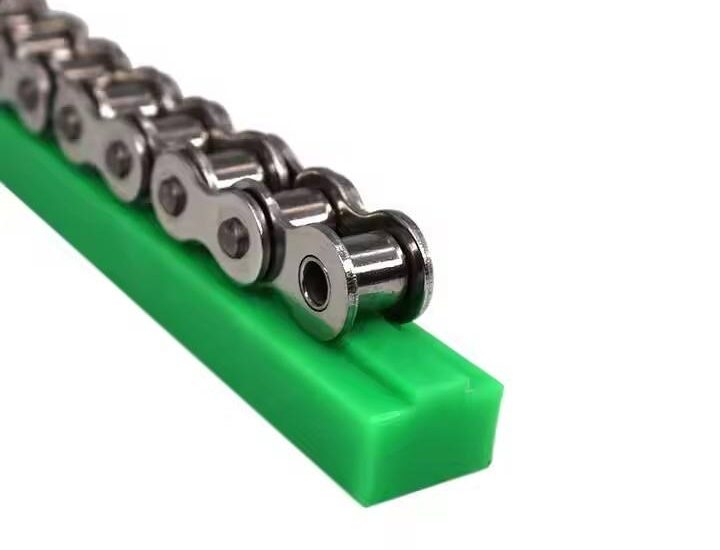
Noise and vibration are more than just minor annoyances in industrial environments. In roller chain systems, excessive sound levels and constant vibration often signal deeper mechanical issues that can shorten equipment life, reduce efficiency, and compromise workplace safety. As production lines become faster and more automated, controlling these factors has become a top priority for engineers and maintenance teams.
One of the most effective and widely adopted solutions is the use of chain guides for roller chain. By providing controlled guidance and continuous support, these components play a critical role in stabilizing chain motion, reducing impact forces, and minimizing unwanted noise. Unlike traditional unsupported chain layouts, systems equipped with properly designed chain guides for roller chain operate more smoothly and consistently, even under demanding conditions.
In this article, we will explore exactly how chain guides for roller chain help reduce noise and vibration, why they outperform conventional support methods, and how their correct selection and installation can transform the performance of an entire conveyor or power transmission system.
Understanding the Root Causes of Noise and Vibration in Roller Chain Systems
Noise and vibration in roller chain systems usually originate from uncontrolled movement and repeated impact. As the chain engages and disengages with sprockets, sudden changes in direction and speed can create shock loads. When the chain is unsupported over long spans, it may whip, oscillate, or slap against surrounding components, producing both audible noise and structural vibration.
Misalignment is another major contributor. Even slight deviations in sprocket alignment can cause uneven loading, leading to rattling sounds and continuous vibration that travel through the machine frame. Over time, these issues intensify as wear increases, creating a cycle where vibration accelerates component degradation and degraded components generate even more noise.
What Are Chain Guides for Roller Chain and How Do They Work
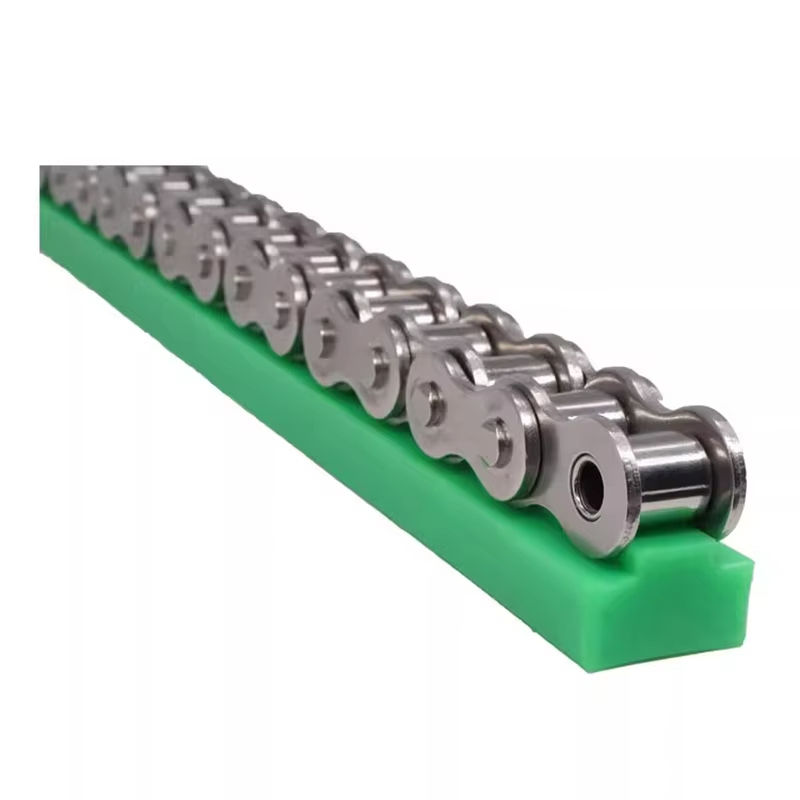
Chain guides for roller chain are engineered components designed to control and support chain movement throughout its operating path. They are typically mounted along the chain’s travel route, guiding the chain with a precisely shaped profile that maintains consistent contact without excessive friction.
By keeping the chain properly positioned, chain guides for roller chain prevent uncontrolled lateral movement and vertical bounce. This guidance ensures that the chain engages sprockets smoothly and travels in a predictable path, reducing the sudden impacts that often cause noise and vibration.
How Chain Guides for Roller Chain Minimize Chain Impact and Shock Loads
One of the primary ways chain guides for roller chain reduce noise is by minimizing impact forces. When a chain runs freely without guidance, it can strike sprockets or machine surfaces abruptly. Each impact generates a sharp sound and a corresponding vibration pulse.
With chain guides for roller chain in place, the chain is gradually guided into engagement. The controlled contact reduces shock loads, allowing forces to be distributed more evenly. This smoother transfer of motion results in noticeably quieter operation and less stress on mechanical components.
The Role of Chain Guides for Roller Chain in Dampening Vibration
Vibration often spreads through machinery because there is no barrier to absorb or isolate it. Chain guides for roller chain act as a stabilizing interface between the moving chain and the stationary structure. Their continuous support limits oscillation and reduces the amplitude of vibration before it can propagate.
By stabilizing chain motion, chain guides for roller chain help prevent resonant vibration that can amplify noise levels across an entire system. This is especially important in high-speed or long-conveyor applications where even small vibrations can escalate quickly.
Material Selection: Why Plastic Chain Guides for Roller Chain Reduce Noise Better Than Metal
Material choice plays a critical role in noise reduction. Plastic chain guides for roller chain are widely preferred because engineered polymers naturally absorb vibration and dampen sound. Unlike metal supports, plastic surfaces reduce metal-to-metal contact, which is a common source of high-frequency noise.
In addition to acoustic benefits, plastic chain guides for roller chain provide low friction and wear resistance. These properties help maintain consistent performance over time, ensuring that noise and vibration levels remain low throughout the system’s service life.
How Chain Guides for Roller Chain Improve Chain Alignment and Tracking
Proper alignment is essential for quiet operation. Chain guides for roller chain maintain accurate tracking by keeping the chain centered and properly oriented as it moves. This controlled alignment prevents side loading and uneven wear, both of which contribute to vibration and rattling noises.
With improved tracking, sprocket engagement becomes smoother and more uniform. This consistency reduces fluctuations in load and speed, further lowering the overall noise profile of the system.
Long-Term Benefits of Using Chain Guides for Roller Chain in Noise-Sensitive Environments
In environments where noise control is critical, such as automated factories or enclosed production lines, chain guides for roller chain provide long-term advantages. Reduced noise levels improve worker comfort and help facilities comply with safety and environmental regulations.
Lower vibration also enhances system stability, reducing the likelihood of unexpected shutdowns or performance inconsistencies. Over time, these benefits translate into higher productivity and a more reliable operation.
How Reduced Noise and Vibration Extend Equipment Life
Noise and vibration are often early indicators of mechanical stress. By addressing their root causes, chain guides for roller chain help protect key components such as bearings, shafts, and sprockets. Reduced vibration means less fatigue and slower wear rates across the entire system.
As a result, maintenance intervals can be extended, and the risk of sudden component failure is significantly reduced. This improved durability leads to lower total operating costs and better long-term return on investment.
Best Practices for Selecting Chain Guides for Roller Chain to Maximize Noise Reduction
To achieve optimal noise reduction, it is important to select chain guides for roller chain that match the application. Factors such as chain size, operating speed, load conditions, and environmental exposure should all be considered.
Choosing the correct guide profile and material ensures consistent contact without excessive friction. Proper mounting and alignment are equally important, as even the best chain guides for roller chain cannot perform effectively if installed incorrectly.
Common Installation Mistakes That Reduce the Effectiveness of Chain Guides for Roller Chain
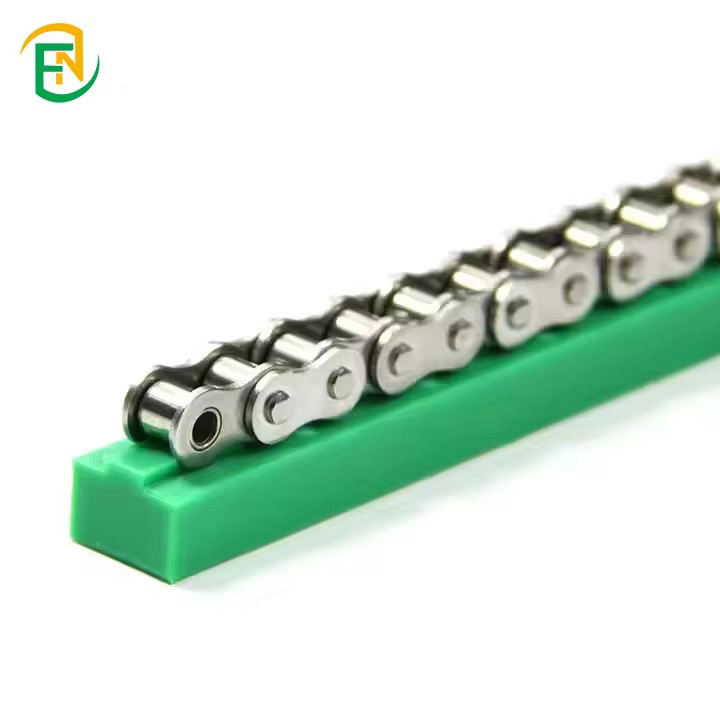
Improper installation can limit the noise-reducing benefits of chain guides for roller chain. Common mistakes include insufficient support length, incorrect guide positioning, or loose mounting hardware. These issues can allow unwanted movement to persist, reducing overall effectiveness.
Avoiding these errors requires careful planning and regular inspection. Ensuring that chain guides for roller chain remain securely mounted and correctly aligned helps maintain quiet and stable operation over time.
Future Trends in Chain Guides for Roller Chain Focused on Quieter Operation
As industries demand quieter and more efficient systems, chain guides for roller chain continue to evolve. Advances in polymer technology and guide design are leading to improved vibration damping and longer service life.
Future developments are likely to focus on enhanced material performance and smarter integration with automated systems, further reducing noise while improving overall efficiency.
Why Chain Guides for Roller Chain Are Essential for Quieter, More Stable Operations
Noise and vibration are unavoidable challenges in roller chain systems, but they do not have to be accepted as normal. Chain guides for roller chain offer a proven and effective way to control chain movement, reduce impact forces, and dampen vibration at its source.
By investing in properly designed and installed chain guides for roller chain, manufacturers can achieve quieter operation, longer equipment life, and more stable system performance. In modern industrial environments where efficiency and reliability are critical, these benefits make chain guides for roller chain an essential component rather than an optional upgrade.