
- September 2, 2025
- Posted by: feinuojixie
- Category: Chain Guides News
No Comments
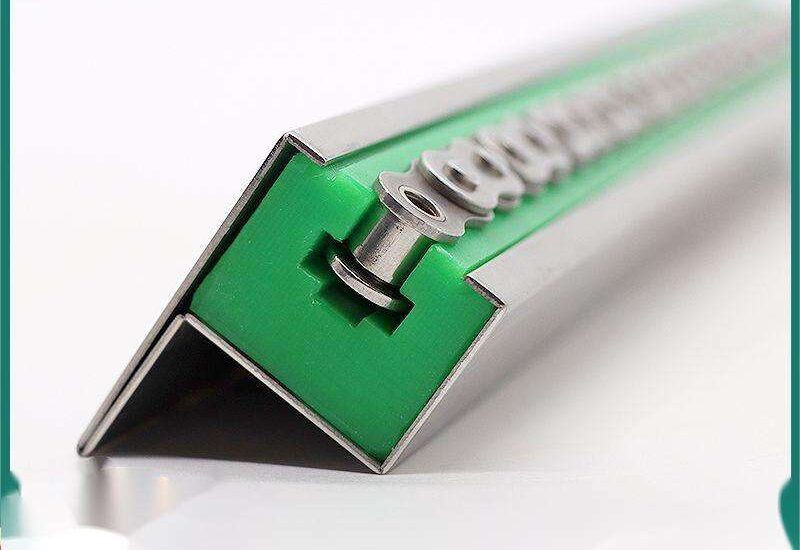
Finally, this part will discuss the enduring role of guide rail for conveyor in evolving material handling systems. It will touch on how advancements in automation and technology still rely on the rail for stability and precision, predicting that it will continue to be a critical component in optimizing workflows for years to come.
In the complex world of material handling, every component plays a role in keeping operations running smoothly, but few are as quietly impactful as guide rail for conveyor. This unassuming structure, often overshadowed by larger conveyor machinery, is the unsung hero that ensures materials move exactly where they need to, when they need to. Whether in a bustling warehouse, a high-speed manufacturing plant, or a busy distribution center, guide rail for conveyor serves as the invisible hand that steers the workflow toward efficiency, precision, and reliability. To truly understand its transformative power, we must first grasp what it is and how it functions as the backbone of any well-oiled material handling system.
Guide rail for conveyor is, at its core, a structural component designed to guide and contain materials as they travel along a conveyor belt or track. Typically made from durable materials like steel, aluminum, or high-strength plastic, it is mounted alongside or above the conveyor surface, creating a physical barrier that prevents items from veering off course. Its design varies based on the specific needs of the workflow—some rails are straight and rigid for uniform movement, while others are curved to accommodate turns in the conveyor path. Some even feature adjustable heights or widths to adapt to different material sizes, from small packages to large industrial parts. Regardless of its form, the primary purpose remains consistent: to maintain control over the movement of materials, ensuring they follow a precise trajectory from start to finish.
This control is foundational to efficient material handling. Without guide rail for conveyor, materials are prone to shifting, sliding, or colliding with one another, especially at high speeds or around corners. A single misaligned item can disrupt the entire flow, causing jams, delays, or even damage to both the materials and the conveyor system itself. Guide rail for conveyor eliminates this chaos by providing a clear, defined path, turning a potentially erratic process into a predictable one. In doing so, it lays the groundwork for all the other benefits it brings to a workflow, from increased speed and reduced downtime to enhanced safety. By understanding its basic function, we can begin to appreciate how this simple yet essential component has the power to transform even the most complex operations.

How Guide Rail for Conveyor Eliminates Material Misalignment: A Game-Changer for Precision
Material misalignment is a persistent headache in material handling, one that can send ripples of inefficiency through an entire operation. Imagine a scenario in a packaging facility: small boxes, each destined for different retailers, glide along a conveyor toward a sorting station. Without guide rail for conveyor, a slight bump from a neighboring box or a minor unevenness in the belt could cause one box to tilt, blocking the path of others. Suddenly, the flow grinds to a halt as workers rush to straighten the jumble, wasting valuable time and risking damage to the products inside. In a manufacturing setting, misalignment can be even more costly. Delicate components, such as circuit boards or glass panels, might shift during transport, leading to improper positioning in assembly lines. This not only requires rework but can also result in defective products that fail quality checks, eating into profits and tarnishing a company’s reputation.
Guide rail for conveyor steps in as a precision tool to eliminate these issues. By creating a physical boundary that runs parallel to the conveyor path, it acts as a steady hand, gently guiding materials back into alignment if they start to drift. For irregularly shaped items—such as automotive parts with protruding edges or bulk items like bags of grain—the rail’s contoured design can cradle the material, ensuring it maintains a consistent orientation. In high-speed environments, where even a fraction of an inch of misalignment can cause a cascade of problems, the rail’s rigidity becomes critical. It resists the forces generated by fast-moving materials, preventing them from bouncing or sliding off course. This level of control is especially valuable in automated systems, where robots or machines rely on materials arriving at exact positions to perform tasks like labeling, welding, or packaging. With guide rail for conveyor in place, these automated processes can operate with pinpoint accuracy, reducing errors and increasing the overall quality of output.
The impact of this precision extends beyond individual tasks; it transforms the entire workflow into a synchronized process. When materials arrive at each stage of production or distribution exactly as expected, downstream operations can proceed without hesitation. For example, in a food processing plant, bottles moving along a conveyor must align perfectly with filling nozzles to avoid spillage. Guide rail for conveyor ensures each bottle is centered, allowing the filling machine to work at maximum capacity without pauses for adjustments. Similarly, in a logistics hub, packages that stay aligned can be scanned more efficiently by barcode readers, reducing the number of unreadable labels and the need for manual data entry. In every case, the rail’s ability to eliminate misalignment turns a process that was once prone to disruptions into one that is smooth, predictable, and highly efficient.
Boosting Throughput: The Direct Impact of Guide Rail for Conveyor on Production Speed
Throughput—the rate at which materials are processed and moved through a workflow—is a key metric of operational efficiency, and guide rail for conveyor plays a pivotal role in maximizing this rate. In systems without proper guidance, frequent pauses to correct misaligned items or clear jams become inevitable, slowing down the entire conveyor line. For instance, in a busy distribution center handling hundreds of packages per hour, even a 30-second stop to straighten a wayward box can snowball into significant delays by the end of the day, reducing the total number of packages shipped. Guide rail for conveyor eliminates these interruptions by keeping materials in a steady, unobstructed flow, allowing the conveyor to operate at its optimal speed without unnecessary slowdowns.
The effect of this continuous flow is particularly noticeable in high-volume environments. Consider an automotive assembly plant where parts like door panels or engine components are transported to various workstations. With guide rail for conveyor ensuring each part arrives at the right station in the correct orientation, workers or robotic arms can immediately begin their tasks without waiting for adjustments. This seamless transition between stages reduces the time each part spends in transit, allowing more parts to be processed in the same timeframe. Over the course of a shift, this adds up to a substantial increase in overall production—whether it’s assembling more cars, packaging more products, or shipping more orders. The rail doesn’t just maintain speed; it unlocks the conveyor’s full potential to handle higher volumes, directly boosting throughput and, in turn, revenue.
Moreover, guide rail for conveyor enables consistent speed across the entire workflow, preventing bottlenecks that often form when materials pile up at a single point. In a manufacturing line where different machines operate at varying speeds, the rail ensures that materials arrive at each machine in a steady stream, matching the machine’s processing capacity. For example, a printing press in a newspaper factory can only operate efficiently if paper rolls are fed into it at a constant rate. Guide rail for conveyor keeps the rolls aligned and moving smoothly, allowing the press to run at full speed without overloading or underfeeding. This balance between input and processing speed eliminates backlogs, ensuring that every component of the workflow contributes to the highest possible throughput.
Reducing Downtime: How Guide Rail for Conveyor Minimizes Disruptions in Your Line
Downtime is the bane of any operation, eating into productivity, increasing labor costs, and delaying deadlines—and guide rail for conveyor is a powerful tool in minimizing these costly interruptions. One of the primary causes of downtime in conveyor systems is equipment damage resulting from misaligned materials. When items shift off course, they can scrape against conveyor frames, jam between rollers, or even fall onto critical mechanical components, causing wear, breakage, or malfunctions. For example, a metal part sliding off a conveyor in a factory might get caught in a motor, burning out the motor and requiring hours of repair time. Guide rail for conveyor acts as a protective barrier, preventing materials from coming into contact with sensitive equipment and reducing the risk of such damage. This proactive protection translates to fewer unexpected breakdowns and longer intervals between maintenance stops.
Another major source of downtime is the need for manual intervention to resolve material-related issues. Without guide rail for conveyor, workers must constantly monitor the line, stepping in to reposition items, clear jams, or retrieve fallen materials. Each of these actions pulls workers away from more valuable tasks, such as quality control or equipment maintenance, and extends the time it takes to complete the workflow. In a warehouse, for example, a single jammed conveyor belt might require two workers to spend 20 minutes clearing it, halting the movement of all items downstream. With guide rail for conveyor keeping materials on track, such interventions become rare, allowing workers to focus on their core responsibilities and keeping the line running continuously.
Guide rail for conveyor also reduces downtime related to quality control and rework. When materials are misaligned during processing, they often result in defective products that need to be reworked or discarded. For instance, in a bottle-filling plant, a misaligned bottle might be underfilled or overfilled, requiring it to be pulled from the line, emptied, and refilled—all of which take time and resources. By ensuring precise alignment, the rail minimizes these defects, reducing the need for rework and keeping the line moving forward. Over time, the cumulative effect of fewer breakdowns, less manual intervention, and reduced rework leads to a significant decrease in total downtime, making the operation more efficient and profitable.
Enhancing Worker Safety: The Overlooked Benefit of Guide Rail for Conveyor
Worker safety is a cornerstone of any successful operation, and guide rail for conveyor contributes to a safer workplace in ways that are often underestimated. One of the most direct risks in material handling is the danger of falling objects. Without proper guidance, materials can slide or topple off the conveyor, posing a threat to workers standing nearby. A heavy box falling from a conveyor in a warehouse, for example, could cause serious injury to a worker on the floor. Guide rail for conveyor creates a physical barrier that contains materials, preventing such falls and reducing the risk of impact-related accidents. This containment is especially critical in areas where conveyors are elevated or run through busy work zones with high foot traffic.
In addition to preventing falls, guide rail for conveyor reduces the need for workers to interact with moving materials—a common source of injuries. When items misalign, workers often feel compelled to reach into or near the conveyor to adjust them, putting their hands, arms, or even entire bodies in close proximity to moving parts like belts, rollers, or gears. This exposes them to risks such as pinching, crushing, or entanglement. For example, a worker trying to straighten a misaligned package on a fast-moving conveyor might accidentally get their hand caught between the package and the belt, leading to a painful injury. With guide rail for conveyor maintaining alignment, these manual adjustments are rarely necessary, keeping workers at a safe distance from moving components and lowering the risk of machinery-related accidents.
Guide rail for conveyor also helps reduce physical strain on workers, which is a leading cause of long-term injuries in material handling. Without the rail, workers may spend hours bending, stooping, or stretching to retrieve fallen items, reposition materials, or clear jams—movements that can lead to musculoskeletal disorders over time. In a manufacturing plant, for instance, workers might repeatedly bend to pick up small parts that slide off the conveyor, straining their backs or knees. The rail’s ability to keep materials in place eliminates the need for these repetitive, strenuous actions, allowing workers to maintain better posture and reduce their risk of chronic injury. By creating a safer, more ergonomic work environment, guide rail for conveyor not only protects workers but also reduces absenteeism and turnover, further strengthening the overall efficiency of the operation.

Customization Options: Tailoring Guide Rail for Conveyor to Your Unique Workflow Needs
No two workflows are identical, and guide rail for conveyor’s versatility through customization makes it a adaptable solution for a wide range of industries and applications. One of the key customization options is material selection, which allows the rail to perform optimally in specific environments. For example, in food and beverage processing facilities, where hygiene is paramount, guide rail for conveyor can be made from stainless steel or food-grade plastic, materials that resist corrosion, are easy to clean, and comply with strict industry regulations. In contrast, in heavy-duty manufacturing settings handling metal parts or machinery, a steel guide rail with a durable coating offers the strength and impact resistance needed to withstand constant contact with heavy materials. This ability to choose materials based on the workflow’s demands ensures the rail is both functional and long-lasting.
Another critical customization feature is the rail’s design and dimensions, which can be tailored to the size, shape, and weight of the materials being transported. For small, lightweight items like electronics components, a narrow, low-profile guide rail prevents them from tipping over without adding unnecessary bulk. For large, irregularly shaped items such as furniture or industrial equipment, a wider rail with adjustable height settings can cradle the item securely, even as it moves around curves or inclines. Curved guide rails are another valuable customization, designed to match the specific angles of a conveyor’s path, ensuring materials navigate turns smoothly without shifting. In automated systems, rails can also be integrated with sensors or triggers, allowing them to adjust their position dynamically based on the material’s size or speed, further enhancing precision.
Customization extends beyond the rail’s physical attributes to its installation and integration with existing equipment. Guide rail for conveyor can be mounted in various ways—on the conveyor frame, the floor, or overhead—depending on the workspace layout and the need to maximize floor space. For facilities with limited room, modular rails that can be easily assembled, disassembled, or reconfigured offer flexibility, allowing the system to adapt as workflow needs change. Additionally, rails can be paired with accessories like buffers or rollers to reduce friction, protect delicate materials, or assist in merging or diverting items at specific points in the conveyor line. This level of customization ensures that guide rail for conveyor doesn’t just fit into a workflow—it becomes an integral part of it, addressing unique challenges and optimizing performance in ways that generic solutions cannot.
Installation and Maintenance: Ensuring Long-Term Performance of Guide Rail for Conveyor
Proper installation and regular maintenance are essential to unlocking the full potential of guide rail for conveyor, ensuring it operates effectively and lasts for years. Installation begins with a thorough assessment of the conveyor system and workflow needs. This includes measuring the conveyor’s length, width, and path (whether straight, curved, or inclined) to determine the correct dimensions and configuration of the rail. During installation, precise alignment is critical: the rail must run parallel to the conveyor belt or track, with consistent spacing to avoid gaps that could allow materials to slip through or excessive pressure that might damage items. For curved sections, the rail’s radius must match the conveyor’s turn to prevent materials from jamming or scraping. Secure mounting is also key—using sturdy brackets and fasteners appropriate for the rail’s material and the conveyor’s frame ensures it can withstand the forces of moving materials without shifting over time. Many manufacturers provide detailed installation guides or offer professional installation services to ensure these steps are followed correctly, laying the foundation for reliable performance.
Once installed, routine maintenance is necessary to keep guide rail for conveyor in top condition. Regular inspections are the first line of defense, allowing operators to identify issues like loose fasteners, bent sections, or signs of wear before they escalate. For example, a small dent in the rail from repeated contact with heavy materials might, if left unaddressed, cause materials to catch or misalign over time. Cleaning is another important maintenance task, as debris, dust, or residue can accumulate on the rail, creating friction that slows materials or damages sensitive items like electronics or food products. In food processing facilities, daily cleaning with sanitizing solutions is often required to meet hygiene standards, while in industrial settings, periodic wiping or brushing may suffice. Lubrication of moving parts, such as adjustable rail mechanisms or rollers integrated with the rail, helps maintain smooth operation and prevents rust or corrosion.
Over time, even well-maintained guide rail for conveyor may require repairs or replacement of worn components. This could involve straightening a bent section, replacing a damaged bracket, or upgrading to a more durable material if the workflow’s demands change (e.g., switching from handling lightweight packages to heavier machinery parts). Keeping a record of maintenance activities, including inspection dates, repairs, and replacements, helps track the rail’s performance and plan for future upgrades. By investing time in proper installation and consistent maintenance, businesses can ensure that guide rail for conveyor continues to enhance efficiency, safety, and precision in their workflow for the long term.
Real-World Success Stories: How Businesses Transformed Their Workflows with Guide Rail for Conveyor
Across industries, businesses of all sizes have experienced tangible improvements after implementing guide rail for conveyor, turning theoretical benefits into real-world results. In the logistics sector, a mid-sized e-commerce warehouse struggled with frequent package jams on its sorting conveyor, often caused by irregularly shaped boxes shifting and blocking the line. Workers spent up to two hours daily clearing jams, and missed shipping deadlines became common. After installing a custom curved guide rail designed to cradle irregular packages, the warehouse saw a 70% reduction in jams. This not only cut down on manual intervention but also increased the conveyor’s throughput by 25%, allowing the warehouse to ship an additional 500 packages per day and meet tight delivery windows consistently.
In the manufacturing realm, a small automotive parts supplier faced quality issues with its assembly line. Metal brackets being transported to welding stations often shifted, leading to imprecise welds and a 15% defect rate. Reworking these defective parts cost the company thousands of dollars monthly and delayed shipments to clients. The supplier installed a steel guide rail with adjustable side panels to fit the brackets’ specific dimensions, ensuring they arrived at the welding station perfectly aligned. Within three months, the defect rate dropped to less than 2%, eliminating rework costs and reducing production time per bracket by 10 minutes. This improvement not only boosted profitability but also strengthened the supplier’s reputation for reliability, leading to new client partnerships.
The food and beverage industry has also benefited significantly. A craft brewery struggled with bottle spillage on its filling line, where glass bottles would occasionally tilt, causing beer to overflow and creating safety hazards from slippery floors. The brewery tried various solutions, but none worked until it installed a food-grade plastic guide rail with soft, rounded edges to gently guide each bottle into position under the filling nozzles. Spillage was eliminated entirely, reducing product waste by 300 gallons per month. Additionally, the rail’s easy-to-clean design simplified hygiene protocols, helping the brewery pass its annual health inspection with zero violations. These changes allowed the brewery to increase production by 15% while maintaining a safer work environment for its staff.
Choosing the Right Guide Rail for Conveyor: Factors to Consider for Maximum Impact
Selecting the right guide rail for conveyor requires careful consideration of several key factors to ensure it aligns with your workflow’s unique needs and delivers maximum efficiency. First and foremost, evaluate the type of materials being transported. For lightweight or delicate items like electronics or glassware, a guide rail made from plastic or aluminum with smooth, non-abrasive surfaces is ideal, as it minimizes the risk of scratches or damage. Heavier materials, such as metal parts or concrete blocks, demand a sturdier rail—typically steel—capable of withstanding constant impact without bending or warping. For materials that require hygiene, like food or pharmaceuticals, prioritize rails made from stainless steel or food-grade plastics that resist bacteria growth and are easy to sanitize.
Next, consider the conveyor’s speed and operational environment. High-speed conveyors, common in distribution centers or manufacturing lines, generate more force, so the guide rail must be rigid and securely mounted to prevent materials from bouncing or shifting. In contrast, slower-moving conveyors may allow for more flexibility in rail material, such as lightweight aluminum. Environmental conditions also play a role: in outdoor settings or facilities with high moisture (like car washes or agricultural processing plants), a corrosion-resistant rail (e.g., galvanized steel) is necessary to withstand rust and degradation. Extreme temperatures, whether hot (in bakeries or foundries) or cold (in frozen food warehouses), require rails made from materials that can maintain their integrity without cracking or becoming brittle.
The conveyor’s design and layout are equally important. Straight conveyor sections can use simple, linear guide rails, while curved sections need rails with a matching radius to ensure smooth material movement around turns. Inclined or declined conveyors may require taller rails or additional features like cleats to prevent materials from sliding backward due to gravity. If the conveyor system includes merges, diverts, or sorting stations, the rail should be compatible with these mechanisms—for example, adjustable rails that can widen or narrow to allow materials to switch paths without jamming. Additionally, consider the workflow’s potential for growth or change: modular, adjustable rails offer flexibility, making it easier to adapt the system if you start handling new materials or increase production volume.
Finally, factor in long-term usability and cost. While initial price is a consideration, investing in a durable, high-quality guide rail often reduces long-term costs by minimizing maintenance, repairs, and replacements. Look for rails from reputable manufacturers that offer warranties, as this indicates confidence in their product’s performance. It’s also wise to consult with suppliers or industry experts who can assess your specific workflow and recommend customized solutions—for example, a rail with integrated sensors for automated systems or a design that works with existing conveyor components to avoid costly overhauls. By weighing these factors, you can choose a guide rail for conveyor that not only addresses current challenges but also supports future efficiency gains.

The Future of Material Handling: Why Guide Rail for Conveyor Remains Indispensable
As material handling continues to evolve with advancements in automation, robotics, and smart technology, guide rail for conveyor remains a foundational component, adapting to new innovations while retaining its core purpose of ensuring precision and efficiency. Automation, in particular, relies heavily on consistent material positioning, and guide rail for conveyor provides the stability needed for robots and automated machines to perform tasks like picking, packing, or assembly with accuracy. In smart factories, where conveyor systems are connected to sensors and AI-driven software, the rail’s role becomes even more critical: by keeping materials in a predictable path, it ensures that sensor data (such as weight, size, or barcode information) is collected reliably, enabling the software to make real-time adjustments to the workflow. This integration of guide rail for conveyor with smart technology creates a more responsive, data-driven operation, but it is the rail’s basic function—guiding materials—that makes this connectivity effective.
The push for sustainability in material handling also highlights the rail’s enduring value. As businesses strive to reduce waste, energy use, and carbon footprints, guide rail for conveyor contributes by minimizing material damage, which cuts down on product loss and the need for rework. Its role in increasing throughput also means that conveyor systems can operate more efficiently, reducing the energy required per unit of material processed. Additionally, modern guide rails are increasingly made from recycled or recyclable materials, aligning with sustainability goals without compromising performance. For example, some manufacturers now offer guide rails made from recycled plastic, which are just as durable as virgin plastic but have a lower environmental impact.
Looking ahead, the rise of e-commerce and the growing demand for faster, more flexible delivery will further emphasize the need for efficient material handling. Distribution centers and fulfillment hubs, which must process a diverse range of package sizes and shapes at rapid speeds, will rely on guide rail for conveyor to manage this complexity. Customizable rails that can adapt to varying package dimensions, combined with automated sorting systems, will be key to meeting consumer expectations for quick shipping. Even as new technologies like autonomous mobile robots (AMRs) emerge, they often work alongside conveyor systems, and guide rail for conveyor ensures that materials are positioned correctly for AMRs to pick up, bridging the gap between traditional and cutting-edge handling methods.
In essence, guide rail for conveyor is more than a static component—it is a versatile, evolving tool that will continue to play a central role inshaping the future of material handling. Its ability to adapt to new technologies, support sustainability efforts, and meet the demands of a fast-paced global market ensures that it will remain indispensable for years to come. Whether in a small local warehouse or a large-scale smart factory, guide rail for conveyor will continue to be the silent force that transforms chaotic workflows into models of efficiency, precision, and safety.
For businesses looking to stay competitive in an ever-evolving landscape, investing in the right guide rail for conveyor is not just a practical choice—it is a strategic one. It is a commitment to optimizing operations, protecting workers, reducing waste, and positioning the business to thrive in the future of material handling. As we look ahead, one thing is clear: guide rail for conveyor will remain a cornerstone of efficient, reliable, and innovative material handling systems, proving that even the most fundamental components can have a transformative impact on the way we work.