
- December 17, 2025
- Posted by: feinuojixie
- Category: Chain Guides News
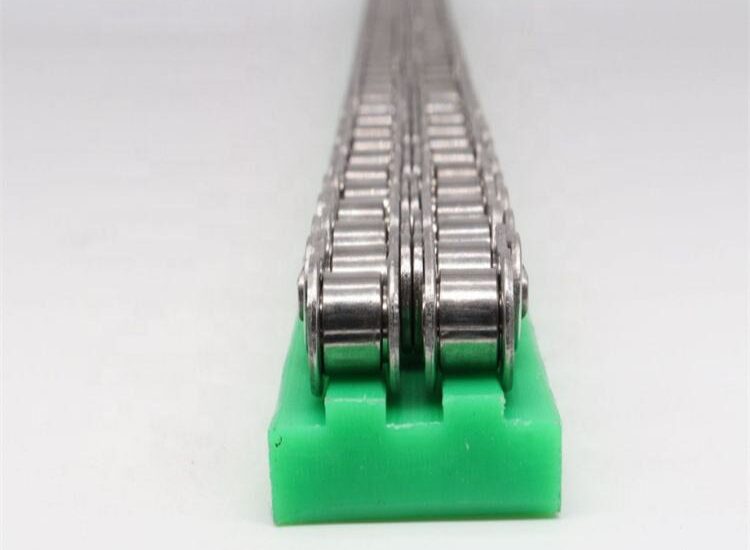
In many production environments, efficiency improvements are often sought through major equipment upgrades or complex automation systems. However, one of the most effective ways to enhance performance across a production line lies in a much smaller component: the Plastic Guide. Though simple in appearance, the right Plastic Guide plays a critical role in maintaining smooth motion, protecting equipment, and ensuring consistent output.
A poorly chosen guiding solution can introduce friction, misalignment, vibration, and premature wear, all of which silently erode productivity. On the other hand, a well-designed Plastic Guide supports continuous operation, reduces mechanical stress, and allows the entire production line to run at its intended speed. Understanding this impact is the first step toward unlocking measurable efficiency gains.
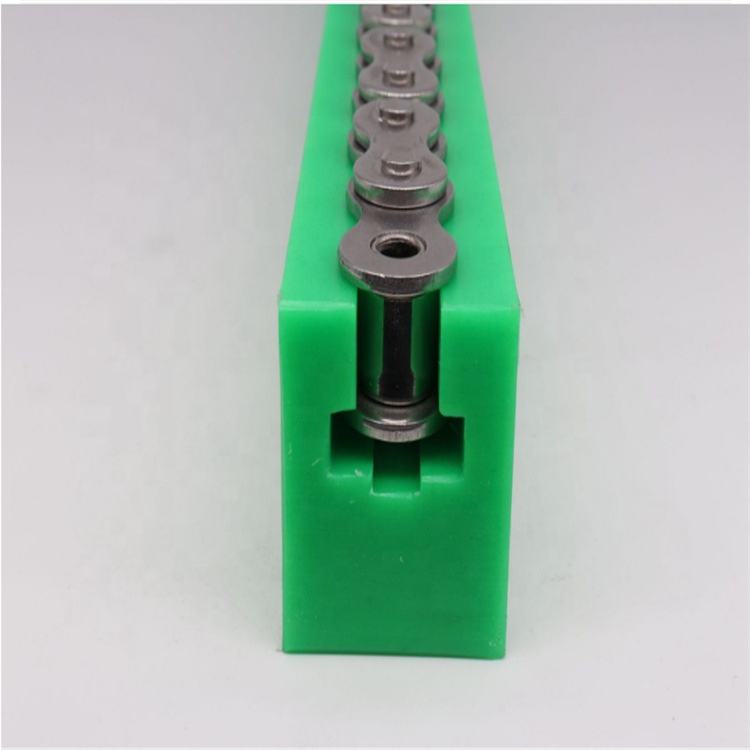
Understanding the Role of a Plastic Guide in a Modern Production Line
A Plastic Guide is designed to control, support, and direct the movement of products or mechanical components throughout a production process. It is commonly used in conveyor systems, packaging equipment, assembly lines, and automated handling systems where consistent motion is essential.
By maintaining proper alignment and spacing, a Plastic Guide prevents unwanted contact, reduces lateral movement, and ensures that products travel smoothly from one stage to the next. This controlled guidance minimizes disruptions and allows machinery to operate with greater stability and predictability.
How a Plastic Guide Reduces Friction and Improves Motion Efficiency
Friction is one of the most common hidden sources of energy loss in a production line. A high-quality Plastic Guide is engineered with low-friction materials that allow components to glide smoothly rather than drag or scrape.
This reduction in friction translates directly into improved motion efficiency. Motors require less power to move products, components experience less wear, and cycle times become more consistent. Over long operating hours, these incremental gains accumulate into significant productivity improvements and lower energy consumption.
Plastic Guide Design and Its Impact on Production Speed
The design of a Plastic Guide influences how efficiently products move through the system. Profile geometry, dimensional accuracy, and surface smoothness all determine how well the guide interacts with moving parts.
A precisely engineered Plastic Guide allows higher line speeds without compromising stability. Products remain properly aligned even during rapid transitions, reducing the risk of jams or slowdowns. When production speed increases without sacrificing control, overall output rises without additional equipment investment.
Improving Equipment Uptime with the Right Plastic Guide Material
Material selection is one of the most important factors in Plastic Guide performance. Different production environments expose components to heat, moisture, chemicals, and continuous mechanical stress.
A properly selected Plastic Guide material resists wear, deformation, and environmental degradation. This durability reduces the frequency of replacement and prevents unexpected failures that cause downtime. Increased equipment uptime means fewer interruptions, smoother scheduling, and more reliable production planning.
How a Plastic Guide Enhances Precision and Product Consistency
Consistency is essential for maintaining product quality. A Plastic Guide provides stable and repeatable positioning, ensuring that each product follows the same path through the production line.
This precise guidance reduces variation caused by misalignment or uncontrolled movement. As a result, downstream processes such as cutting, labeling, or packaging can operate with higher accuracy. Improved consistency not only enhances product quality but also reduces scrap and rework.
Reducing Noise and Vibration Through Proper Plastic Guide Selection
Excessive noise and vibration are signs of inefficiency within a production line. A Plastic Guide made from engineered polymer materials absorbs vibration more effectively than rigid alternatives.
By dampening impact and reducing contact noise, a Plastic Guide contributes to quieter operation and less mechanical stress. This improvement benefits both equipment longevity and workplace comfort, creating a more stable and productive manufacturing environment.
Plastic Guide Solutions for Different Production Line Applications
No two production lines are exactly alike, and a Plastic Guide must be selected with the specific application in mind. High-speed packaging, heavy-load conveying, and precision assembly each place different demands on guiding components.
A customized Plastic Guide solution ensures compatibility with load requirements, speed, and environmental conditions. Tailoring the guide to the application allows manufacturers to achieve optimal efficiency rather than settling for a one-size-fits-all approach.
Cost Efficiency Gains Driven by a High-Performance Plastic Guide
While a Plastic Guide may represent a small portion of total equipment cost, its impact on long-term expenses is substantial. Reduced wear on moving parts lowers maintenance costs, while improved efficiency decreases energy usage.
Fewer breakdowns and longer service intervals also reduce labor and replacement expenses. When evaluated over the full lifecycle of the production line, a high-performance Plastic Guide delivers strong cost efficiency and measurable return on investment.
Integration Tips: Choosing the Right Plastic Guide for Your Production Line
Selecting the right Plastic Guide requires careful consideration of operating conditions. Factors such as load, speed, temperature, chemical exposure, and mounting requirements must be evaluated together.
Working with experienced suppliers and testing solutions in real operating conditions helps ensure proper integration. A well-matched Plastic Guide becomes a seamless part of the system rather than a limiting factor.
Future-Proofing Your Production Line with an Advanced Plastic Guide
As production lines evolve toward greater automation and flexibility, the demands placed on guiding components continue to increase. An advanced Plastic Guide supports higher speeds, tighter tolerances, and more complex motion patterns.
By choosing a forward-looking Plastic Guide solution, manufacturers prepare their production line for future upgrades without extensive redesign. This adaptability protects investment and supports long-term operational growth.
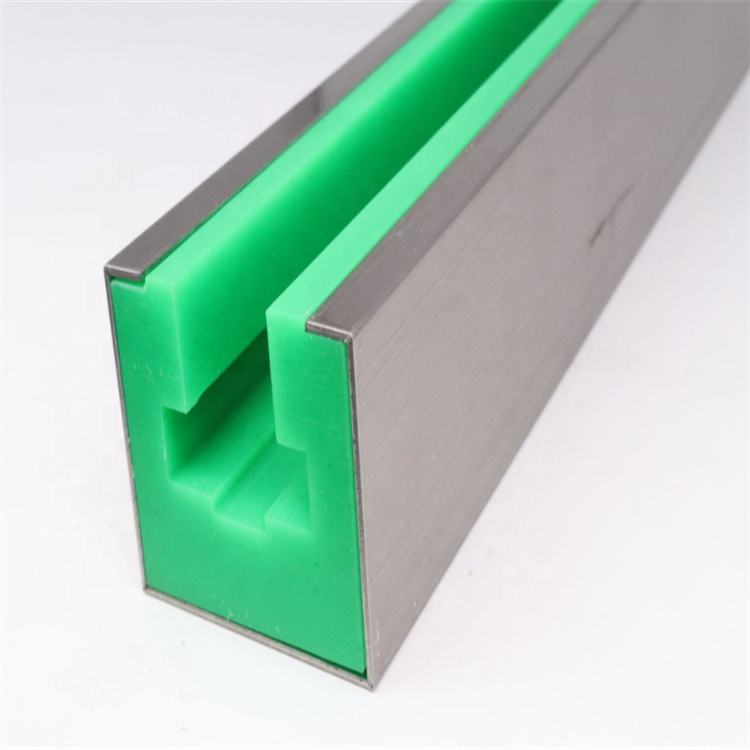
Unlocking Full Production Line Efficiency with the Right Plastic Guide
Efficiency across a production line is not driven by a single large change, but by many smart design decisions working together. The Plastic Guide is one of those critical decisions that quietly shapes performance every day.
By reducing friction, improving alignment, enhancing durability, and supporting consistent motion, the right Plastic Guide enables smoother operation from start to finish. When selected thoughtfully, it becomes a powerful tool for improving efficiency, reliability, and competitiveness across the entire production line.