
- August 29, 2025
- Posted by: feinuojixie
- Category: Chain Guides News
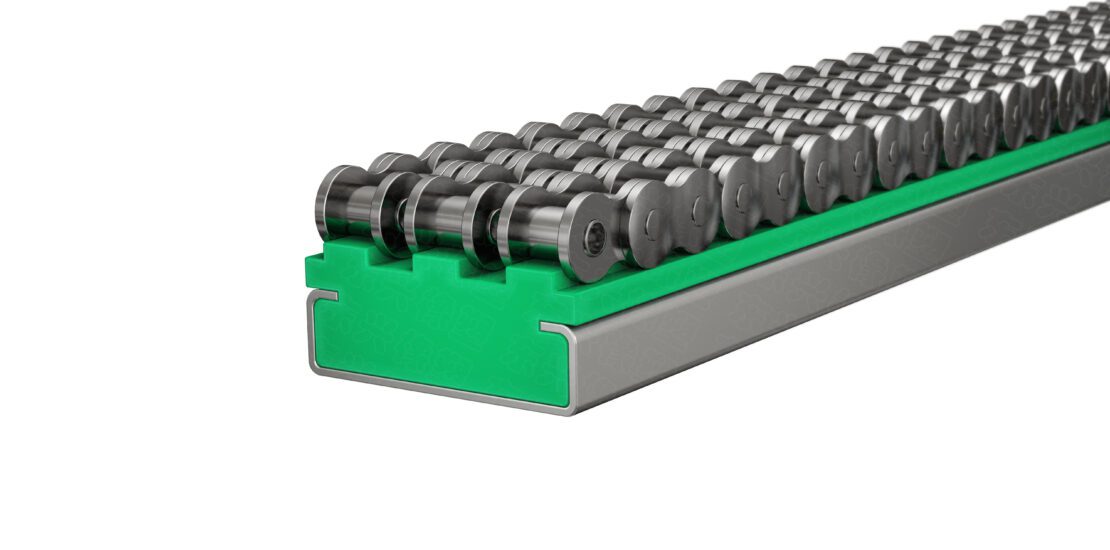
In the fast-paced world of manufacturing, every second counts. Whether you’re running a conveyor line for packaging, an assembly system for electronics, or a robotic workstation for automotive parts, the smooth, consistent movement of components is the backbone of meeting production targets. Yet, one often-overlooked component plays a critical role in keeping these operations on track: guide rail. For decades, manufacturers relied on metal guide rail to guide moving parts – but today, plastic guide rail is emerging as a game-changer, offering a unique blend of durability, cost savings, and performance that directly boosts efficiency.
Traditional metal guide rail comes with a long list of pain points: it rusts in humid or wet environments, requires frequent lubrication to prevent friction-related wear, adds weight that strains equipment, and generates loud noise that can disrupt workflows. These issues don’t just inconvenience teams – they lead to unplanned downtime, higher maintenance costs, and slower production speeds. Plastic guide rail, by contrast, addresses each of these challenges head-on. Made from advanced polymers (often reinforced with materials like glass fiber or carbon fiber), it resists corrosion, operates smoothly without constant lubrication, and is significantly lighter than metal. But its benefits go beyond solving problems – plastic guide rail actively enhances how manufacturing lines perform, from reducing errors in part handling to supporting the speed of modern automation.
In this blog, we’ll dive deep into what plastic guide rail is, why it’s a superior choice for today’s manufacturing needs, and how it can transform your line’s efficiency. We’ll debunk common myths, share real-world success stories, and walk you through choosing the right plastic guide rail for your unique operations. By the end, you’ll understand why more and more manufacturers are making the switch – and how plastic guide rail can become your line’s secret weapon for hitting (and exceeding) production goals.

What Is Plastic Guide Rail, and Why Does It Matter for Your Manufacturing Line?
At its core, plastic guide rail is a purpose-built component engineered to guide, support, and align moving parts within manufacturing systems—think conveyor belts transporting product casings, robotic arms shifting electronic components, or assembly line carriers moving partially finished goods. Unlike generic plastic parts, it’s crafted from specialized polymers (often blended with reinforcements like glass fiber, carbon fiber, or mineral additives) that enhance its strength, wear resistance, and ability to withstand the harsh conditions of industrial settings. This intentional design isn’t just about durability; it’s about ensuring the guide rail can keep up with the relentless pace of modern manufacturing, where even small misalignments or breakdowns can derail entire production runs.To understand why plastic guide rail matters, let’s compare it to the traditional metal guide rail many manufacturers still use. Metal rails, while sturdy, struggle with three critical issues that directly harm efficiency: rust, noise, and high maintenance demands. In environments with moisture—such as food processing plants that require frequent cleaning or automotive facilities where coolant is used—metal guide rail quickly develops rust. This rust doesn’t just look unprofessional; it causes jams as moving parts catch on corroded areas, leading to unplanned downtime. Metal also generates significant noise when in contact with other components, creating a loud workspace that increases worker fatigue and distractions. And perhaps most frustratingly, metal guide rail needs regular lubrication to prevent friction-induced wear—missing a lubrication check can lead to premature failure, forcing teams to pause production for repairs.
Plastic guide rail eliminates these pain points entirely. Its non-metallic composition means it never rusts, even in wet or humid conditions, keeping lines moving smoothly without corrosion-related interruptions. The inherent damping properties of plastic also muffle friction noise, turning a loud, stressful workspace into a calmer environment where workers can focus better. And because many plastic guide rail options are self-lubricating (thanks to additives like PTFE, or Teflon), they require minimal maintenance—no more scheduling weekly lubrication checks or stopping production to oil rails. These benefits aren’t just quality-of-life improvements; they directly translate to more consistent production, lower operational costs, and a more sustainable manufacturing process.
But plastic guide rail’s importance goes beyond fixing metal’s flaws. It’s a flexible solution that adapts to the unique needs of different manufacturing lines. For example, a pharmaceutical plant that requires strict hygiene standards can use food-grade, easy-to-clean plastic guide rail that meets FDA regulations. A manufacturer with curved conveyor lines can opt for plastic rail molded into custom curves, avoiding the need to cut and weld metal (which weakens the rail and creates alignment issues). In short, plastic guide rail isn’t just a replacement for metal—it’s a upgrade that aligns with the specific challenges and goals of your manufacturing operation.
Key Benefits of Plastic Guide Rail: Beyond Basic Movement
While guiding moving parts is plastic guide rail’s primary function, its true value lies in the secondary benefits that directly boost efficiency and reduce costs. Let’s break down these advantages, starting with one of the biggest concerns for manufacturers: maintenance.
Reduced Maintenance Costs: Less Time Fixing, More Time Producing
Maintenance is a necessary evil in manufacturing, but it’s also a major drain on resources—every hour a team spends repairing or replacing guide rail is an hour the line isn’t producing. Plastic guide rail slashes these costs in three ways. First, its resistance to corrosion means it doesn’t degrade in wet or chemical-exposed environments, so you won’t need to replace rusted sections every few months. Second, many plastic guide rail options are self-lubricating, eliminating the need for regular oiling or greasing. This not only saves time but also reduces the risk of lubricant contamination (a critical benefit for industries like food processing or pharmaceuticals). Third, plastic’s low friction coefficient means it wears more slowly than metal—tests show that high-quality plastic guide rail can last up to twice as long as metal rail in the same application. For example, a beverage bottling plant that switched to plastic guide rail reported cutting maintenance costs by 45% in the first year, simply because they no longer needed to replace rusted rails or schedule weekly lubrication.
Noise Reduction: Creating a Calmer, More Productive Workspace
Noise in manufacturing isn’t just annoying—it’s a productivity killer. A study by the Occupational Safety and Health Administration (OSHA) found that workers in loud environments (above 85 decibels) are 20% more likely to make errors and 30% slower at tasks requiring focus. Metal guide rail contributes significantly to this noise, as metal-on-metal contact generates sharp, repetitive sounds that can exceed 90 decibels in busy lines. Plastic guide rail, by contrast, absorbs and dampens these sounds. Its flexible polymer structure cushions the impact between moving parts, reducing noise levels by 30–50% compared to metal. A electronics assembly plant that switched to plastic guide rail saw a noticeable difference: noise levels dropped from 88 decibels to 62 decibels, and workers reported fewer errors in delicate component handling. The plant also noted a 15% increase in daily output, as teams could work longer without fatigue.
Lightweight Design: Easier Installation and Energy Savings
Metal guide rail is heavy—even a short section can weigh 10–15 pounds—making installation slow and labor-intensive. Plastic guide rail, by comparison, is 50–70% lighter than metal. This light weight has two big benefits. First, installation is faster: a two-person team can install plastic guide rail in half the time it takes to install metal rail, reducing downtime during upgrades or replacements. Second, lighter guide rail puts less strain on supporting equipment, like conveyor frames or robotic arms. Over time, this reduces wear on these more expensive components, extending their lifespan. Perhaps most surprisingly, lightweight plastic guide rail also cuts energy costs. Conveyor systems and robotic arms don’t have to work as hard to move parts along a light rail, so they use less electricity. A furniture manufacturer that switched to plastic guide rail on its conveyor lines saw a 12% drop in monthly energy bills, simply because the conveyors were no longer hauling heavy metal rail.
