
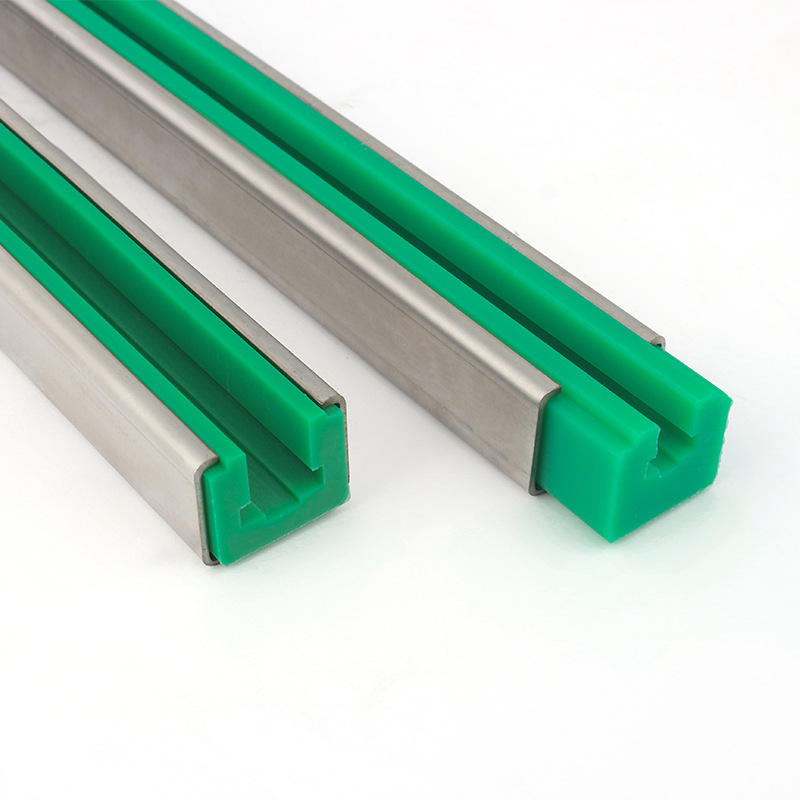

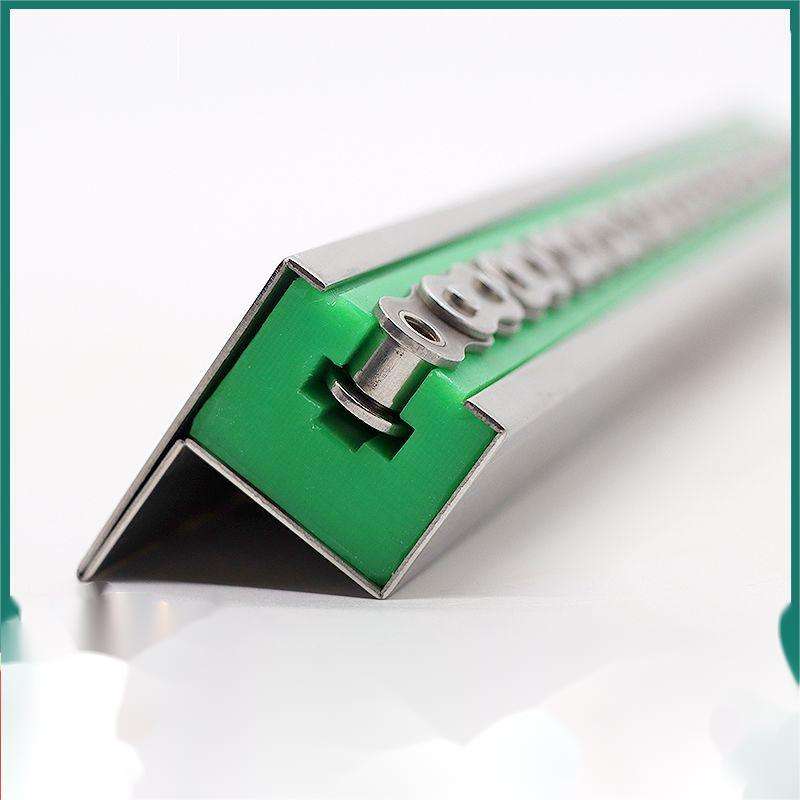


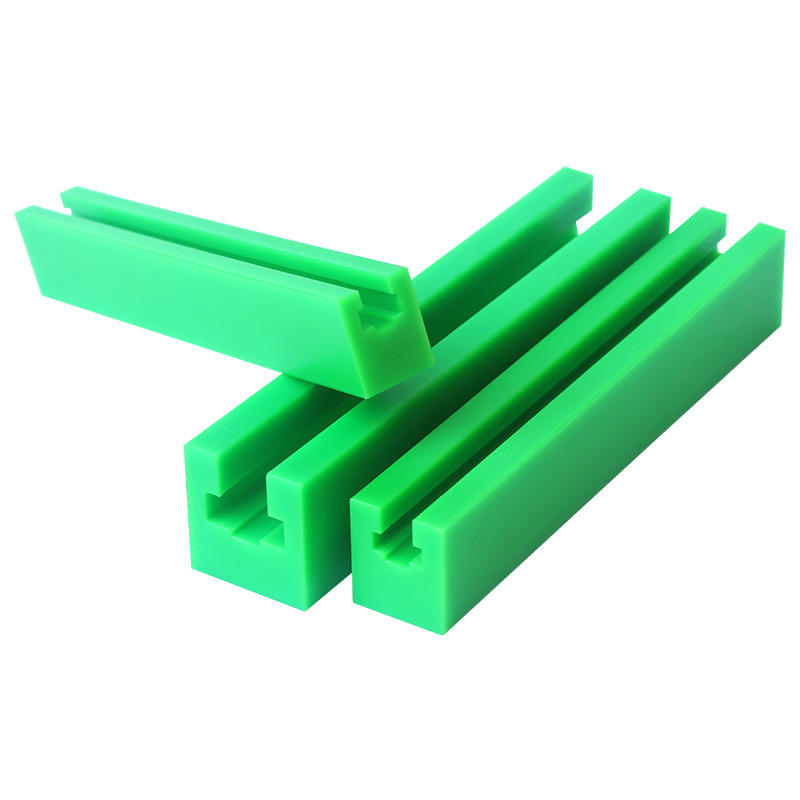

The Corrosion-Resistant Roller Chain Guide is a top – tier product meticulously engineered for the food processing industry. It serves as a critical component in ensuring the seamless operation of roller chains within food processing lines. By reducing friction, minimizing wear, and preventing chain derailment, it significantly contributes to the efficiency and reliability of the production process. Given the demanding nature of food processing environments, which involve exposure to moisture, various food substances, and frequent cleaning with potent chemicals, the corrosion – resistant feature of this guide is not just an advantage but a necessity.
Roller Chain Guide Parameters

Usage Scenarios
Meat and Poultry Processing
In meat and poultry processing plants, the environment is particularly harsh. The roller chain guide has to endure regular exposure to raw meat juices, blood, and the aggressive cleaning agents used to maintain hygiene. For example, in high – volume poultry slaughterhouses where conveyor systems move thousands of birds per hour, the guide ensures that the roller chains keep operating smoothly despite the constant splashing of fluids. It also withstands the repeated use of hot water and strong disinfectants during daily cleaning procedures, preventing rust and corrosion that could otherwise compromise the integrity of the chain and contaminate the meat products.
Dairy Production
Dairy production lines present their own set of challenges. Milk residues, which are rich in organic matter, can accumulate on components over time. Additionally, the cleaning solutions used in dairy plants are often alkaline to effectively remove milk fats and proteins. Our corrosion – resistant roller chain guide is impervious to these substances. In large – scale milk bottling plants, where conveyor belts move thousands of bottles of milk per minute, the guide enables the roller chains to function without interruption. It prevents the build – up of milk deposits that could cause the chains to jam and ensures that the equipment remains in compliance with strict dairy industry hygiene standards.
Bakeries and Confectionery
Bakeries and confectionery factories are filled with sticky substances such as dough, sugar, and syrups. These substances can easily adhere to roller chains, causing them to slow down or even break. The roller chain guide for food processing lines is designed to resist such adhesion. In a busy bakery where conveyor belts transport trays of freshly baked bread or pastries, the guide keeps the chains running smoothly. It can also withstand the high temperatures present in ovens and the steam from the baking process, making it a reliable choice for bakery equipment.
Manufacturing Process
Material Selection
The manufacturing process begins with the careful selection of raw materials. Only the highest – quality food – grade materials are considered. For the main body of the guide, food – grade stainless steel is chosen. This stainless steel is selected for its high chromium content, which typically ranges from 16% to 26%. The chromium forms a thin, invisible, and self – healing oxide layer on the surface of the steel when exposed to oxygen. This oxide layer acts as a barrier, preventing the underlying metal from coming into contact with corrosive substances.
Precision Machining
Once the materials are selected, precision machining techniques are employed. Computer – Numerical – Control (CNC) machines are used to cut, shape, and form the stainless steel into the exact dimensions required for the roller chain guide. This ensures a high level of accuracy, with tolerances often within ±0.05 mm. The machining process includes operations such as milling, drilling, and turning to create the smooth surfaces and precise features necessary for the guide to function effectively.
Quality Control Checks
Throughout the manufacturing process, multiple quality control checks are carried out. First, during the raw material inspection, the chemical composition of the stainless steel is verified using spectroscopy to ensure it meets the food – grade standards. During the machining stage, dimensional inspections are performed using calipers, micrometers, and coordinate measuring machines (CMMs) to ensure that all parts are within the specified tolerances. After machining, the surface finish of the guide is evaluated to ensure it is smooth enough to prevent the accumulation of food particles. Finally, strength tests are conducted, where the guides are subjected to simulated loads and stresses similar to those they will encounter in actual food processing environments.
Corrosion – Resistant Treatment
After manufacturing, the roller chain guides undergo an additional corrosion – resistant treatment. This treatment may involve passivation, where the stainless steel is immersed in a mild acid solution (such as nitric acid) to enhance the formation and stability of the protective oxide layer. In some cases, a special food – grade coating may also be applied. This coating further improves the corrosion resistance and provides an extra layer of protection against food – related contaminants. The coating is carefully selected to be non – toxic, non – flaking, and compliant with all relevant food safety regulations.
Material Introduction
Food – Grade Stainless Steel
As mentioned earlier, the primary material used in the construction of the roller chain guide is food – grade stainless steel. This type of stainless steel is not only highly corrosion – resistant but also meets the strictest safety requirements for use in the food industry. The high chromium content, as well as the presence of other alloying elements such as nickel (usually in the range of 8% – 14% for common food – grade stainless steels), contributes to its excellent corrosion resistance. Nickel helps to enhance the stability of the passive oxide layer and improves the steel’s resistance to pitting and crevice corrosion, which are common types of corrosion in food processing environments.
Additional Materials (Optional)
In some cases, depending on the specific requirements of the food processing application, additional materials may be incorporated into the roller chain guide. For example, certain guides may have inserts made of high – density polyethylene (HDPE) or ultra – high – molecular – weight polyethylene (UHMWPE). These materials are known for their low friction coefficients, which can further reduce wear on the roller chains. HDPE and UHMWPE are also food – grade compliant, non – toxic, and resistant to many common food – related chemicals. They can be used in areas where the stainless steel guide may come into direct contact with the food product, providing an extra layer of protection against any potential metal – food interactions.
Packaging and Delivery
Packaging
Each corrosion – resistant roller chain guide is individually wrapped in a layer of food – grade protective film. This film is made of a material that is non – toxic, non – reactive with food substances, and provides a barrier against dust, moisture, and scratches during transportation and storage. Multiple guides are then carefully placed in sturdy cardboard boxes. Inside the boxes, foam inserts or other cushioning materials are used to secure the guides in place. The cushioning materials are also selected to be food – grade compliant, ensuring that they do not contaminate the guides. The boxes are labeled clearly with product information, including the part number, quantity, and any handling instructions.
Delivery
We offer a variety of delivery options to meet the diverse needs of our customers. For customers who require urgent delivery, express shipping services are available. These services typically use air freight and can deliver the products within 1 – 3 business days, depending on the destination. For larger orders or customers who are less time – sensitive, we can arrange cost – effective sea or land transportation. Sea freight is a popular option for international customers, as it is more economical for large volumes. When using sea freight, the products are carefully loaded into containers to ensure their safety during the long – distance journey. For domestic deliveries, land transportation via trucks is often used. All shipments are tracked using modern tracking systems, and customers are provided with real – time tracking information. This allows them to monitor the progress of their order from the moment it leaves our facility until it reaches their doorstep.

There are no reviews yet.