
- January 6, 2026
- Posted by: feinuojixie
- Category: Chain Guides News

In modern industrial machinery, smooth and reliable chain movement is essential for maintaining efficiency, reducing downtime, and extending equipment life. At the center of this performance lies the Roller Chain Guide, a component that often receives less attention than it deserves. Despite its simple appearance, the design of a Roller Chain Guide plays a decisive role in how well a chain system performs under real operating conditions.
A well-designed Roller Chain Guide ensures consistent chain alignment, minimizes unwanted vibration, and supports controlled motion throughout the entire operating cycle. When design considerations are overlooked, even a high-quality chain can suffer from accelerated wear, increased noise, or unstable movement. These issues not only reduce system reliability but can also lead to costly maintenance and unexpected shutdowns.
As industrial systems become more compact, faster, and more demanding, the importance of thoughtful Roller Chain Guide design continues to grow. Engineers and designers must consider material behavior, geometry, load conditions, and environmental factors to achieve truly smooth operation. By understanding how design choices influence performance, it becomes possible to build chain systems that operate quietly, efficiently, and dependably over the long term.
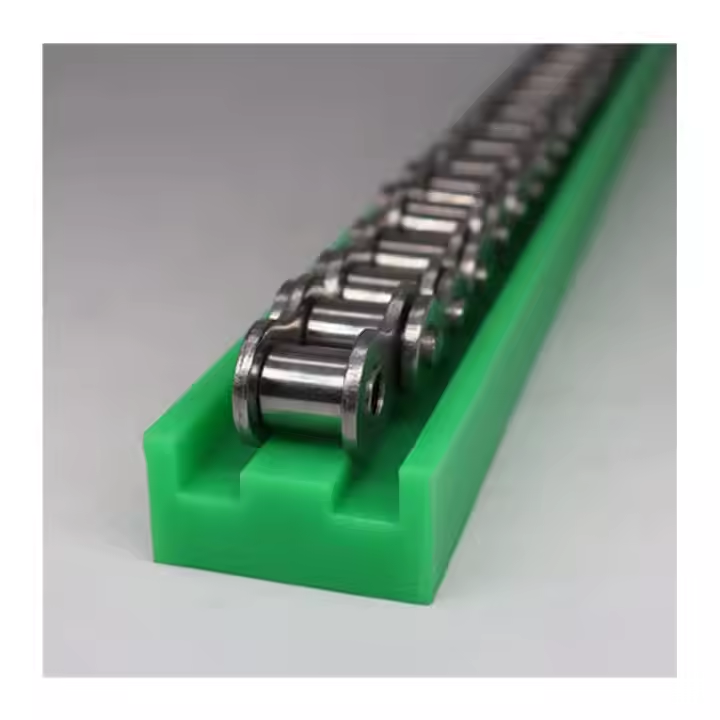
Understanding the Core Function of a Roller Chain Guide in Mechanical Systems
A Roller Chain Guide serves as a stabilizing element that controls chain movement throughout an operating cycle. Its primary function is to maintain precise chain alignment while supporting consistent motion under varying loads and speeds. By keeping the chain on a defined path, the Roller Chain Guide prevents lateral movement that could otherwise lead to derailment or uneven wear.
Beyond alignment, a Roller Chain Guide also absorbs dynamic forces generated during acceleration, deceleration, and directional changes. This controlled guidance reduces stress on both the chain and surrounding components. When properly designed, the Roller Chain Guide becomes an integral part of the motion system rather than a passive accessory, contributing directly to operational stability and reliability.
Key Design Principles of a Roller Chain Guide for Smooth Motion Control
Smooth motion begins with continuity. A Roller Chain Guide should provide uninterrupted support along critical sections of the chain path, especially in areas where tension fluctuates. Gaps or inconsistent contact can cause vibration, noise, and unpredictable chain behavior.
Another essential principle is controlled contact. The Roller Chain Guide must guide the chain without creating excessive friction. Balanced contact pressure ensures that the chain remains stable while still moving freely. Designers should also consider load distribution, ensuring that forces are spread evenly across the guide surface to avoid localized wear and deformation.
Material Selection Strategies for a Durable Roller Chain Guide
Material choice has a direct impact on the lifespan and performance of a Roller Chain Guide. High-performance polymers are commonly used due to their low friction, excellent wear resistance, and noise-dampening characteristics. These materials help maintain smooth chain movement while reducing the need for frequent lubrication.
In applications with high temperatures, heavy loads, or aggressive environments, material stability becomes even more critical. The selected material must retain its mechanical properties over time, resisting deformation and surface degradation. A well-chosen material ensures that the Roller Chain Guide performs consistently throughout its service life.
Optimizing Roller Chain Guide Geometry for Reliable Chain Tracking
Geometry is a defining factor in how effectively a Roller Chain Guide controls chain movement. The guide profile should match the chain dimensions precisely, providing firm guidance without restricting motion. Poorly matched geometry can lead to chain climbing, misalignment, or uneven wear patterns.
Smooth transitions along curves and entry points are equally important. Abrupt changes in geometry can disrupt chain flow and increase impact forces. By refining the guide shape and maintaining tight dimensional tolerances, designers can achieve reliable chain tracking and long-term operational stability.
Roller Chain Guide Design Considerations for Noise and Vibration Reduction
Noise and vibration are common indicators of inefficient chain guidance. A properly designed Roller Chain Guide minimizes these issues by stabilizing chain movement and dampening mechanical resonance. Material damping properties, combined with continuous support, play a significant role in reducing sound levels.
Structural rigidity also contributes to vibration control. A Roller Chain Guide that flexes under load can introduce oscillations into the system. By balancing stiffness with shock absorption, designers can create a guide that promotes quiet, smooth operation even in high-speed applications.
Environmental Factors That Influence Roller Chain Guide Design
Operating conditions heavily influence Roller Chain Guide performance. Temperature extremes can affect material expansion and hardness, while moisture and chemical exposure may accelerate wear or degradation. Dust and debris can also interfere with smooth chain movement if not properly accounted for.
Effective Roller Chain Guide design considers these environmental challenges from the outset. Selecting appropriate materials, incorporating protective features, and allowing for thermal movement all contribute to reliable performance across diverse industrial environments.
Custom Roller Chain Guide Design Solutions for Complex Applications
Standard solutions may not always meet the demands of specialized systems. In applications involving unusual layouts, high loads, or limited space, a custom Roller Chain Guide design can provide targeted performance benefits. Customization allows designers to optimize geometry, material selection, and mounting methods for specific operational requirements.
By tailoring the Roller Chain Guide to the application, engineers can improve efficiency, reduce maintenance needs, and enhance overall system reliability. Custom solutions often deliver long-term value by addressing challenges that generic designs cannot resolve.
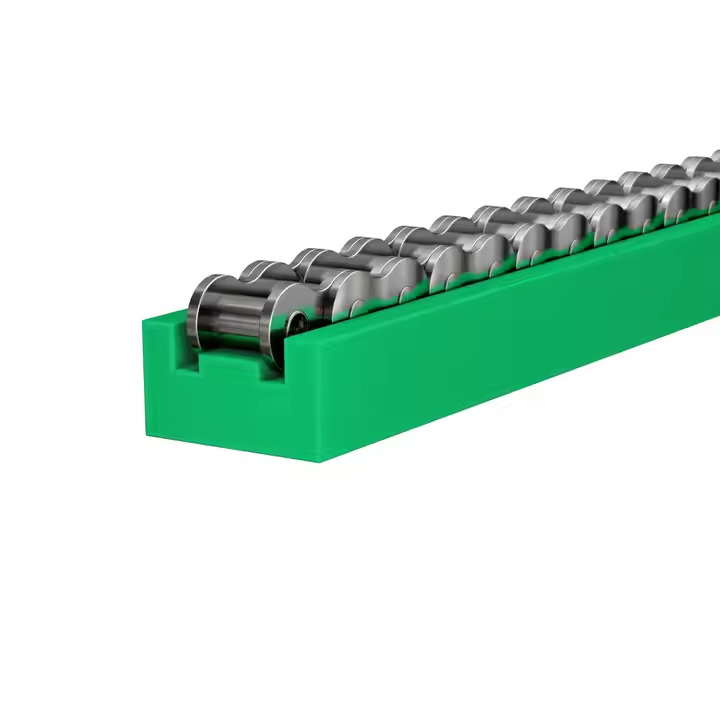
Common Roller Chain Guide Design Mistakes and How to Avoid Them
One common mistake is underestimating load conditions. A Roller Chain Guide designed without sufficient load capacity may deform or wear prematurely. Another frequent issue is neglecting environmental factors, leading to material failure or inconsistent performance.
Avoiding these mistakes requires a holistic design approach. Evaluating real operating conditions, selecting appropriate materials, and validating geometry through testing all help ensure that the Roller Chain Guide performs as intended. Attention to detail during the design phase prevents costly problems later.
Building Long-Term Reliability Through Smart Roller Chain Guide Design
A well-engineered Roller Chain Guide is essential for achieving smooth and reliable operation in modern machinery. Through careful consideration of function, material, geometry, and environment, designers can create solutions that support stable chain movement and reduce system stress.
By applying proven design principles and avoiding common pitfalls, the Roller Chain Guide becomes a strategic component that enhances efficiency, minimizes maintenance, and extends equipment life. Smart design choices today lead to dependable performance and long-term operational success.