
- September 24, 2025
- Posted by: feinuojixie
- Category: Chain Guides News
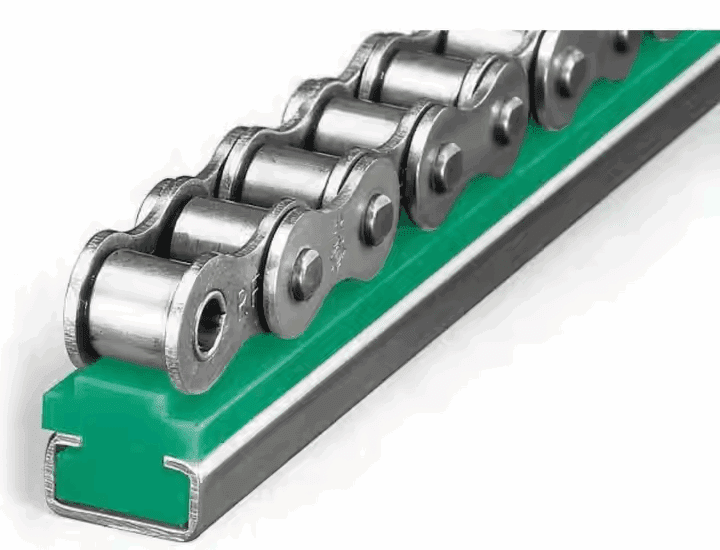
Roller chains play a fundamental role in the world of mechanical engineering, serving as a crucial component in a wide range of machinery and equipment. These chains are designed to transmit power efficiently between two or more rotating shafts, making them an essential element in countless industrial applications. From conveyor systems in factories to the drive trains of motorcycles and bicycles, roller chains are the unsung heroes that keep things moving smoothly.
This comprehensive guide to roller chains aims to provide you with in – depth knowledge about their components, types, applications, maintenance, and more. Whether you are an engineer looking to select the right roller chain for a project, a mechanic responsible for maintaining machinery, or simply someone with a curious mind interested in the inner workings of mechanical systems, this guide has something for you.
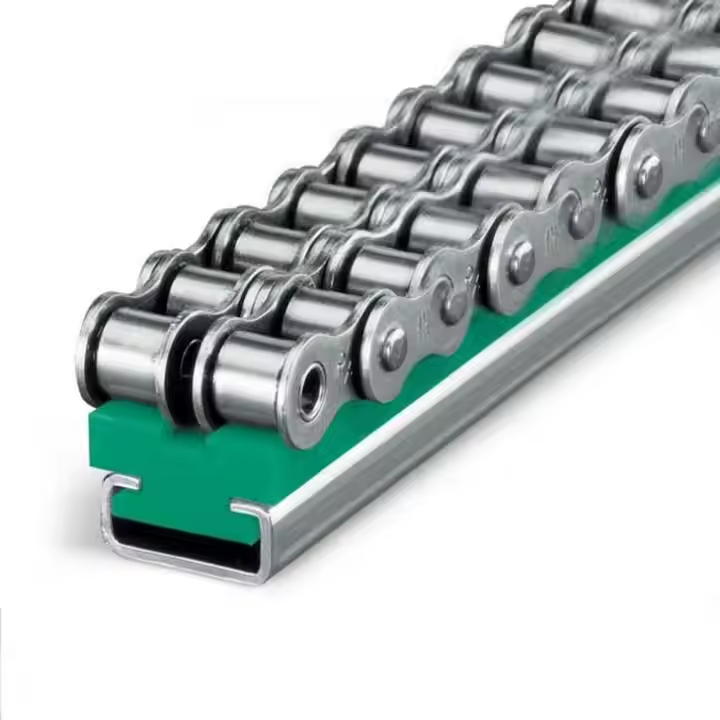
Components of a Roller Chain
A roller chain is made up of several key components, each playing a distinct and vital role in its overall functionality. Understanding these components is essential for anyone involved in the design, selection, or maintenance of roller chain systems.
1. Rollers
Rollers are cylindrical in shape and are typically made of high – strength steel. They are positioned on the outer part of the chain links. The primary function of rollers is to reduce friction when the chain engages with the sprockets. As the chain moves over the sprocket teeth, the rollers roll along the tooth surfaces. This rolling motion significantly decreases the frictional forces compared to a sliding contact. By minimizing friction, rollers help in efficient power transmission, as less energy is wasted in overcoming resistance. They also contribute to a smoother operation of the chain, reducing wear and tear on both the chain and the sprockets, thus extending the lifespan of the entire system.
2. Pins
Pins are the connecting elements within a roller chain. They are inserted through the link plates, bushings, and rollers to hold the chain together. Pins are usually made of hardened steel to ensure high strength. Their main function is to provide a secure connection between the various components of the chain, allowing the chain to bend and flex as it moves around sprockets. At the same time, they must be strong enough to withstand the tensile forces exerted on the chain during power transmission. The quality and integrity of the pins are crucial for the overall strength and reliability of the roller chain. If a pin fails, it can lead to chain breakage, which can cause machinery to malfunction and potentially result in costly downtime.
3. Bushings
Bushings are located between the pins and the rollers. They are often made of materials such as bronze or a special polymer composite. The position of bushings is critical as they act as a buffer between the moving parts. Their main role is to reduce wear and friction between the pins and the rollers. When the chain is in motion, the rollers rotate around the bushings, and the bushings in turn slide along the pins. This arrangement distributes the load evenly and reduces the direct metal – to – metal contact, which would otherwise lead to rapid wear. By reducing wear, bushings help to increase the chain’s lifespan, improve its performance, and maintain the accuracy of power transmission over time.
4. Link Plates
Link plates are the flat, usually rectangular – shaped components that form the basic structure of the chain. They are designed to withstand the tensile forces generated during power transmission. Link plates are typically made of high – carbon steel or alloy steel, which provides the necessary strength. The design of link plates often includes holes for the pins to pass through, and their shape and thickness are carefully engineered to optimize the chain’s performance. They not only hold the other components of the chain together but also maintain the overall shape and alignment of the chain. In addition, link plates can be designed with different features such as offset links in some specialized chains to improve flexibility or accommodate specific applications.
Types of Roller Chains
Roller chains come in various types, each designed to meet specific requirements in different applications. The selection of the right type of roller chain is crucial for ensuring optimal performance, efficiency, and durability of the machinery it is used in. Here are some of the most common types of roller chains.
1. Standard Roller Chains
Standard roller chains are the most commonly used type in a wide variety of applications. They are designed to meet the general requirements of power transmission in many mechanical systems. These chains have a uniform pitch, which is the distance between consecutive pin centers. The pitch determines the size and strength of the chain, with smaller – pitched chains being suitable for lighter – duty applications and larger – pitched chains for heavier – duty tasks.
Characteristics:
- They are made with high – quality materials, typically steel, to ensure strength and durability. The components, such as rollers, pins, bushings, and link plates, are precisely engineered to work together smoothly.
- Standard roller chains have a simple and straightforward design, which makes them easy to install, maintain, and replace.
Applications:
- In industrial settings, they are used in conveyor systems to move products along production lines. For example, in a food processing factory, standard roller chains are used to transport food items from one processing station to another.
- They are also commonly found in small – to – medium – sized machinery like pumps, compressors, and some types of agricultural equipment. In a small – scale irrigation pump, a standard roller chain can be used to transfer power from the engine to the pump mechanism.
Common Specifications and Models:
- ANSI (American National Standards Institute) has established a set of standards for roller chains. Common ANSI standard roller chain sizes include 40, 50, 60, etc. The number in the designation is related to the pitch of the chain, with a 40 – pitch chain having a pitch of 0.5 inches, a 50 – pitch chain having a pitch of 0.625 inches, and a 60 – pitch chain having a pitch of 0.75 inches. Each size has corresponding specifications for the dimensions of its components, such as the diameter of the rollers, the thickness of the link plates, and the strength ratings.
2. Double – Pitch Roller Chains
Double – pitch roller chains are an interesting variation of the standard roller chains, with distinct features that make them suitable for specific applications.
Difference from Standard Chains:
The most notable difference is in the pitch. As the name implies, double – pitch roller chains have a pitch that is twice that of standard roller chains of the same nominal size. This means that the distance between consecutive pin centers is larger. While the link plates and pins are often similar in size to those of standard chains, the rollers may be proportionally larger to accommodate the increased pitch.
Advantages in Specific Transmission Systems:
- Long – Span Applications: Double – pitch roller chains are well – suited for applications where long center distances between sprockets are required. Because of their larger pitch, they can cover longer distances without the need for excessive numbers of chain links. This reduces the weight and cost of the chain assembly compared to using a standard chain over the same distance. For example, in some overhead conveyor systems in large – scale warehouses, double – pitch roller chains are used to transport goods over long aisles.
- Lower – Speed Operations: They are also beneficial in lower – speed transmission systems. The larger pitch allows for a more relaxed operation, reducing the stress on the chain components at lower rotational speeds. This can lead to increased chain life and reduced maintenance requirements in applications such as slow – moving agricultural conveyors or some types of material handling equipment in construction yards.
3. Heavy – Duty Roller Chains
Heavy – duty roller chains are engineered to handle extreme loads and harsh operating conditions, making them essential in certain industries.
Design Features:
- Robust Construction: These chains have thicker link plates, larger and stronger pins, and more durable rollers compared to standard chains. The materials used are often of a higher grade, with enhanced heat – treatment processes to improve strength and wear resistance. For example, the link plates may be made of high – strength alloy steel that can withstand significant tensile forces without deforming or breaking.
- Special Coatings or Treatments: Some heavy – duty roller chains are coated with materials like zinc or nickel to protect against corrosion, which is important in environments where the chain may be exposed to moisture, chemicals, or other corrosive substances. Others may have special surface treatments to reduce friction and improve wear resistance further.
Applicable Fields:
- Heavy Machinery: In construction equipment such as bulldozers, excavators, and cranes, heavy – duty roller chains are used in the drive systems for tracks or in the power transmission mechanisms for various components. For instance, the track drive system of a bulldozer relies on heavy – duty roller chains to transfer power from the engine to the tracks, allowing the machine to move over rough terrains while carrying heavy loads.
- Industrial Equipment: In factories with heavy – duty manufacturing processes, such as steel mills or mining operations, heavy – duty roller chains are used in equipment like large – scale crushers, conveyors for transporting heavy ores or raw materials, and in the power transmission systems of large motors and generators. In a steel mill, a heavy – duty roller chain may be used to drive the conveyor that transports hot steel billets from the smelting area to the rolling mills.
Working Principle of Roller Chains
1. Power Transmission
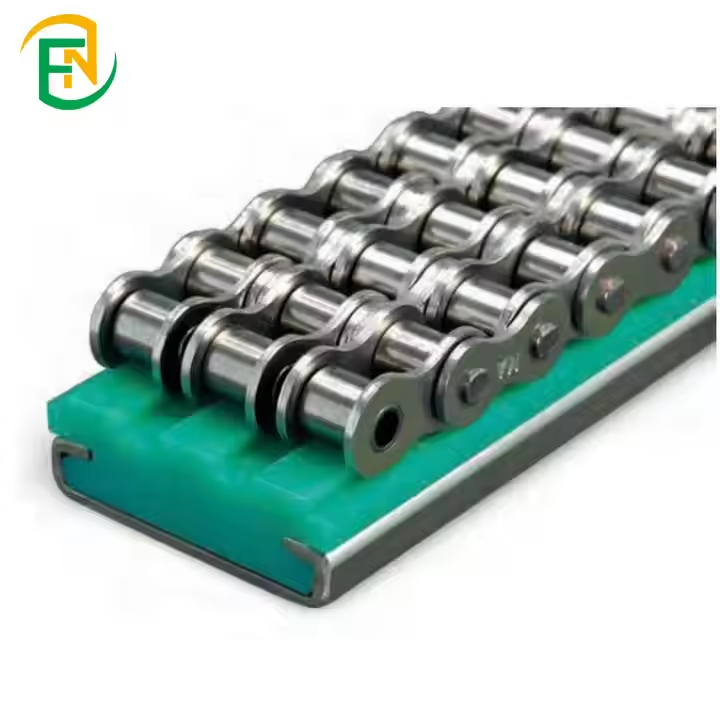
Roller chains operate on a relatively straightforward yet highly effective power – transmission principle. When a roller chain is installed between two sprockets, the teeth of the sprockets engage with the rollers of the chain. As one sprocket, typically connected to a power source such as an electric motor or an engine, starts to rotate, it pulls the chain along. The chain, in turn, causes the other sprocket to rotate.
From a mechanical perspective, the force exerted by the driving sprocket on the chain creates a tension force. This tension force is transmitted along the length of the chain and is then transferred to the driven sprocket. The rollers of the chain play a crucial role in this process. They reduce the frictional resistance between the chain and the sprocket teeth. When the sprocket rotates, the rollers roll over the teeth, rather than sliding. This rolling motion minimizes energy losses due to friction, allowing for more efficient power transfer.
Mathematically, the power transmitted by a roller chain can be calculated using the formula , where is the power in kilowatts, is the tension in the chain in newtons, and is the linear velocity of the chain in meters per second. This formula shows that the power transmitted is directly proportional to both the tension in the chain and the speed at which the chain is moving.
2. Tension and Slack
The tension and slack in a roller chain have a significant impact on its transmission efficiency and overall performance. If the chain is too loose (has excessive slack), several problems can occur. First, the chain may jump or skip over the sprocket teeth, especially during sudden changes in load or speed. This can lead to inconsistent power transmission, as well as increased wear on the chain and sprockets. Second, a loose chain may vibrate, which can cause additional stress on the chain components and may also produce noise.
On the other hand, if the chain is too tight (has excessive tension), it can put unnecessary stress on the chain, sprockets, and the shafts they are mounted on. This can lead to premature wear of the chain and sprocket components, as well as potential damage to the bearings supporting the shafts. Excessive tension can also increase the power required to drive the chain, reducing the overall efficiency of the system.
To adjust the chain tension, several methods can be used. In many applications, adjustable mounting brackets or idler pulleys are employed. Adjustable mounting brackets allow the distance between the sprockets to be increased or decreased, thereby adjusting the tension in the chain. Idler pulleys, which are small, freely – rotating wheels, can be added to the chain system. By positioning the idler pulley against the chain, the tension can be adjusted. In some cases, a tensioner device may be used. These devices can automatically adjust the tension in the chain as it stretches over time due to wear or changes in operating conditions. Regular inspection and adjustment of chain tension are essential maintenance tasks to ensure the smooth and efficient operation of roller chain systems.
Roller Chain Sizing and Selection
1. Understanding Chain Sizes
Roller chain sizes are defined by several key parameters, with pitch being one of the most fundamental. The pitch of a roller chain is the distance between the centers of consecutive pins. It serves as a primary indicator of the chain’s overall size and load – carrying capacity. For example, in the ANSI standard system, a 40 – pitch chain has a pitch of 0.5 inches, while a 60 – pitch chain has a pitch of 0.75 inches. A larger pitch generally means the chain can handle heavier loads, as the components such as link plates and pins are proportionally larger to support the increased stress.
Another important parameter is the roller diameter. The roller diameter affects how the chain interacts with the sprockets. Larger rollers can distribute the load over a larger area on the sprocket teeth, reducing wear and tear. In some cases, the roller diameter may be standardized based on the pitch of the chain. For instance, in a common 50 – pitch roller chain, the roller diameter is typically a specific value that is designed to work optimally with sprockets of corresponding size and tooth profile.
The inner link plate width also plays a significant role in chain sizing. It determines the amount of space available for the rollers and bushings within the chain. A wider inner link plate can accommodate larger – diameter rollers or additional components in some specialized chains. Additionally, the thickness of the link plates is crucial. Thicker link plates are generally used in chains that need to withstand higher tensile forces, such as those in heavy – duty industrial applications.
2. Factors to Consider in Selection
When selecting a roller chain, multiple factors must be carefully considered to ensure optimal performance and longevity of the mechanical system.
Load Requirements: The first and foremost factor is the load that the chain will have to bear. This includes both the static load (the weight or force when the system is at rest) and the dynamic load (the forces during operation, which can include acceleration, deceleration, and shock loads). For light – duty applications like a small – scale office conveyor, a standard roller chain with a relatively small pitch may be sufficient. However, in a large – scale industrial conveyor that moves heavy materials, a heavy – duty roller chain with a larger pitch, thicker link plates, and stronger components is required to handle the substantial loads without failure.
Speed of Operation: The speed at which the chain will operate is another critical factor. At high speeds, the chain experiences more stress due to increased centrifugal forces and rapid engagement and disengagement with the sprockets. High – speed applications demand chains with precise manufacturing tolerances to reduce vibration and ensure smooth operation. For example, in a high – speed printing press, a chain with low – friction components and accurate pitch is essential to prevent skipping or premature wear. In contrast, for low – speed applications such as a slow – moving agricultural winch, a less precise and more robust chain may be suitable.
Operating Environment: The environment in which the chain will operate has a significant influence on the selection. In a corrosive environment, such as a chemical processing plant or a marine application, a chain made of stainless steel or one with a special corrosion – resistant coating should be chosen. Exposure to dust, dirt, or abrasive particles can also affect chain performance. In dusty environments like a mining operation, chains with sealed components or additional protective features are preferred to prevent contaminants from entering the chain and causing excessive wear. Temperature is another environmental factor. In high – temperature environments, such as in some industrial furnaces or heat – treating equipment, chains made of heat – resistant materials or with heat – resistant lubricants must be used to maintain their mechanical properties and prevent premature failure.
Sprocket Compatibility: The chain must be compatible with the sprockets it will work with. This includes having the correct pitch to match the sprocket teeth, as well as the appropriate roller diameter to ensure smooth engagement. If the chain and sprocket are not properly matched, it can lead to issues such as chain skipping, excessive noise, and uneven wear. For example, using a chain with a non – standard pitch on a standard – sized sprocket can cause the chain to not fit correctly, resulting in poor power transmission and potential damage to both the chain and the sprocket.
Installation and Maintenance of Roller Chains
1. Installation Steps
Proper installation of a roller chain is crucial to ensure its optimal performance and long – term reliability. Here are the detailed installation steps:
Prepare the Work Area: Clear the area around the installation site of any debris, tools, or other objects that could interfere with the installation process. Ensure that the surface on which you are working is clean and flat to provide a stable base.
Inspect the Chain and Components: Before installation, carefully inspect the roller chain, sprockets, and any other associated components. Check for any signs of damage, such as bent link plates, cracked rollers, or worn – out sprocket teeth. If any defects are found, replace the damaged components immediately.
Align the Sprockets: The sprockets must be precisely aligned. Misaligned sprockets can cause uneven wear on the chain and sprockets, leading to premature failure. Use a straightedge or a laser alignment tool to check the alignment of the sprockets’ axes. Adjust the position of the sprockets as necessary until they are perfectly aligned.
Connect the Chain: If the chain is supplied in a length that needs to be joined, use a connecting link. Connecting links usually come with a cotter pin or a spring clip to secure the link in place. Insert the pins of the connecting link into the chain ends, making sure they fit snugly. Then, install the cotter pin or spring clip according to the manufacturer’s instructions. For chains with master links, simply open the master link, insert it into the chain ends, and close it securely.
Install the Chain on the Sprockets: Carefully drape the chain over the sprockets, ensuring that the rollers of the chain engage properly with the teeth of the sprockets. Start by placing the chain on the smaller sprocket first (if there are multiple sprockets of different sizes), and then guide it onto the larger sprockets.
Adjust the Chain Tension: As mentioned earlier, proper chain tension is essential. Use an adjustable mounting bracket or an idler pulley to adjust the tension. A general rule of thumb is that the chain should have a small amount of slack, usually about 1% – 2% of the center distance between the sprockets. However, the exact tension requirements may vary depending on the application and the manufacturer’s recommendations. Check the tension by hand, pulling the chain at its mid – span between the sprockets. It should have a slight give but not be too loose or too tight.
2. Maintenance Tips
Regular maintenance is the key to extending the lifespan of a roller chain and ensuring its continued smooth operation. Here are some practical maintenance tips:
Lubrication: Lubrication is perhaps the most important maintenance task for roller chains. Use a high – quality lubricant specifically designed for roller chains. The lubricant should have good adhesion properties to stay on the chain components, high – temperature resistance to withstand the heat generated during operation, and anti – wear additives to reduce friction. Apply the lubricant regularly, depending on the operating conditions. In high – speed or high – load applications, more frequent lubrication may be required. The lubricant should be applied to all moving parts of the chain, including the rollers, pins, and bushings.
Inspection for Wear: Regularly inspect the chain for signs of wear. Check the thickness of the link plates, the diameter of the rollers, and the condition of the pins. Excessive wear can be indicated by elongation of the chain, which is a common issue over time. Measure the chain’s pitch at several points along its length. If the pitch has increased by more than a certain percentage (usually around 3% – 5%, depending on the application), it may be time to replace the chain. Also, look for any signs of cracking, chipping, or deformation of the chain components.
Cleaning: Keep the chain clean to prevent the accumulation of dirt, dust, and debris. Dirt can act as an abrasive, accelerating the wear of the chain components. Use a suitable cleaning agent, such as a degreaser, to remove contaminants. Avoid using harsh chemicals that could damage the chain’s surface or the lubricant. After cleaning, make sure the chain is thoroughly dried before reapplying lubricant. A clean chain not only performs better but also has a longer lifespan.
Check for Proper Tension: Periodically check the chain tension during operation. As the chain wears or the machinery experiences thermal expansion and contraction, the tension can change. Use a tension gauge or the manual – check method described earlier to ensure that the tension remains within the recommended range. Adjust the tension as necessary to prevent issues such as chain skipping, excessive noise, or premature wear.
Storage: If the roller chain needs to be stored for an extended period, store it in a clean, dry environment. Protect it from moisture, which can cause rusting, and from extreme temperatures. Apply a protective coating of lubricant or a rust – inhibitor before storage to keep the chain in good condition. When taking the chain out of storage for reinstallation, inspect it thoroughly and re – lubricate it before use.
Applications of Roller Chains
Roller chains are versatile components that find applications in a vast array of industries and mechanical systems. Their ability to efficiently transmit power makes them indispensable in many scenarios.
1. Industrial Applications
In the industrial sector, roller chains are everywhere. In manufacturing plants, they are used in conveyor systems that transport raw materials, semi – finished products, and finished goods along the production line. For example, in an electronics manufacturing factory, roller chains are used to move printed circuit boards from one assembly station to another. These chains can handle high – volume and continuous operation, ensuring a smooth flow of production.
They are also crucial in the operation of machinery such as lathes, milling machines, and drilling machines. In a lathe, the roller chain is part of the power – transmission system that transfers rotational motion from the motor to the spindle, allowing the cutting tool to operate on the workpiece. In large – scale industrial equipment like cranes and hoists, heavy – duty roller chains are used to lift and lower heavy loads. The chains in these applications need to be extremely strong and durable to withstand the high tensile forces involved.
2. Automotive Applications
Roller chains play a vital role in the automotive industry. One of the most well – known applications is in the engine’s timing mechanism. The timing chain ensures that the engine’s valves open and close at the correct time in relation to the piston’s movement. This precise synchronization is essential for the engine to operate efficiently and smoothly. A broken or malfunctioning timing chain can lead to serious engine damage, as the valves may collide with the pistons.
In the transmission system of some vehicles, especially motorcycles and some off – road vehicles, roller chains are used to transfer power from the engine to the wheels. These chains are designed to handle the high torque and varying speeds associated with vehicle operation. For example, in a motorcycle, the drive chain connects the engine’s output shaft to the rear wheel sprocket, allowing the motorcycle to move forward or backward. The chain must be able to withstand the shock loads generated during acceleration, deceleration, and gear changes.
3. Other Applications
Roller chains are also used in agricultural machinery. Tractors often use roller chains in their power – take – off (PTO) systems, which transfer power from the tractor’s engine to various implements such as plows, mowers, and balers. These chains need to be robust enough to handle the heavy loads and harsh operating conditions in agricultural fields, including dirt, moisture, and high – torque demands.
In the fitness equipment industry, roller chains are used in some types of exercise machines. For instance, in a stationary bike, a roller chain may be used to transfer the rotational motion from the pedals to the flywheel, providing resistance and simulating the experience of cycling on the road. The chains in fitness equipment are designed to be smooth – operating and durable, as they are used repeatedly during workouts.
Even in small – scale applications like garage door openers, roller chains can be found. The chain in a garage door opener system is responsible for lifting and lowering the garage door. It must be reliable and able to operate quietly, as it is used frequently in residential settings.

Troubleshooting Roller Chain Problems
1. Common Issues
Despite their reliability, roller chains can encounter several common problems during operation. One of the most prevalent issues is chain elongation. Over time, the pins and bushings in the chain wear down, causing the chain to stretch. This elongation can lead to problems such as improper engagement with sprockets, chain skipping, and reduced power – transmission efficiency.
Another common problem is chain derailment or “jumping off” the sprockets. This can occur due to misaligned sprockets, excessive chain slack, or damaged sprocket teeth. When the chain derails, it can disrupt the operation of the machinery and may even cause damage to other components if not addressed promptly.
Wear is also a significant concern. The rollers, pins, bushings, and link plates of the chain can all experience wear. Wear on the rollers can lead to a loss of smooth rolling action, while wear on the pins and bushings can cause the chain to become loose. Link plate wear can reduce the chain’s strength and increase the risk of breakage. In some cases, corrosion can also be an issue, especially in environments where the chain is exposed to moisture, chemicals, or salt – laden air. Corrosion can weaken the chain components and accelerate wear.
2. Solutions and Prevention
To address chain elongation, regular inspection is crucial. Measure the chain’s pitch at regular intervals. If the elongation exceeds the recommended limit (usually around 3% – 5% depending on the application), the chain should be replaced. Some systems may also have adjustable tensioners that can be used to take up the slack as the chain elongates. However, it’s important to note that simply adjusting the tension without addressing the root cause of elongation (wear) may only provide a temporary fix.
For chain derailment, start by ensuring that the sprockets are properly aligned. Use alignment tools to check and adjust the position of the sprockets. Maintain the correct chain tension to prevent excessive slack. If the sprocket teeth are damaged, they should be repaired or replaced. Installing guide rails or guards can also help prevent the chain from derailing, especially in applications where there is a high risk of misalignment or lateral forces on the chain.
To combat wear, proper lubrication is essential. Use a high – quality lubricant that is suitable for the operating conditions of the chain. Lubrication reduces friction between the moving parts, minimizing wear. Regularly clean the chain to remove dirt, debris, and contaminants that can act as abrasives and accelerate wear. In corrosive environments, choose a chain made of corrosion – resistant materials or apply a protective coating. Additionally, selecting a chain with higher – quality components and proper heat – treatment can improve its wear resistance.
Preventive maintenance is the key to avoiding many of these problems. Establish a regular maintenance schedule that includes inspection, lubrication, and tension adjustment. Train operators and maintenance personnel to recognize the early signs of problems and take appropriate action. By being proactive in maintaining roller chains, you can significantly reduce the likelihood of unexpected breakdowns and extend the lifespan of the chain and the machinery it serves.
Future Trends in Roller Chain Technology
As technology continues to evolve, the field of roller chain technology is also set to witness several exciting advancements. These future trends aim to enhance the performance, efficiency, and durability of roller chains, making them even more reliable in a wide range of applications.
1. Advanced Materials
One of the significant trends in roller chain technology is the exploration and use of advanced materials. Traditional roller chains are primarily made of steel, but new materials are emerging that offer improved properties. For example, high – strength alloys with enhanced wear – resistance and fatigue – resistance are being developed. These alloys can withstand higher loads and more extreme operating conditions, reducing the need for frequent replacements.
2. Design Improvements
In terms of design, future roller chains are likely to feature more optimized geometries. Engineers are working on improving the shape of rollers, pins, and link plates to further reduce friction and increase power – transmission efficiency. For example, new roller designs may incorporate special profiles that better distribute the load on the sprocket teeth, minimizing wear and tear.
Another area of design improvement is in the development of self – adjusting or intelligent tensioning systems. These systems can automatically adjust the chain tension based on real – time operating conditions, such as changes in load, speed, or temperature. This eliminates the need for manual tension adjustments and ensures that the chain always operates at the optimal tension, reducing the risk of issues like chain skipping or premature wear.
3. Lubrication Innovations
Lubrication is a critical aspect of roller chain maintenance, and future trends in this area focus on more advanced lubrication methods. One innovation is the development of self – lubricating materials that can be integrated into the chain components. These materials slowly release lubricant over time, reducing the frequency of external lubrication requirements.
Nanotechnology – based lubricants are also on the horizon. These lubricants contain nanoparticles that can fill in microscopic gaps and irregularities on the surface of chain components, further reducing friction and wear. They may also have enhanced thermal – stability and anti – oxidation properties, making them more suitable for high – temperature applications.
4. Miniaturization and High – Precision Chains
With the increasing demand for smaller and more compact machinery in industries like electronics and medical devices, there is a trend towards the development of miniaturized roller chains. These chains need to be highly precise in their manufacturing to ensure smooth operation at small scales. High – precision chains with tight tolerances in pitch and component dimensions are being developed to meet the requirements of applications such as micro – motors, small – scale robotics, and precision instrumentation.
In conclusion, the future of roller chain technology holds great promise. Through the application of advanced materials, innovative design improvements, better lubrication methods, and the development of high – precision and miniaturized chains, roller chains will continue to play a vital role in mechanical engineering, enabling more efficient and reliable operation of a wide variety of machinery.
Conclusion
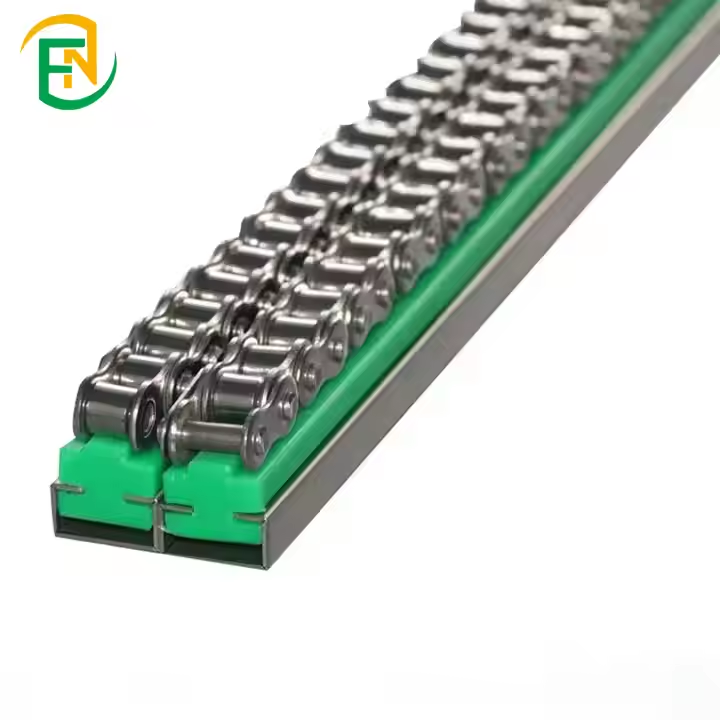
In conclusion, roller chains are a cornerstone of mechanical engineering, with applications spanning from industrial machinery to everyday consumer products. Understanding the components, types, working principles, and proper installation and maintenance of roller chains is essential for anyone involved in mechanical systems.
The importance of choosing the right roller chain for a specific application cannot be overstated. The correct chain ensures efficient power transmission, reduces wear and tear, and minimizes the risk of costly breakdowns. Similarly, regular maintenance, including proper lubrication, inspection, and tension adjustment, is crucial for extending the lifespan of the chain and maintaining the reliability of the machinery.
As technology advances, the future of roller chains looks promising, with new materials, design improvements, and lubrication innovations on the horizon. These developments will continue to enhance the performance and versatility of roller chains, making them even more indispensable in a wide range of industries. Whether you are an engineer, a mechanic, or a hobbyist, keeping up – to – date with the latest knowledge about roller chains will enable you to make the most of these remarkable mechanical components in your projects.