
- November 13, 2025
- Posted by: feinuojixie
- Category: Injection Molding News

Injection molding has long been the backbone of modern manufacturing, powering industries from automotive to consumer electronics. Over the years, the process of creating an injection molded part has evolved from manual craftsmanship to high-speed automation. However, as global competition intensifies and sustainability becomes a priority, the industry is entering a new era—one defined by intelligence, adaptability, and performance.
Today’s manufacturers are no longer just producing parts; they are engineering solutions. The combination of smart technology, innovative materials, and digital manufacturing tools is transforming how every injection molded part is designed, tested, and produced. This evolution not only improves efficiency but also opens the door to stronger, more sustainable, and more cost-effective products than ever before.
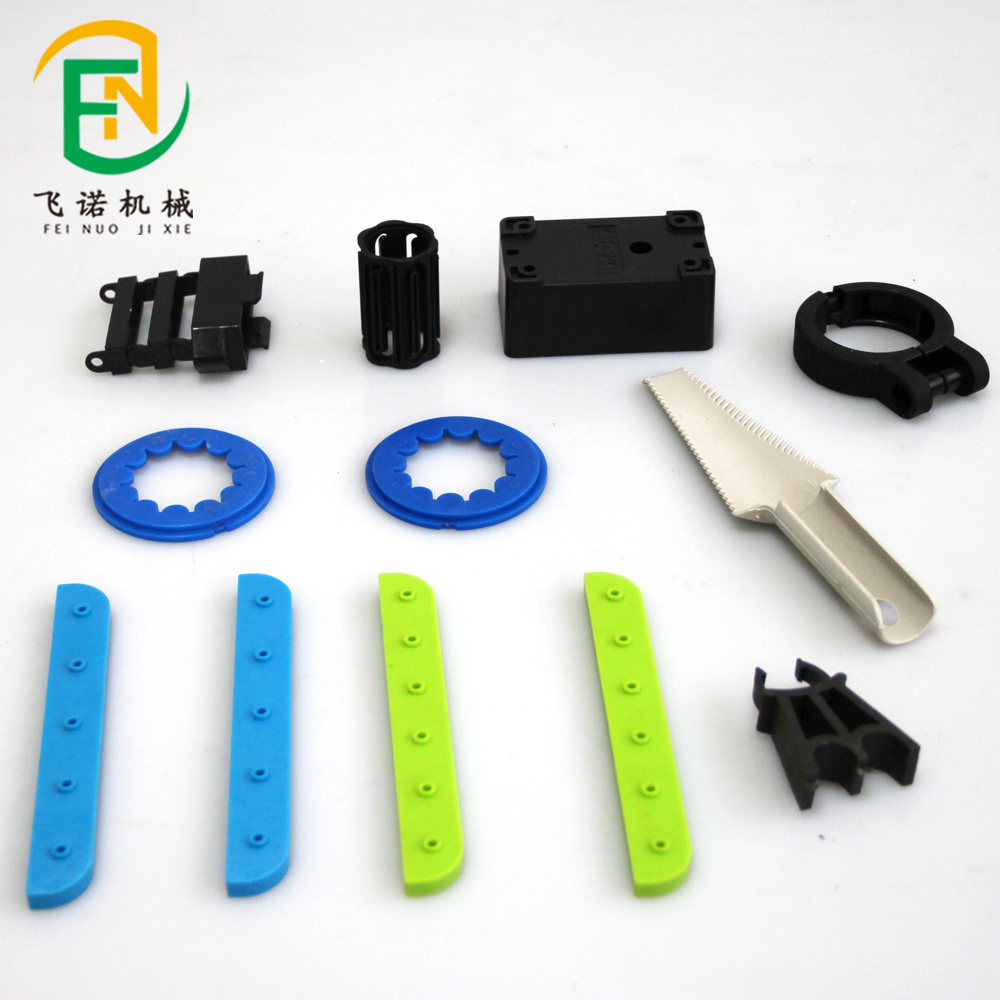
Smart Manufacturing: The Digital Revolution in Injection Molded Part Production
Smart manufacturing is changing the game for injection molded part production. By integrating IoT sensors, cloud-based monitoring, and AI-driven analytics, manufacturers can now achieve real-time visibility into every stage of the process. Machines can self-adjust parameters based on live data, reducing waste and improving part consistency.
Automation plays a central role in this transformation. Robotic arms now handle material feeding, mold removal, and assembly with unmatched precision. Combined with predictive maintenance powered by data analytics, downtime is minimized, and overall productivity soars. This new era of smart manufacturing ensures that every injection molded part meets exacting standards while optimizing cost and energy use.
Material Innovation: Creating Stronger and More Sustainable Injection Molded Part
Material science is at the heart of every breakthrough in injection molded part production. The future belongs to materials that are not only stronger and lighter but also environmentally responsible. Engineers are now turning to advanced polymers, high-performance composites, and bio-based resins to meet modern performance and sustainability demands.
High-performance polymers like PEEK and PPS are redefining the limits of strength and heat resistance, allowing injection molded part production to replace metal components in automotive, aerospace, and industrial applications. At the same time, the rise of biodegradable and recycled plastics is helping manufacturers reduce their carbon footprint without sacrificing quality. By combining these new materials with intelligent process control, manufacturers can produce injection molded part that deliver exceptional durability and sustainability in one package.
Design Optimization: How Simulation and Digital Twin Are Perfecting Every Injection Molded Part
In the past, creating the perfect injection molded part involved extensive trial and error. Today, that’s changing with the use of simulation software and digital twin technology. These digital tools allow engineers to virtually test mold designs, material flow, cooling behavior, and part performance before physical production ever begins.
By leveraging simulation, manufacturers can identify potential issues—such as warping, sink marks, or uneven stress—early in the design phase. The digital twin then replicates the real-world production environment, allowing continuous optimization as conditions change. This combination not only reduces prototyping costs but also accelerates time-to-market while ensuring each injection molded part achieves flawless precision and consistency.
AI and Machine Learning: Intelligent Control for the Next Generation of Injection Molded Part
Artificial intelligence and machine learning are rapidly becoming indispensable in injection molded part manufacturing. These systems analyze massive amounts of process data—from temperature and pressure readings to cycle times—to detect patterns invisible to the human eye.
With predictive algorithms, AI can automatically fine-tune molding parameters to prevent defects before they occur. Machine learning models continuously improve by learning from historical production data, enhancing process stability over time. This shift toward self-optimizing manufacturing ensures every injection molded part is produced with maximum efficiency, minimal waste, and consistent quality. The result is a smarter, data-driven production line that adapts in real time to maintain peak performance.
Sustainability and Circular Economy: Greener Approaches to Injection Molded Part Manufacturing
As environmental awareness grows, sustainability has become a defining factor in the future of injection molded part production. Manufacturers are adopting circular economy principles that prioritize resource efficiency, waste reduction, and material reuse.
Recycling technologies now allow post-consumer plastics to be reprocessed into new high-quality materials suitable for molding. Energy-efficient machinery reduces power consumption, while closed-loop water cooling systems minimize waste. Many factories are even integrating renewable energy sources to further lower their environmental impact.
By embracing sustainable practices, manufacturers are proving that injection molded part production can be both eco-friendly and economically viable. This shift not only benefits the planet but also strengthens brand reputation and aligns with consumer expectations for greener products.
Customization and Flexibility: Meeting Market Demands with Agile Injection Molded Part Production
In an era where consumers demand personalized products, flexibility in manufacturing has become essential. The injection molding industry is adapting through digital manufacturing platforms and modular tooling systems that enable faster, more cost-effective customization.
With 3D-printed molds, rapid prototyping, and adaptive mold designs, manufacturers can produce customized injection molded part for specific industries or even individual customers. This level of agility helps businesses respond quickly to market trends, shorten production cycles, and reduce inventory waste. The ability to produce on-demand, small-batch runs without compromising quality represents a major leap forward for injection molded part production.
Global Trends: How the Future of Injection Molded Part Production Is Shaping the World
The globalization of manufacturing continues to influence how injection molded part are designed, produced, and distributed. Smart factories equipped with digital connectivity are creating global networks of production sites that share data, optimize logistics, and enhance supply chain resilience.
Emerging markets are also adopting advanced injection molding technologies, driving innovation through competition and collaboration. Meanwhile, industries such as electric vehicles, renewable energy, and healthcare are generating unprecedented demand for high-quality injection molded part with specialized functions. This convergence of global innovation and local customization marks the next frontier for the industry.
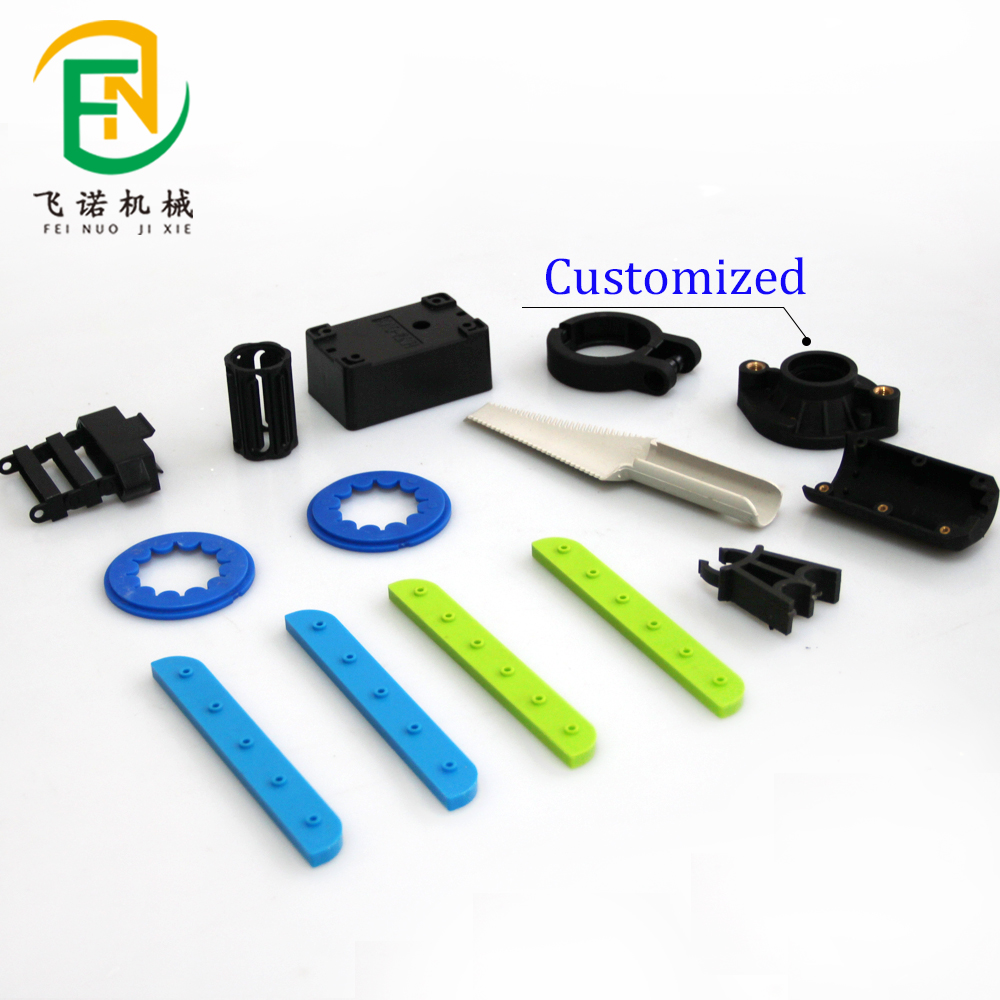
Building a Smarter, Stronger Future for Injection Molded Part
The future of injection molded part production is intelligent, sustainable, and adaptable. Through the integration of smart manufacturing, advanced materials, AI-driven control, and sustainable design, the industry is setting new standards for performance and efficiency.
Manufacturers that embrace these technologies will not only stay ahead of the competition but also contribute to a cleaner, more connected world. As the lines between digital and physical production continue to blur, one thing is clear: the next generation of injection molded part will be smarter, stronger, and more essential to the future of manufacturing than ever before.