
- October 10, 2025
- Posted by: feinuojixie
- Category: Chain Guides News

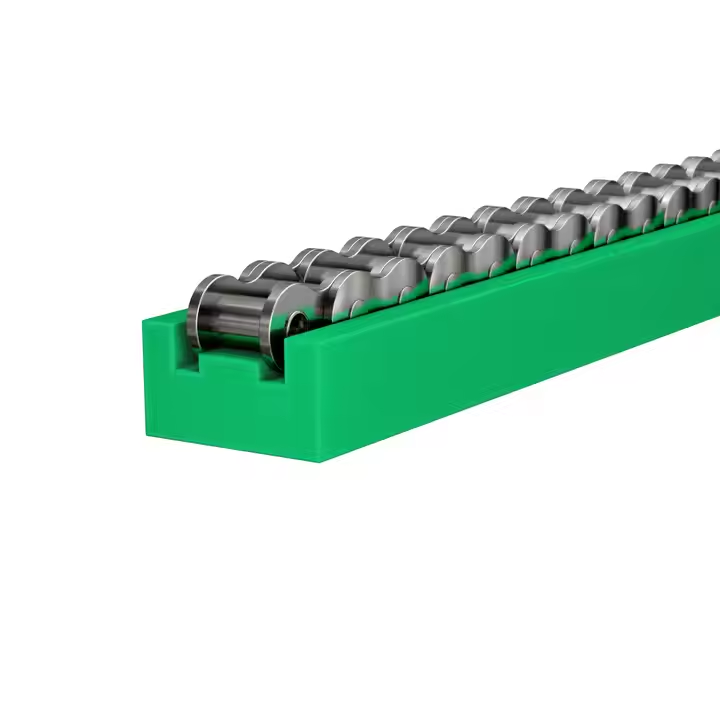
In the intricate world of mechanical systems, the guide wear strip plays a role that is both unassuming and indispensable. Acting as a crucial interface between moving parts, it serves as a safeguard, ensuring the smooth and stable operation of machinery. By reducing friction and wear between components, guide wear strips significantly extend the lifespan of equipment. This not only minimizes the need for frequent and costly replacements but also enhances the overall efficiency of the machinery.
Think of a conveyor belt system in a busy manufacturing plant. The guide wear strips along the edges of the conveyor keep the belt running straight, preventing it from veering off – track. Without these strips, the belt would constantly rub against the sides of the conveyor frame, leading to rapid wear and potential breakdowns. In precision – based machinery like CNC machines, guide wear strips enable the accurate movement of cutting tools, contributing to the production of high – quality products.
Given the critical role it plays, making the right choice when selecting a guide wear strip is of utmost importance. Even a seemingly minor error in the selection process can lead to a cascade of problems, from decreased performance to unexpected downtime. In the following sections, we will explore the top 5 mistakes that are commonly made when choosing a guide wear strip and how you can avoid them.

Mistake 1: Neglecting Material Compatibility
The Crucial Role of Material Compatibility
Material compatibility is a fundamental factor that can make or break the performance of a guide wear strip. Different materials have unique properties, and when paired incorrectly, they can lead to a host of problems. For instance, in a high – temperature industrial furnace, the guide wear strip needs to be made of a material that can withstand extreme heat without deforming or losing its structural integrity. If a material that is not heat – resistant is chosen, it will quickly degrade, causing the machinery to malfunction.
In a food – processing environment, the guide wear strip must be made of materials that are non – toxic and compliant with food – safety regulations. Stainless steel or certain types of food – grade plastics are often the go – to choices here. Using a material that is not suitable for food contact could contaminate the products, leading to serious health risks and potential legal issues for the company.
When the guide wear strip is in contact with moving metal parts, the material of the strip should be selected to minimize friction and wear. For example, if the equipment has aluminum components, a guide wear strip made of a material that has a low coefficient of friction against aluminum, such as some types of engineered polymers, would be a better choice. This ensures smooth operation and reduces the need for frequent maintenance.
Common Instances of Material Incompatibility
One common example of material incompatibility is the use of a guide wear strip made of a soft polymer in a high – load – bearing application where the mating surface is a hard metal. Over time, the soft polymer will experience excessive wear due to the high pressure exerted by the metal. This not only reduces the lifespan of the guide wear strip but can also cause particles from the worn – out strip to contaminate the machinery, leading to further damage.
Another instance is when a guide wear strip made of a material that is not resistant to chemicals is used in an environment with chemical exposure. For example, in a chemical plant where there are corrosive substances present, a standard rubber guide wear strip will quickly corrode. This corrosion weakens the strip, making it ineffective in guiding the moving parts. As a result, the parts may misalign, leading to increased friction, noise, and potential breakdowns.
In a marine environment, where there is high humidity and saltwater exposure, using a guide wear strip made of a non – corrosion – resistant metal can lead to rapid rusting. The rust not only degrades the performance of the strip but can also cause pitting on the mating surfaces, which in turn accelerates wear and reduces the accuracy of the moving parts.
Mistake 2: Overlooking Load – Bearing Capacity
Determining the Right Load – Bearing Capacity
Determining the correct load – bearing capacity of a guide wear strip is not a one – size – fits – all process. It requires a detailed understanding of the application and the forces at play. Static load, which is the weight that the guide wear strip has to support when the equipment is stationary, is the starting point. For example, in a heavy – duty industrial press, the guide wear strips need to bear the weight of the moving parts of the press when it is at rest. This can be calculated by simply adding up the masses of all the components that the strip will support and multiplying by the acceleration due to gravity.
Dynamic load, on the other hand, is more complex. It takes into account the forces generated during the operation of the equipment, such as vibrations, shocks, and acceleration or deceleration forces. In a high – speed conveyor system, when the conveyor starts or stops suddenly, there are significant acceleration and deceleration forces acting on the guide wear strips. These dynamic forces can be several times greater than the static load. Specialized engineering formulas and software can be used to accurately calculate dynamic loads. For instance, the dynamic load factor can be determined based on the speed of the moving parts, the frequency of starts and stops, and the nature of the conveyed materials.
Consequences of Incorrect Load – Bearing Assessment
An incorrect assessment of the load – bearing capacity can have far – reaching consequences. If the selected guide wear strip has a load – bearing capacity that is too low for the application, it will quickly succumb to the forces acting upon it. One of the most common issues is deformation. The strip may start to bend or compress under the excessive load, which disrupts the smooth movement of the components it is guiding. In a linear motion system used in a precision – manufacturing machine, even a slight deformation of the guide wear strip can cause the moving parts to deviate from their intended path. This leads to inaccuracies in the manufacturing process, resulting in products that do not meet the required tolerances.
Over time, the excessive load can also cause the guide wear strip to fracture. A broken guide wear strip means immediate equipment failure. In a large – scale mining operation, if the guide wear strips in the conveyor system break, it can bring the entire mining process to a halt. This not only causes significant production losses but also incurs high costs for repairs and replacements. Additionally, the sudden failure of the guide wear strip can pose safety risks to the operators, especially in machinery with moving parts that can become misaligned and cause accidents.
Mistake 3: Disregarding Environmental Conditions
Impact of Environment on Guide Wear Strip
Environmental conditions can have a profound impact on the performance and lifespan of guide wear strips. Temperature, for instance, is a critical factor. In high – temperature environments, such as those found in industrial furnaces or certain manufacturing processes, the guide wear strip can experience thermal expansion. If the material of the strip is not designed to handle high temperatures, it may expand to the point where it deforms or loses its dimensional stability. This can lead to increased friction between the moving parts, as the strip no longer fits properly. Over time, this excessive friction can cause the strip to wear out prematurely, and it may also generate heat, further exacerbating the problem.
On the other hand, in low – temperature environments, some materials can become brittle. For example, certain plastics that are commonly used in guide wear strips may lose their flexibility in extremely cold conditions. This brittleness makes the strip more prone to cracking and breaking under the normal stresses and strains of operation. In a refrigeration system, where the guide wear strips are exposed to sub – zero temperatures, choosing a material that is not suitable for cold environments can result in frequent failures.
Humidity is another significant environmental factor. High humidity levels can cause corrosion in metal – based guide wear strips. In a marine environment or a humid industrial setting, such as a paper mill, the presence of moisture in the air can lead to the formation of rust on steel guide wear strips. Rust not only weakens the strip but also creates a rough surface, which increases friction and wear. Even in non – metal guide wear strips, high humidity can affect the material properties. Some polymers may absorb moisture, causing them to swell or change their mechanical properties, such as hardness and elasticity.
Chemical exposure is also a major concern. In chemical plants, laboratories, or any environment where there are corrosive chemicals present, the guide wear strip must be resistant to the specific chemicals it will come into contact with. For example, in a facility that processes acids, a guide wear strip made of a material that is not acid – resistant will quickly degrade. The chemical reactions between the strip and the chemicals can lead to the breakdown of the material, resulting in a loss of its guiding and wear – reducing functions.
Tailoring Guide Wear Strip to the Environment
To ensure optimal performance, it is essential to select a guide wear strip that is tailored to the specific environmental conditions of the application. In high – temperature environments, materials such as high – temperature – resistant polymers like PEEK (Polyether – ether – ketone) or certain types of ceramics can be used. PEEK has excellent heat resistance, maintaining its mechanical properties even at high temperatures. It also has a low coefficient of friction, which helps in reducing wear and ensuring smooth operation. Ceramics, on the other hand, are known for their high – temperature stability and hardness, making them suitable for applications where extreme heat and wear resistance are required.
For low – temperature applications, materials that retain their flexibility and toughness at cold temperatures should be chosen. Some specialized elastomers and cold – resistant plastics are designed to perform well in sub – zero conditions. These materials can withstand the brittleness – inducing effects of cold and continue to function as effective guide wear strips.
In humid environments, corrosion – resistant materials are a must. Stainless steel alloys with high chromium and nickel content are often used for metal guide wear strips in such conditions. These alloys have excellent resistance to rust and corrosion. For non – metal options, materials that are impervious to moisture absorption can be selected. Some fluoropolymers, for example, are highly resistant to humidity and chemical attack, making them suitable for use in both humid and chemically – aggressive environments.
When dealing with chemical exposure, it is crucial to identify the specific chemicals present in the environment and choose a guide wear strip material that is resistant to those chemicals. For instance, if the environment contains strong alkalis, materials like certain types of synthetic rubbers or corrosion – resistant metals that are compatible with alkalis should be used. Conducting a thorough chemical compatibility analysis before making a selection can save a great deal of time, money, and potential equipment failures in the long run.
Mistake 4: Ignoring Precision Requirements
The Link between Precision and Guide Wear Strip
In precision – based machinery, the precision of the guide wear strip is directly related to the operational accuracy of the entire equipment. High – precision equipment, such as semiconductor manufacturing machines, optical inspection devices, and high – end CNC machining centers, demands guide wear strips with extremely tight tolerances. These machines are designed to work with micron – level or even sub – micron – level precision. For example, in a semiconductor lithography machine, which is used to create the intricate patterns on silicon wafers, the movement of the components needs to be controlled with nanometer – level accuracy. The guide wear strips in such a machine must be manufactured with equally high precision to ensure that the wafer – handling stages and the projection lenses move precisely along their intended paths.
Even in less – extreme precision applications, such as general – purpose industrial machinery, the precision of the guide wear strip still plays a crucial role. If the guide wear strip has significant dimensional variations or is not flat and straight within the required tolerances, it can introduce errors in the movement of the components it guides. This is because the guide wear strip serves as a reference surface for the moving parts. In a linear motion system, if the guide wear strip is not precisely parallel to the axis of motion, the moving carriage will deviate from its straight – line path, leading to inaccuracies in the positioning of the workpiece or tool attached to it.
How Inaccuracy Affects Equipment Performance
When the precision requirements of a guide wear strip are not met, it can lead to a variety of performance – related issues in the equipment. One of the most common problems is positioning deviation. In a CNC milling machine, for instance, if the guide wear strip has inaccuracies, the cutting tool may not reach the exact coordinates programmed into the machine. This results in parts being machined with incorrect dimensions, which can lead to scrap parts and costly rework. Even a small deviation of a few microns can be unacceptable in high – precision manufacturing processes, as it can affect the functionality and quality of the final product.
In addition to positioning deviation, inaccurate guide wear strips can also cause the equipment to operate unstably. The uneven surface of an imprecise guide wear strip can create inconsistent friction forces as the components move along it. These fluctuating friction forces can cause vibrations and oscillations in the moving parts. In a high – speed spindle system, such vibrations can not only reduce the surface finish quality of the machined parts but also increase the wear rate of the spindle bearings and other components. Over time, the repeated stress caused by these vibrations can lead to component fatigue and premature failure.
Furthermore, the inaccuracy of the guide wear strip can also affect the overall efficiency of the equipment. When the moving parts deviate from their optimal paths due to the imprecision of the guide wear strip, the equipment may need to spend more time and energy to complete a task. For example, in a robotic arm used for pick – and – place operations in an automated assembly line, if the guide wear strips on the arm joints are not precise, the arm may take longer to reach the target positions accurately. This can slow down the entire assembly process and reduce the productivity of the line.
Mistake 5: Underestimating Installation and Maintenance
Importance of Proper Installation
Proper installation of a guide wear strip is the foundation for its optimal performance. The installation process is not just about attaching the strip to the machinery; it requires careful attention to detail. Before installation, it is crucial to ensure that the mating surfaces are clean, smooth, and free from any debris or contaminants. Even a small particle of dirt between the guide wear strip and the mating surface can cause uneven wear, leading to premature failure of the strip. For example, in a high – speed printing press, any dust or ink residue on the guide surfaces can get trapped between the guide wear strip and the moving parts, creating abrasive conditions that quickly wear down the strip.
The installation method also varies depending on the type of guide wear strip and the machinery. Some strips may require the use of adhesives, while others are mechanically fastened using screws or bolts. When using adhesives, it is essential to choose the right type of adhesive that is compatible with the material of the guide wear strip and the mating surface. Applying the adhesive evenly and ensuring proper contact between the strip and the surface is crucial. If the adhesive is not applied correctly, the strip may not be firmly attached, and it can come loose during operation, causing serious problems. In the case of mechanically fastened guide wear strips, the screws or bolts should be tightened to the recommended torque specifications. Over – tightening can cause the strip to deform, while under – tightening can lead to the strip becoming loose over time.
Significance of Regular Maintenance
Regular maintenance is equally important for the long – term performance and lifespan of guide wear strips. Just like any other mechanical component, guide wear strips are subject to wear and tear during operation. Regular inspection allows you to detect early signs of wear, such as surface roughness, grooves, or thinning of the strip. For example, in a manufacturing plant that operates 24/7, conducting daily visual inspections of the guide wear strips in the production equipment can help identify any potential issues before they escalate into major problems. If a small groove is noticed on the surface of the strip during an inspection, it can be addressed immediately, either by replacing the strip or taking corrective measures to prevent further damage.
Lubrication is a key aspect of maintenance. Applying the right lubricant to the guide wear strip at regular intervals can significantly reduce friction and wear. Different materials of guide wear strips may require different types of lubricants. For instance, some polymer – based guide wear strips may work best with a silicone – based lubricant, while metal – based strips may need a high – temperature – resistant grease. The frequency of lubrication also depends on the operating conditions of the machinery. In high – speed or high – load applications, more frequent lubrication may be necessary.
In addition to inspection and lubrication, cleaning the guide wear strip regularly is essential. Removing dirt, dust, and other contaminants that accumulate on the strip can prevent abrasive wear. In a dusty industrial environment, such as a quarry or a sawmill, using compressed air or a suitable cleaning solution to clean the guide wear strips at least once a week can help maintain their performance. By neglecting regular maintenance, the lifespan of the guide wear strip can be reduced by up to 50%, leading to increased downtime and higher replacement costs.
Conclusion
Recap of Key Mistakes
In summary, when selecting a guide wear strip, it’s crucial to avoid several common pitfalls. First, neglecting material compatibility can lead to rapid wear, equipment malfunction, and even safety hazards. Different materials interact differently, and choosing the wrong combination can spell disaster for your machinery. Second, overlooking load – bearing capacity is a serious error. Incorrectly assessing the forces the strip needs to bear can result in deformation, fracture, and ultimately, equipment failure.
Disregarding environmental conditions is another significant mistake. Temperature, humidity, and chemical exposure can all degrade the performance and lifespan of guide wear strips. Using a strip that is not suitable for the environment it will operate in is like setting up your equipment for failure. Ignoring precision requirements is also a no – no, especially in high – precision machinery. Even a slight deviation in the guide wear strip can lead to positioning errors, unstable operation, and reduced efficiency. Finally, underestimating installation and maintenance can cut the lifespan of the strip in half. Proper installation ensures a good start, while regular maintenance keeps the strip in optimal condition.
Final Thoughts on Making the Right Choice
Making the right choice when selecting a guide wear strip is not just about choosing a component; it’s about ensuring the smooth, efficient, and long – term operation of your machinery. By carefully considering material compatibility, load – bearing capacity, environmental conditions, precision requirements, and installation and maintenance needs, you can avoid the common mistakes that often lead to equipment problems. Remember, a well – chosen guide wear strip is an investment in the reliability and productivity of your machinery. So, take the time to do your research, consult with experts if necessary, and make an informed decision. Your equipment, and your bottom line, will thank you.