
- November 21, 2025
- Posted by: feinuojixie
- Category: Chain Guides News
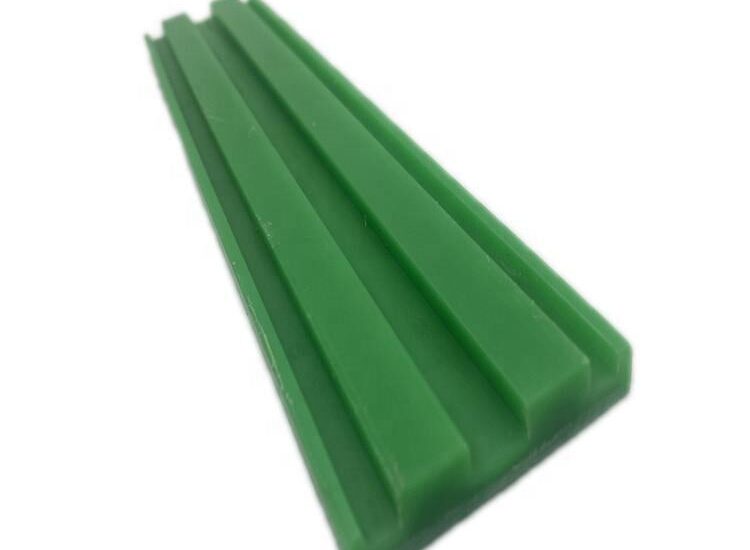
In today’s fast-moving production and automation environment, plastic guide rail has become one of the most reliable and efficient components engineers can integrate into their systems. Its role goes far beyond simply guiding products. A high-quality plastic guide rail improves alignment, stabilizes product flow, reduces vibration, and minimizes friction—all of which are critical for maintaining high throughput and consistent product quality.
Modern engineering demands materials that can operate with precision while offering durability, chemical resistance, and noise reduction. Plastic guide rail meets these requirements exceptionally well, making it a preferred choice in industries ranging from food processing to automotive assembly. As production speeds increase and product handling becomes more delicate, engineers need to understand how plastic guide rail contributes to performance and what factors determine its long-term reliability.
The Core Function of Plastic Guide Rail in Motion and Conveyor Systems
How Plastic Guide Rail Supports Smooth, Controlled Movement
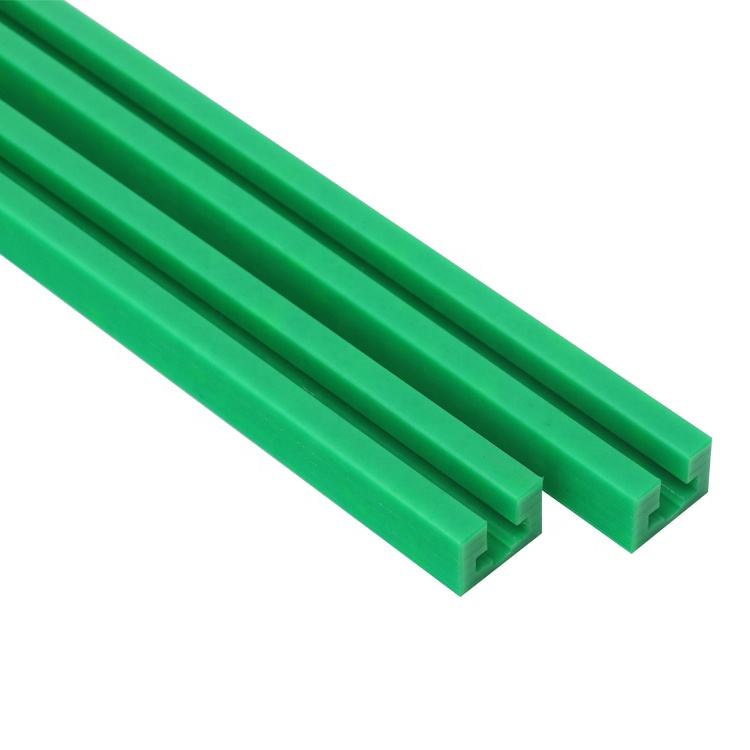
A plastic guide rail plays a central role in controlling the linear movement of products across conveyor or automation equipment. By providing a stable, low-friction path, it ensures smooth transitions between stations, reduces jamming, and maintains precise product positioning. The material’s inherent lubricity helps minimize drag while supporting even the lightest or most delicate items without scratching. For engineers designing systems that rely on predictable flow, the consistent performance of a plastic guide rail is essential.
Why Engineers Prefer Plastic Guide Rail Over Traditional Metal Options
While metal has long been used for guiding components, engineers increasingly choose plastic guide rail for its superior performance in demanding environments. Plastic is lighter, quieter, and more resistant to corrosion and chemical exposure. It prevents product scuffing—a major issue in industries handling finished goods or consumer packaging. Additionally, plastic guide rail can perform reliably without lubrication, making it ideal for clean, sanitary, or washdown environments. These advantages allow engineers to reduce maintenance cycles, lower noise, and improve equipment longevity.
Material Science Behind Durable Plastic Guide Rail
Common Engineering Polymers Used for Plastic Guide Rail
The durability of a plastic guide rail depends heavily on the polymer formulation. UHMW-PE is widely used due to its exceptional wear resistance, self-lubricating properties, and ability to withstand harsh cleaning chemicals. POM offers outstanding dimensional stability and a very low coefficient of friction, making it well-suited for high-precision applications. Engineering grades of PA provide robustness and impact resistance where dynamic loads are significant. Modified blends with fillers or additives further enhance stiffness, heat resistance, or anti-static properties, giving engineers a broad selection for specific system demands.
Key Performance Traits Engineers Must Evaluate
When selecting a plastic guide rail, engineers must consider several performance traits. Wear resistance determines longevity under continuous sliding contact. Impact strength is crucial for systems where products frequently collide with the guide rail. Temperature tolerance ensures reliable operation in heated washdown environments or near machinery generating heat. Equally important is the coefficient of friction, which affects line speed, energy consumption, and product stability. Evaluating these traits early helps prevent premature failure and optimizes system performance.
Precision Engineering: What Makes Plastic Guide Rail High-Precision
Dimensional Accuracy and Tolerance Control
A high-precision plastic guide rail requires strict dimensional accuracy to maintain consistent product handling and avoid misalignment at high speeds. Advanced machining or extrusion processes ensure flatness, proper alignment of edges, and stable thickness throughout the entire length. Tight tolerance control allows engineers to integrate the guide rail seamlessly with conveyor brackets, chain components, and product carriers. This precision is especially important in packaging lines, pharmaceutical systems, and automated inspection equipment where even minor misalignment can cause significant disruptions.
Surface Quality and Its Impact on Product Flow
The surface of a plastic guide rail directly affects product movement. A smooth, polished surface helps minimize drag and prevents micro-abrasion on bottles, cartons, pouches, and other handled items. In high-speed production, surface irregularities can lead to vibration or inconsistent product spacing. Well-engineered surface quality ensures stable flow, reduces noise, and supports sustained high throughput. Precision manufacturing creates surfaces uniform enough for sensitive applications where cleanliness and product protection are top priorities.
Application-Specific Design Considerations for Plastic Guide Rail
Choosing the Right Profile for Conveyor, Packaging, and Automation Equipment
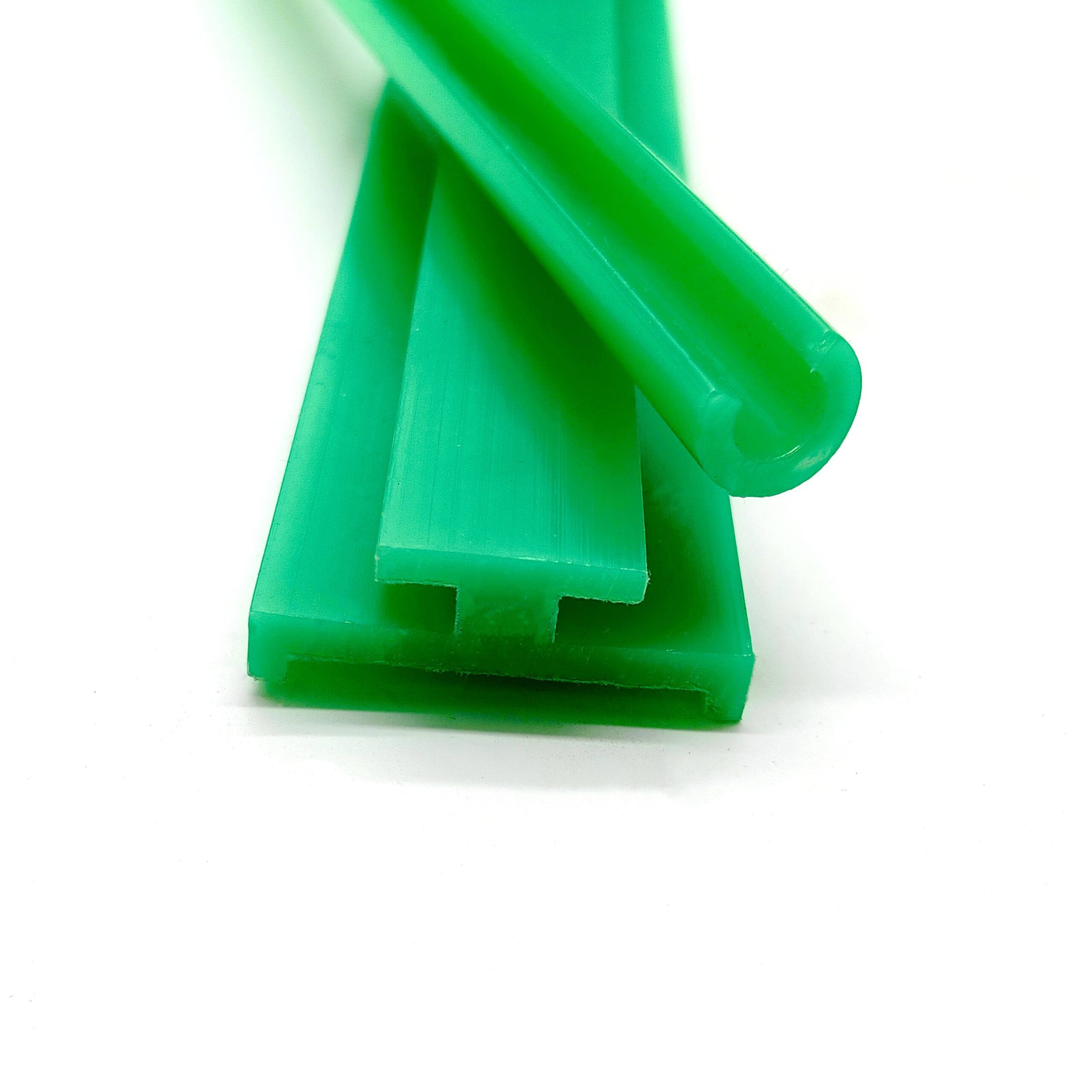
Plastic guide rail is available in many profiles, each designed for specific operational needs. Flat profiles provide broad surface contact for cartons and trays. U-shaped profiles cradle cylindrical products such as bottles or jars. Custom-shaped profiles support unique packaging or delicate items. Engineers must match the profile to product geometry, line speed, and conveyor type. The right profile ensures stability, reduces tipping, and allows smooth movement even during rapid acceleration or deceleration.
Load, Speed, and Environment Factors Engineers Should Calculate
To ensure optimal performance, engineers should evaluate load distribution, conveyor speed, and environmental exposure. High loads require materials with greater stiffness and impact resistance. Fast-moving systems benefit from polymers with superior wear properties and low friction. Exposure to moisture, sanitizing agents, or elevated temperatures influences polymer selection and design. Factoring these conditions into the guide rail specification helps avoid deformation, swelling, or chemical degradation over time.
Installation and Maintenance Best Practices
How to Install Plastic Guide Rail for Maximum Stability and Longevity
Proper installation greatly enhances the service life of a plastic guide rail. Engineers should ensure that mounting brackets are aligned accurately and spaced evenly to prevent sagging or vibration. The fastening method should allow for easy adjustment while maintaining firm support. A slight clearance between the guide rail and moving products prevents unnecessary abrasion. When installed correctly, the guide rail maintains consistent alignment across the entire conveyor, enabling uniform product handling.
Maintenance Tips That Extend Guide Rail Service Life
Plastic guide rail requires minimal maintenance, but routine checks help preserve its performance. Regular cleaning prevents buildup that can increase friction or cause contamination in sensitive industries. Engineers should inspect for wear patterns, warping, or misalignment and correct issues promptly. Periodic tightening of fasteners ensures stability under continuous operation. These simple practices significantly extend service life and maintain system efficiency.
Case Examples: How Plastic Guide Rail Improves Performance in Real Systems
High-Speed Food Conveyor
In food processing, plastic guide rail supports hygienic, stable, and gentle product handling. Its chemical resistance allows frequent washdown without degradation. In high-speed bakery and frozen food lines, the material’s low friction reduces energy use while keeping product flow consistent. This improves throughput and minimizes downtime caused by jams or misalignment.
Beverage Bottling Line
Beverage production relies heavily on precise movement of bottles, caps, and containers. A plastic guide rail prevents scratching and eliminates noise associated with metal contact. Its lightweight nature enables quick adjustments during format changes. In wet environments, plastic maintains grip and stability without corroding, making it ideal for bottling, canning, and labeling stages.
How to Select the Right Supplier for Durable, High-Precision Plastic Guide Rail
Quality Standards, Customization Options, and Engineering Support
Choosing the right supplier ensures that the plastic guide rail meets all performance expectations. Engineers should look for manufacturers who follow strict quality control standards and offer advanced machining or extrusion capabilities. Customization options—such as tailored profiles, reinforced materials, or anti-static formulations—allow better integration with specific systems. Equally important is technical support, including guidance on material selection, load calculations, and design optimization. A capable supplier becomes a long-term partner in ensuring production reliability.
The Strategic Advantage of Choosing the Right Plastic Guide Rail
A durable, high-precision plastic guide rail gives engineers a significant advantage in designing efficient, quiet, and low-maintenance systems. By understanding material properties, performance traits, installation methods, and application requirements, engineers can select the ideal solution for their equipment. With the right guide rail, production lines run more smoothly, maintenance costs decrease, and overall system reliability increases. As industries continue to demand higher speed and greater precision, the role of the plastic guide rail becomes even more essential to modern engineering success.