
- January 7, 2026
- Posted by: feinuojixie
- Category: Chain Guides News

In modern material handling and automated production environments, conveyor systems are expected to operate continuously, efficiently, and with minimal downtime. One often overlooked component that plays a critical role in achieving these goals is the Roller Chain Guide. Without a properly designed Roller Chain Guide, even the most robust conveyor system can suffer from premature wear, instability, and operational failure.
Why a Roller Chain Guide Is Essential in Modern Conveyor Design
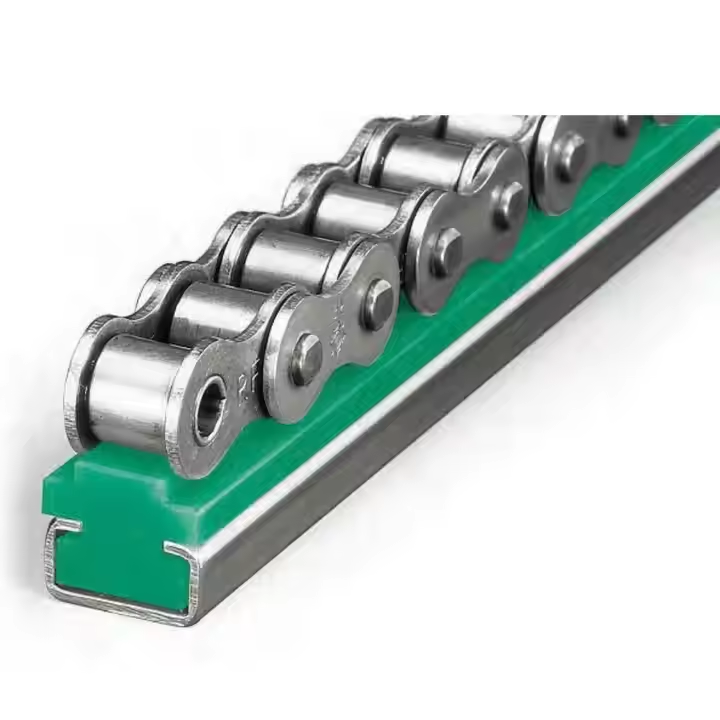
A Roller Chain Guide is far more than a passive accessory. It actively controls the path of the roller chain, ensuring smooth motion and predictable behavior throughout the conveyor system. By maintaining consistent alignment and supporting the chain during operation, a Roller Chain Guide forms the foundation for reliable performance in both simple and complex conveyor layouts.
How a Roller Chain Guide Controls Chain Movement and Alignment
One of the primary functions of a Roller Chain Guide is to keep the roller chain precisely aligned along its intended path. During operation, forces such as load variation, speed changes, and directional transitions can cause the chain to shift laterally. A properly positioned Roller Chain Guide restricts this movement, preventing misalignment that could lead to uneven wear or derailment.
Consistent alignment also helps maintain accurate product positioning, which is especially important in automated systems where timing and precision are critical.
The Role of a Roller Chain Guide in Reducing Wear and Extending Chain Life
Excessive friction and uncontrolled contact are leading causes of roller chain degradation. A Roller Chain Guide provides a controlled, low-friction surface that supports the chain and reduces direct metal-to-metal interaction. This significantly decreases wear on both the chain and adjacent components.
By reducing abrasion and impact stress, a Roller Chain Guide helps extend service intervals and prolong the overall lifespan of the conveyor system.
Why a Roller Chain Guide Improves Conveyor Reliability Under Load
Heavy loads and continuous operation place significant stress on conveyor components. Under these conditions, a Roller Chain Guide plays a vital role in distributing forces evenly and maintaining consistent chain engagement. This prevents localized stress points that can cause sudden failures.
With a properly engineered Roller Chain Guide, conveyors are better equipped to handle demanding workloads without sacrificing stability or performance.
How a Roller Chain Guide Enhances Operational Safety
Uncontrolled chain movement can create serious safety risks, including sudden derailment or component breakage. A Roller Chain Guide minimizes these risks by stabilizing the chain throughout its travel path. This added stability protects surrounding equipment and reduces the likelihood of unexpected mechanical incidents.
A safer conveyor system also means fewer interruptions and a more secure working environment for operators and maintenance personnel.
Material Selection Matters for a Roller Chain Guide
The effectiveness of a Roller Chain Guide depends heavily on material choice. Different operating environments require different properties, such as low friction, high wear resistance, or chemical tolerance. Selecting the right material ensures consistent performance even in harsh conditions like high temperature, moisture, or debris exposure.
Proper material selection allows a Roller Chain Guide to maintain its guiding function over long periods with minimal maintenance.
The Impact of a Roller Chain Guide on Noise Reduction and Smooth Operation
Vibration and noise are often indicators of poor chain control. A well-designed Roller Chain Guide dampens vibration by maintaining steady contact and eliminating unnecessary movement. This results in quieter operation and smoother conveyor motion.
Reduced noise not only improves the working environment but also signals healthier mechanical performance.
Customization Options for a Conveyor-Specific Roller Chain Guide
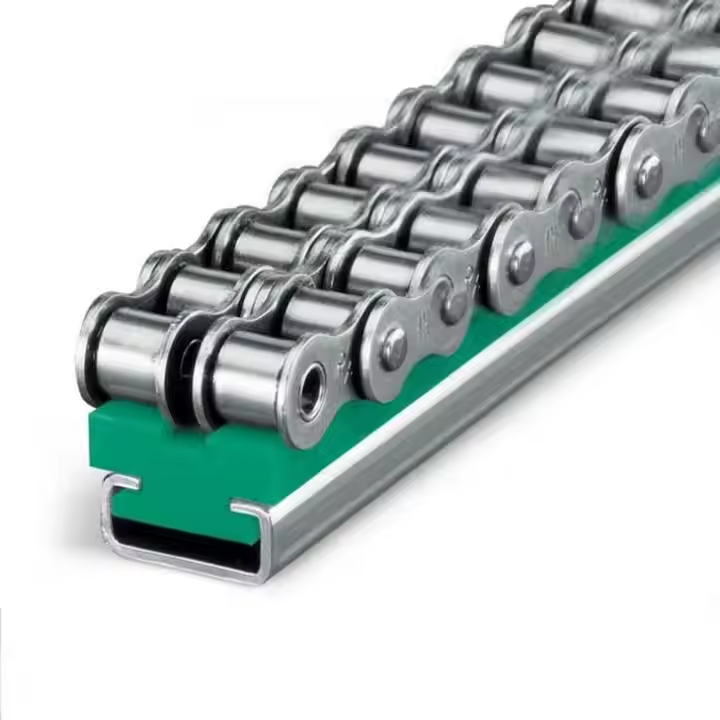
Every conveyor system has unique layout requirements, including curves, elevation changes, and space limitations. A customized Roller Chain Guide can be designed to match these constraints precisely. Tailored profiles, mounting methods, and dimensions ensure optimal performance within the specific application.
Customization allows engineers to solve complex design challenges without compromising reliability.
The Cost-Saving Benefits of Investing in a Proper Roller Chain Guide
While a Roller Chain Guide represents a modest upfront investment, it delivers substantial long-term cost savings. Reduced maintenance frequency, fewer unplanned shutdowns, and extended component life all contribute to lower total operating costs.
By preventing common failure modes, a Roller Chain Guide helps conveyor systems achieve higher uptime and improved return on investment.
Why a Roller Chain Guide Is Not Optional in Conveyor Systems
A conveyor system is only as reliable as its weakest component. The Roller Chain Guide plays a crucial role in maintaining alignment, reducing wear, improving safety, and ensuring consistent operation. Rather than being an optional accessory, it should be considered a core element of conveyor design.