
- September 4, 2025
- Posted by: feinuojixie
- Category: Chain Guides News
No Comments
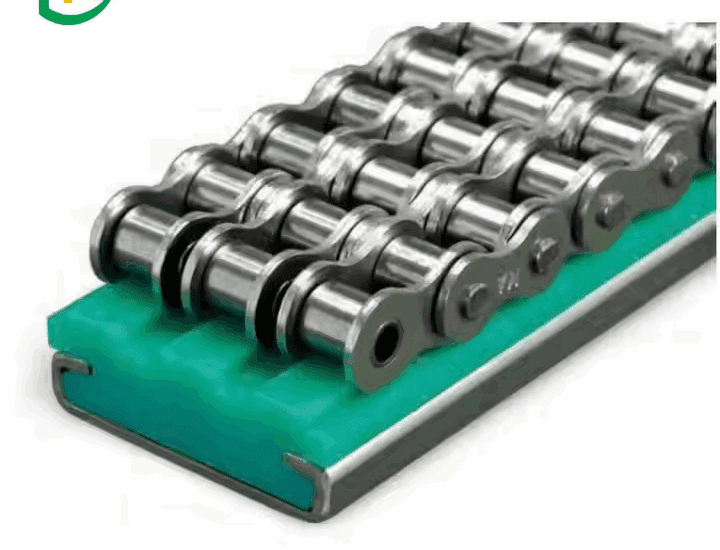
When businesses plan their conveyor system budgets, the focus often lands on big-ticket items: the conveyor belt, motor, or control panel. Guide rail for conveyor, with its seemingly simple “guide and stabilize” function, is easy to dismiss as a minor component—one where cutting costs feels like a harmless way to trim expenses. After all, a cheaper rail might look similar to a premium one at first glance, right? But this line of thinking often leads to a costly mistake. Guide rail for conveyor is not just a supporting player; it’s a critical barrier between smooth operations and unexpected financial hits. Every time a low-quality rail wears down, misaligns, or breaks, it triggers a chain reaction: product damage, unplanned downtime, and repeated repair bills that add up far more than the initial savings of buying a budget rail. In this blog, we’ll break down why investing in high-quality guide rail for conveyor isn’t an extra expense—it’s a long-term financial strategy that protects your bottom line, your productivity, and your peace of mind.

Understanding the True Role of Guide Rail for Conveyor in Your Operations
To fully grasp why high-quality guide rail for conveyor is a long-term money saver, you first need to recognize just how integral this component is to your daily operations. It’s not merely a piece of metal or plastic that lines your conveyor—it’s the unsung hero that keeps your workflow on track. Guide rail for conveyor has four core functions that directly impact efficiency: stabilizing products as they move, preventing costly jams, protecting other conveyor components, and ensuring a smooth, consistent flow from start to finish. For example, in a packaging facility, guide rail for conveyor keeps boxes aligned so they don’t tip over mid-transit, which would otherwise block the entire line. In a manufacturing plant, it guides delicate parts past assembly stations without shifting, ensuring workers can complete their tasks without delays.
The problem with low-quality guide rail for conveyor is that it fails to perform these functions reliably. A cheap rail might be unevenly shaped, causing products to wobble or get stuck. It could be made from brittle material that cracks under minimal pressure, leaving sharp edges that snag items or damage the conveyor belt. Over time, these small failures create a cascading effect: a single jam from a faulty rail can back up production, a cracked rail can scratch products, and misalignment can force other parts of the conveyor to work harder. When you invest in high-quality guide rail for conveyor, you’re not just buying a better component—you’re buying a safeguard for every step of your operation, ensuring that one small part doesn’t bring your entire system to a halt.
The Upfront Cost Myth: Why Cheap Guide Rail for Conveyor Costs More Later
The math is clear: “cheap” guide rail for conveyor isn’t cheap at all. It’s a recurring expense that adds up faster than you might think. High-quality guide rail for conveyor, on the other hand, is a one-time investment that eliminates the cycle of frequent replacements and labor costs, putting more money back into your business over time.
Minimizing Downtime: How High-Quality Guide Rail for Conveyor Keeps Operations Running
Why does low-quality guide rail for conveyor cause so much downtime? Because it’s prone to failure: it can crack under the weight of products, bend out of alignment, or break entirely, forcing you to shut down the conveyor to make repairs. Even small issues, like a slightly warped rail causing occasional jams, add up—each jam might only take 15 minutes to fix, but if that happens 4 times a week, that’s over 52 hours of downtime a year.
High-quality guide rail for conveyor eliminates these risks. Made from durable materials like heavy-gauge steel or reinforced plastic, it resists wear and tear even under constant use. It maintains its shape and alignment, so jams are rare. When issues do arise, they’re usually minor and can be addressed during planned maintenance (like quarterly inspections) rather than unplanned shutdowns. For example, a distribution center in Ohio switched to high-quality guide rail for conveyor and saw their annual downtime related to rail issues drop from 80 hours to just 4 hours—a savings of over $152,000 in lost revenue. Investing in quality isn’t just about avoiding breakdowns; it’s about keeping your business running—and making money—without interruption.
Reducing Product Damage: The Hidden Savings of Reliable Guide Rail for Conveyor
Product damage is another hidden cost of low-quality guide rail for conveyor that many businesses overlook—until they start adding up the numbers. A rail that’s uneven, rough, or poorly fitted can scratch, dent, or knock products off the conveyor, turning perfectly good inventory into waste. Let’s take a small electronics manufacturer that handles 1,000 small components (like phone chargers) on its conveyor every day. If their low-quality guide rail for conveyor causes a 5% damage rate, that’s 50 damaged products per day. At a cost of
500 in wasted inventory every day—or $182,500 per year.
The issue with low-quality guide rail for conveyor is that it can’t provide the consistent support products need. A rail with sharp edges might scratch plastic casings; a rail that’s too loose might let products shift and collide with each other; a rail that’s warped might push products off the conveyor entirely. Even if the damage is minor (like a small scratch on a box), it can force you to discount the product or write it off entirely, eating into your profit margins.
High-quality guide rail for conveyor solves this problem by providing smooth, consistent support. It’s designed to fit your conveyor perfectly, so there are no gaps or uneven spots that can damage products. Materials like polished stainless steel or smooth nylon prevent scratches, while sturdy construction keeps products aligned and secure. A bakery in Texas, for example, switched to high-quality guide rail for conveyor to protect its fragile pastries. Before the switch, they were losing 8% of their daily output to damage; after, the rate dropped to less than 1%—saving them over $60,000 a year in wasted goods. When you invest in reliable guide rail for conveyor, you’re not just protecting your products—you’re protecting your profit.
Lower Maintenance and Labor Costs: Less Work, More Savings with Quality Guide Rail for Conveyor
Maintenance teams are already stretched thin, and low-quality guide rail for conveyor only adds to their workload. A cheap rail requires constant attention: you have to check it for cracks or misalignment every few weeks, adjust it when it shifts, and replace it entirely every few months. Each of these tasks takes time—time that maintenance workers could be spending on more critical tasks, like repairing conveyor motors or upgrading safety systems.
High-quality guide rail for conveyor cuts these costs dramatically. It only needs to be inspected once a quarter (taking 30 minutes each time) and rarely requires adjustments. Over 5 years, that’s just 6 hours of inspection time—costing $210 in labor. With no frequent replacements, you save on both labor and storage space. A manufacturing plant in Michigan reported that after switching to high-quality guide rail for conveyor, their maintenance team spent 75% less time on rail-related tasks—freeing them up to work on projects that improved overall conveyor efficiency. When you choose quality, you’re not just saving money on parts—you’re saving time, reducing labor costs, and keeping your team safe.
Extending the Lifespan of Your Entire Conveyor System with Quality Guide Rail for Conveyor
Guide rail for conveyor doesn’t just affect itself—it affects every other part of your conveyor system. A faulty rail can put extra stress on belts, motors, and rollers, causing them to wear out faster and leading to costly system overhauls. For example, if a low-quality guide rail for conveyor is misaligned, it can cause the conveyor belt to rub against the rail or other components. Over time, this friction wears down the belt’s surface, leading to cracks and tears. A new conveyor belt can cost $2,000 or more, plus the labor to install it—and if the misaligned rail isn’t fixed, the new belt will wear out just as quickly.
High-quality guide rail for conveyor prevents this ripple effect by distributing pressure evenly and maintaining proper alignment. It protects the belt from friction, keeps the motor running efficiently, and reduces wear on rollers and other parts. By taking the stress off these components, it extends the overall lifespan of your conveyor system. A distribution center in Florida found that after installing high-quality guide rail for conveyor, their conveyor system’s lifespan increased from 7 years to 12 years—delaying a $12,000 system replacement by 5 years. That’s not just savings on the rail itself; it’s savings on every part of your conveyor.
Choosing the Right High-Quality Guide Rail for Conveyor: Key Factors to Avoid Regret
Now that you understand the benefits of high-quality guide rail for conveyor, the next step is choosing the right one for your operation. The worst mistake you can make is swapping one low-quality rail for another—so here are the key factors to consider to ensure you’re making a smart investment:
First, material matters. The material of your guide rail for conveyor should match your industry and the products you handle. For example, stainless steel is ideal for manufacturing or food processing (it’s durable and easy to clean), while reinforced plastic is a good choice for lighter products like packaging (it’s lightweight and resists scratches). Avoid cheap materials like thin aluminum or low-grade plastic—they’ll wear out quickly and cost you more in the long run.
Second, compatibility is critical. Not all guide rails work with all conveyors. Make sure the rail you choose is designed for your conveyor’s size, speed, and load capacity. A rail that’s too small for your conveyor will bend under pressure, while a rail that’s too large will cause friction and jams. Check with your conveyor manufacturer or a trusted supplier to find a rail that fits perfectly.
Third, look for warranties and reputation. A manufacturer that stands behind their product will offer a warranty (usually 1–5 years) on their guide rail for conveyor. This is a sign of quality—if the manufacturer is confident the rail will last, they’ll back it up. Also, read customer reviews: other businesses in your industry can tell you which rails hold up and which ones cause problems.
Finally, don’t focus solely on price. It’s tempting to choose the cheapest high-quality option, but remember: the goal is to minimize long-term costs, not just upfront spending. A slightly more expensive rail that’s made from better material and comes with a warranty will save you more money over time than a “budget” high-quality rail that cuts corners.

High-Quality Guide Rail for Conveyor Is an Investment in Long-Term Profitability
When you look at the big picture, high-quality guide rail for conveyor isn’t just a component—it’s an investment in your business’s profitability. The upfront cost might be higher than a low-quality option, but the long-term savings are impossible to ignore: fewer replacements, minimal downtime, less product damage, lower maintenance costs, and a longer-lasting conveyor system. Every dollar you spend on a quality rail is a dollar you’ll get back—and then some—in reduced expenses and increased efficiency.
The biggest mistake businesses make is focusing on “saving money today” instead of “saving money over time.” A $50 guide rail might seem like a good deal, but when you factor in the cost of downtime, product damage, and frequent replacements, it’s a drain on your bottom line. High-quality guide rail for conveyor eliminates that drain, letting you focus on growing your business instead of fixing constant problems.
So, take a moment to evaluate your current guide rail for conveyor. How often do you replace it? How much downtime do you lose to rail-related issues? How much product do you throw away because of damage? The answers to these questions will likely show that investing in quality is the smartest financial decision you can make.
At the end of the day, high-quality guide rail for conveyor isn’t about spending more—it’s about spending wisely. It’s about choosing a component that works as hard as your team does, keeps your operations running smoothly, and ensures that your business is profitable for years to come.